
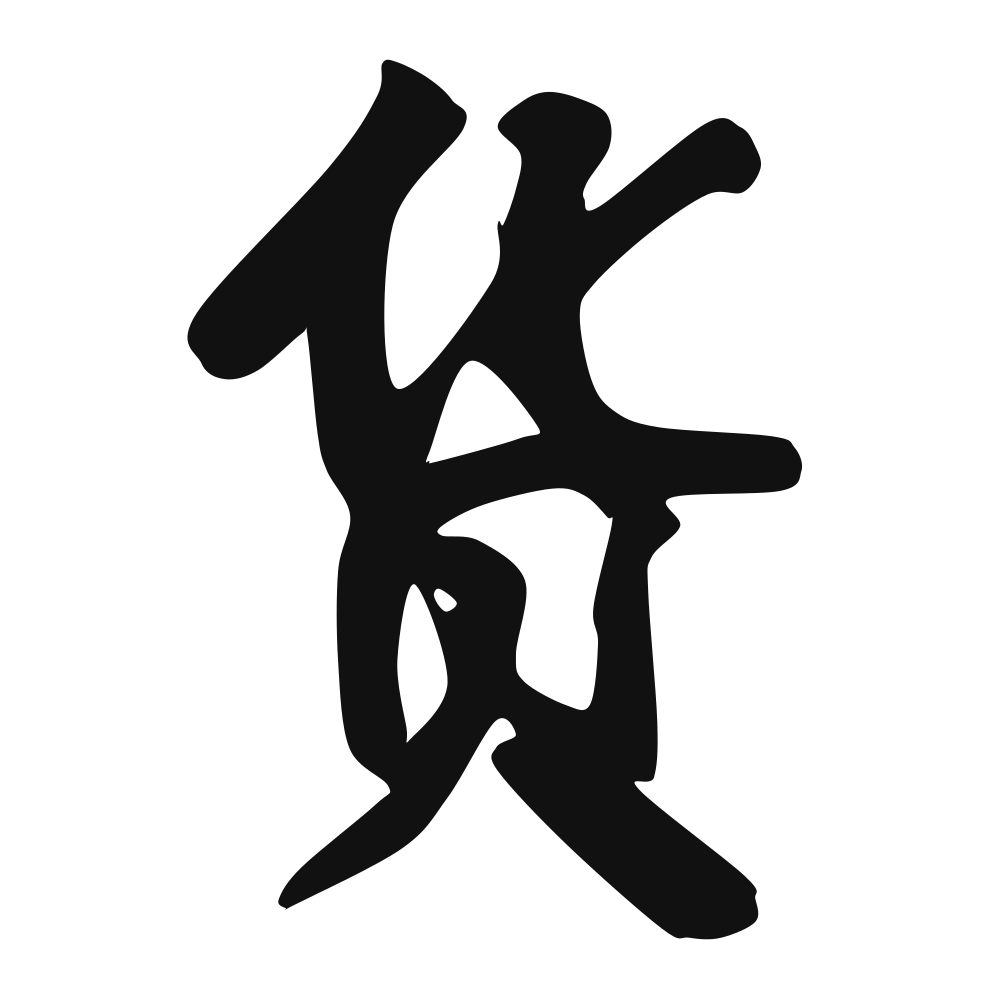
货
goods; money; commodity
Closest English meanings
goods·cargo
The Calligrapher — Huáng Bósī 黄伯思
Song calligrapher and theorist renowned for his seal and clerical script.
Song calligrapher (), master of seal script/clerical script — known for 《东观余论》. Song dynasty
Cultural Story
Zhang Zeduan's scroll, Along the River During the Qingming Festival, lays out the huò of a Song city, the stalls and carts of Bianjing piled with cloth, fruit, and grain. The character huo is that ware, the huo wu a boat disgorges at the wharf. From the painted street the word passed to bai huo, the hundred goods of the market, and to the huo tan where a vendor calls his price.
Common words & phrases
- 货物 goods
- 货运 freight
- 进货 stock up
- 百货 general merchandise
- 货摊 stall
Read the story behind the character
A market sets the huo tan with the morning's vegetables, and a shop jin huo for the holiday rush. The port logs huo yun by the ton, and a buyer browses bai huo online. The character huo still names the goods moved from hand to hand, from the Song street to the cart.
Why this character belongs on skin
In the marketplace everything has its price and its weight, and the word for the cargo, the wares, the very stuff of exchange is 货. 货物 is goods; the merchant's life is the moving of it from where it is scarce to where it is needed. But 货 also names a person spoken of coarsely — a fellow, a piece of work — and there is a Buddhist sorrow in that: how easily the human becomes the commodity. To handle 货 well is to know value without mistaking it for soul. There is a trader's wisdom in the man who has seen both boom and ruin and still deals square. Wear this character near the hand that counts, a mark of the economy you survived. 货 moves; you are not it. Ink it as a line between what you own and what owns you — the reminder that the goods pass through, and you were never the merchandise.
Own this character
Purchase delivers the original SVG of this glyph, brushed by Huáng Bósī 黄伯思, ready to place on skin, paper, or screen.