
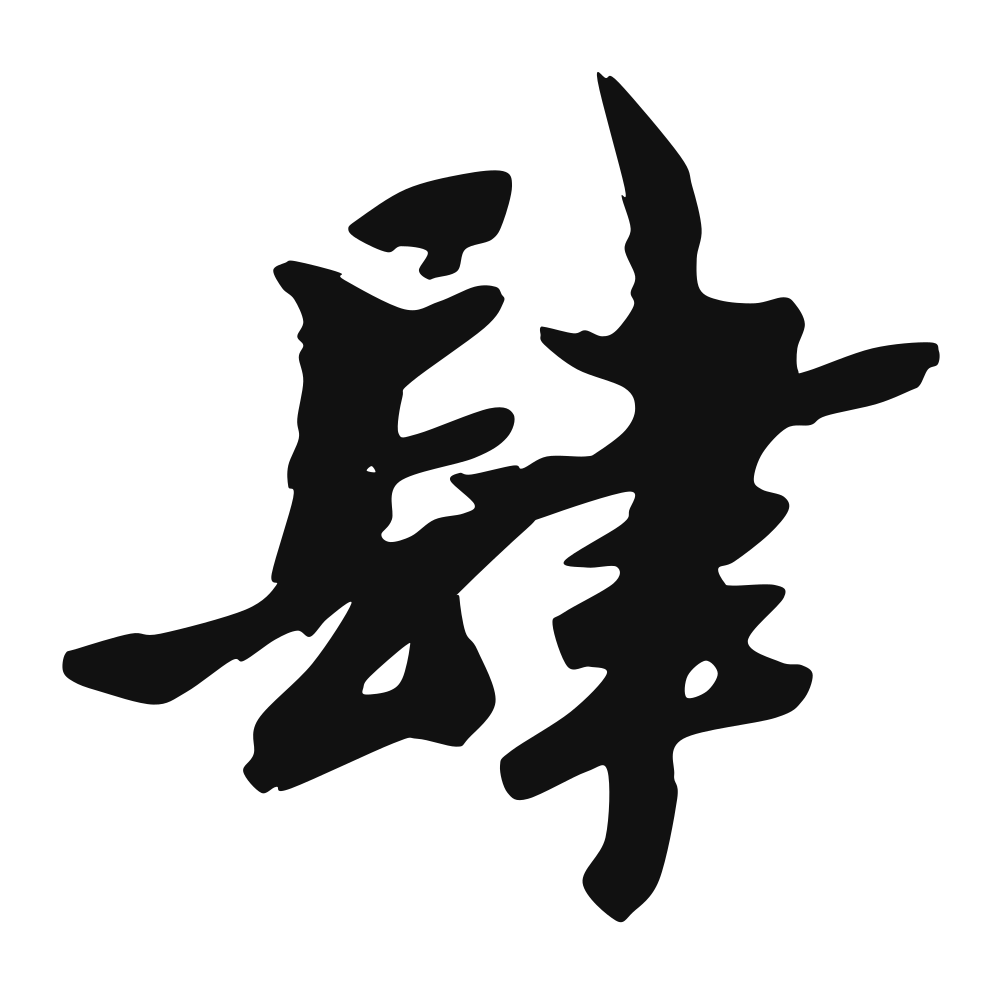
肆
肆 (sì) — unrestrained, bold; (archaic) shop/market. Long 長 + 聿: to stretch out — extended to 'free, unrestrained'. Classical life: 肆无忌惮 — reckless without shame (negative); but 肆 also means 'to display fully'. Grammar: free morpheme — also: four (banker's anti-fraud numeral); unrestrained; wanton; (literary) shop
Closest English meanings
reckless·shop·unrestrained
The Calligrapher — Huáng Dàozhōu 黄道周
Ming loyalist whose upright regular script matched his character.
Ming calligrapher (1585–1646), master of regular script/running script — late-Ming loyalist martyr whose compressed, stormy script mirrors his life. Ming dynasty
Cultural Story
肆 first meant to spread out and display — butcher stalls spread in the marketplace gave the wineshop its name. From display came abandon: the Analects contrasts an older, franker unruliness with modern pettiness, and chroniclers reserved their harshest verb for armies that swept through provinces like weather, plundering as they passed.
Energy Reading
Metal (金)
Comparative symbology, not fortune-telling.
Common words & phrases
- 放肆 presumptuous · wanton
- 肆意 wantonly · recklessly
- 大肆 wantonly · vigorously
- 酒肆 wineshop · tavern
- 肆掠 plunder · ravage
Read the story behind the character
The two senses still split lives: a tabloid 大肆 (wantonly, vigorously) exaggerates a rumor; a toddler turns 放肆 (presumptuous, wanton) in a quiet train carriage; a driver 肆意 (wantonly, recklessly) cuts across three lanes. Meanwhile the older word stays commercial — a renovated 酒肆 (wineshop, tavern) opens beside the canal, its owner unaware the sign is three thousand years old.
Own this character
Purchase delivers the original SVG of this glyph, brushed by Huáng Dàozhōu 黄道周, ready to place on skin, paper, or screen.