
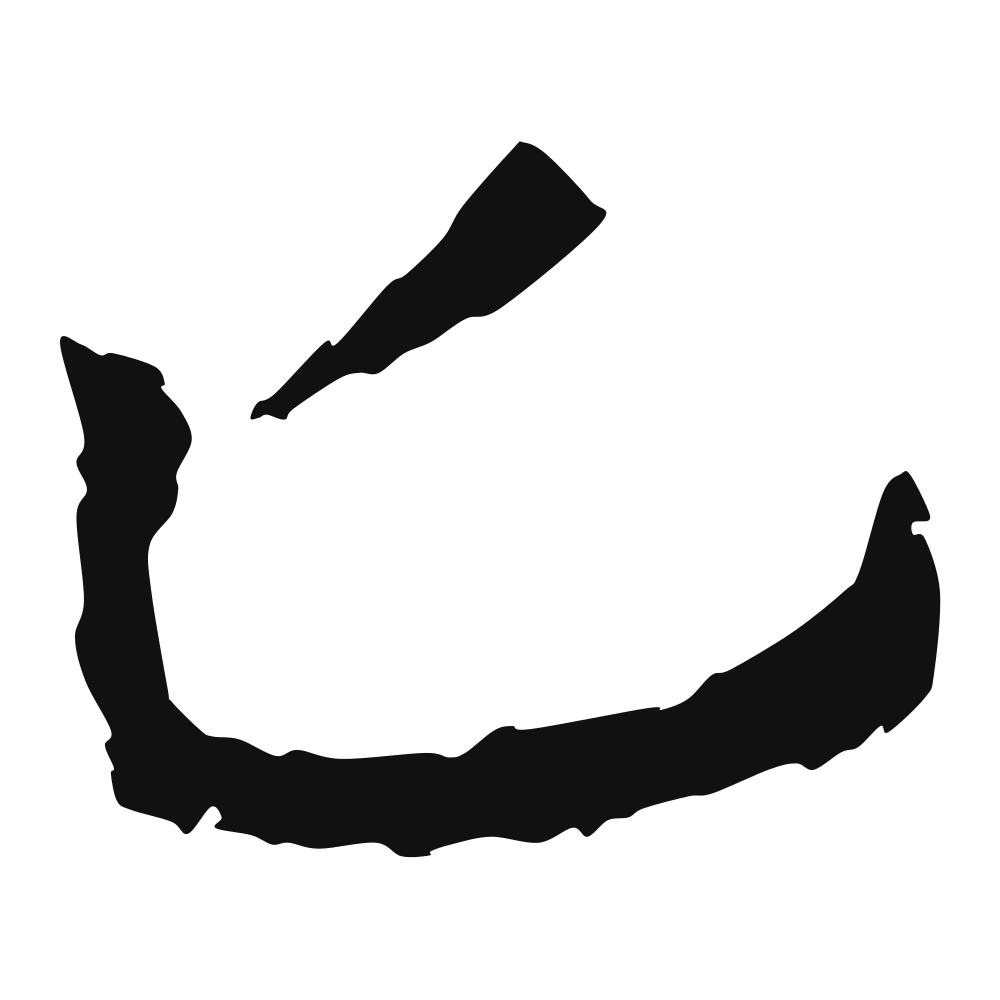
匕
dagger; ladle; ancient type of spoon
Closest English meanings
dagger·spoon·ladle
The Calligrapher — Huáng Xiàng 皇象
Wu-kingdom master of 'chapter cursive' (zhangcao); his Jijiu Zhang is its standard model.
三国吴 calligrapher (生卒年不详(三国吴)), master of clerical cursive — known for 《急就章》松江本. Wu kingdom (Three Kingdoms)
Cultural Story
Jing Ke carried a 匕首 — a short dagger — rolled inside the map he unrolled before the Qin king, the most famous blade in the histories. The same graph 匕 was also the bronze scoop at a Zhou feast, laid beside the meat. One object to eat with, one to kill with, sharing a shape.
Common words & phrases
- 匕首 dagger
- 匕匙 spoon
Read the story behind the character
A collector catalogs a 匕首 from a tomb exhibit; 匕匙 is a word almost no one uses, surviving in dictionary entries. On screen the character appears in costume dramas about assassins and in the name of a kitchen tool no shop sells. The ancient double life — spoon and knife — is now only a note in a footnote.
Why this character belongs on skin
There is a character that holds both the spoon and the dagger. 匕 is the ancient pictograph of a ladle — the thing that brings food to the mouth, intimacy made of bronze. But turn it in the light and the same shape is a blade, the short knife at the belt. The Chinese never split them cleanly; to feed and to fell share a single stroke. To carry 匕 is to know your own edge — that you are capable of the tender and the terrible, often with the same hand. It is the mark of someone who has fed a lover and drawn a line, who understands the spoon and the knife are kin. Ink it near the pulse and you keep both truths: the gentle reach, the sudden cut. We are not one or the other. We are the implement at the table, and we decide, each time, which way to turn.
Own this character
Purchase delivers the original SVG of this glyph, brushed by Huáng Xiàng 皇象, ready to place on skin, paper, or screen.