
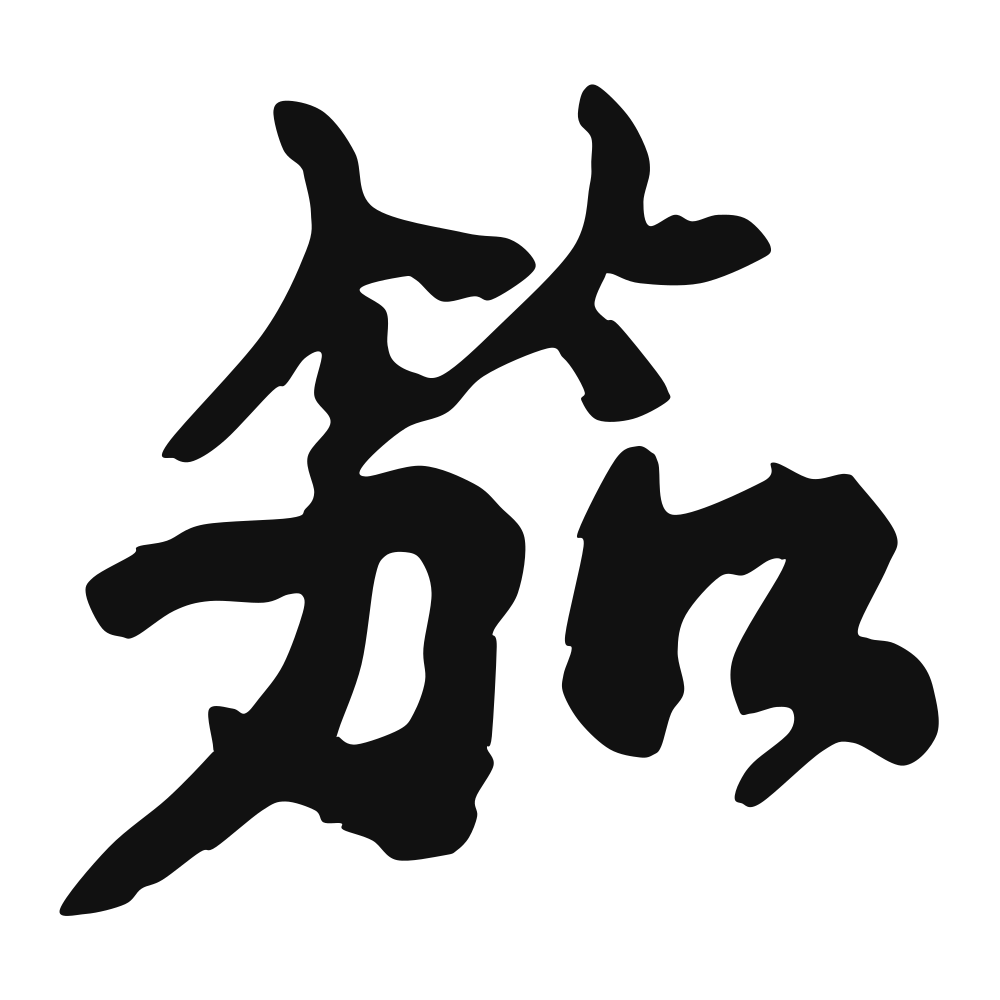
The Calligrapher — Kāng Yǒuwéi 康有为
Qing reformer and theorist who championed stele-based calligraphy.
Qing calligrapher (), master of regular script — Qing reformer-scholar who championed the rugged stele-school aesthetic. Qing dynasty
Cultural Story
The 笳 was the nomads' reed horn, its sound the very timbre of the frontier. Cai Wenji, captured among the Xiongnu, poured her exile into the Eighteen Songs of the Hujia; generals blew it at dawn watch. To Han ears, 笳声 meant homesickness at the wall.
Common words & phrases
- 胡笳 Hu pipe · reed instrument
- 笳声 pipe sound
Read the story behind the character
胡笳 (nomad reed pipe) now means heritage music: ensembles revive it on stage, film scores borrow its moan for steppe scenes, and the Hujia Eighteen Beats appear in guqin recital programs. Tourists at Inner Mongolia grassland camps try the 笳声 (sound of the hujia) between horseback rides.
Why this character belongs on skin
The hujia — reed horn of the steppe — wailed across Han frontier nights until homesick soldiers wept into their armor and the horses grew restless in the cold corrals. 笳 is that sound: thin, desolate, beautiful past all bearing, blown by herders who learned music from wind over grass. Cai Wenji heard it for twelve years of captivity among the nomads and turned her grief into poems that outlived the dynasty that lost her. Music made from a hollow reed, the Buddhists note with a small smile, is emptiness singing — no reed, no song; no absence, no ache worth a melody. All horns, everywhere, blow the same wind; only the longing differs, and longing is the one thing no border ever stopped. Listen at dusk, when the wind drops low over the fields. Something in you will answer a call you never heard before.
Own this character
Purchase delivers the original SVG of this glyph, brushed by Kāng Yǒuwéi 康有为, ready to place on skin, paper, or screen.