
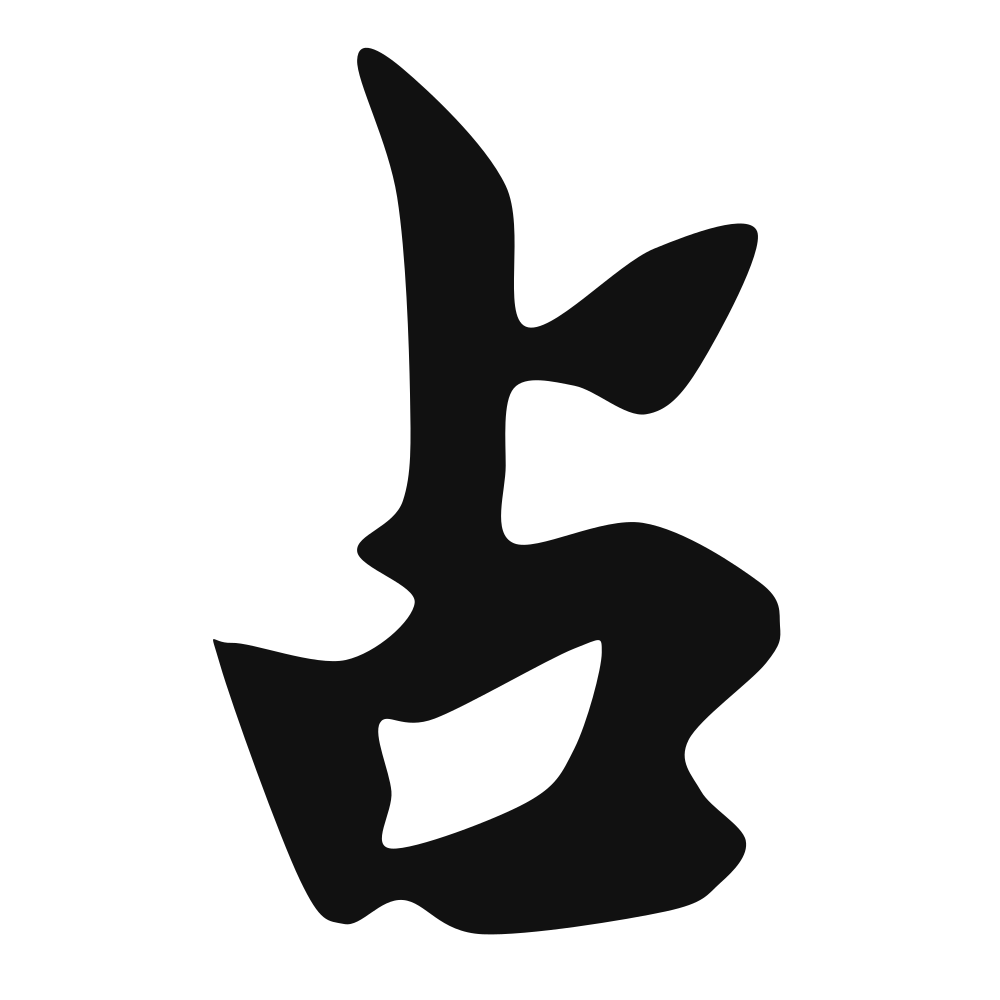
占
to observe; to divine; to take possession of; to occupy; to take up
Closest English meanings
occupy·account for·take·seize
The Calligrapher — Kē Jiǔsī 柯九思
Yuan painter-calligrapher renowned for his robust running script.
Yuan calligrapher (), master of running script — known for 《老人星赋》. Yuan dynasty
Cultural Story
The Yijing teaches 占 — to read the hexagram and so take the moment's measure; the word later widened to 占据, holding ground by force. 占頒 is the general's verb, 占用 the clerk's small claim on a desk. 占卜 kept the old sense, the question put to the stalks before the march.
Common words & phrases
- 占领 occupy · capture · seize
- 占据 occupy · hold · take up
- 占用 occupy · take up · use
- 占有 possess · occupy · hold
- 占卜 divine · fortune-tell · augur
- 占比 proportion · percentage · share
Read the story behind the character
A chain 占頒 the corner with a new store; 占擞 is the shelf a brand buys. 占用 the meeting room no one booked, 占有 the share a report graphs, and 占比 the slice a pie chart shows. 占卜 is the app a user opens before a date. The word holds from the battlefield to the screen.
Why this character belongs on skin
Long before it meant to take or hold, 占 was the act of reading—the crack of a turtle shell under heat, the bones consulted for what the future would not say aloud. To divine is to lean toward mystery with open hands; to occupy is to claim the ground the oracle pointed to. 占 holds both, the asking and the taking, the prayer and the possession. The West knows this double motion in the lots cast by apostles and the land claimed in a name. To wear 占 is to admit you have read the signs and then stepped onto the marked square anyway, staking yourself on a hunch older than reason. Carry it like a gambler's ink, the quiet wager of a person who consulted fate and then walked into it. Let it sit where your hand rests when you think, and mean you read, and you dared.
Own this character
Purchase delivers the original SVG of this glyph, brushed by Kē Jiǔsī 柯九思, ready to place on skin, paper, or screen.