
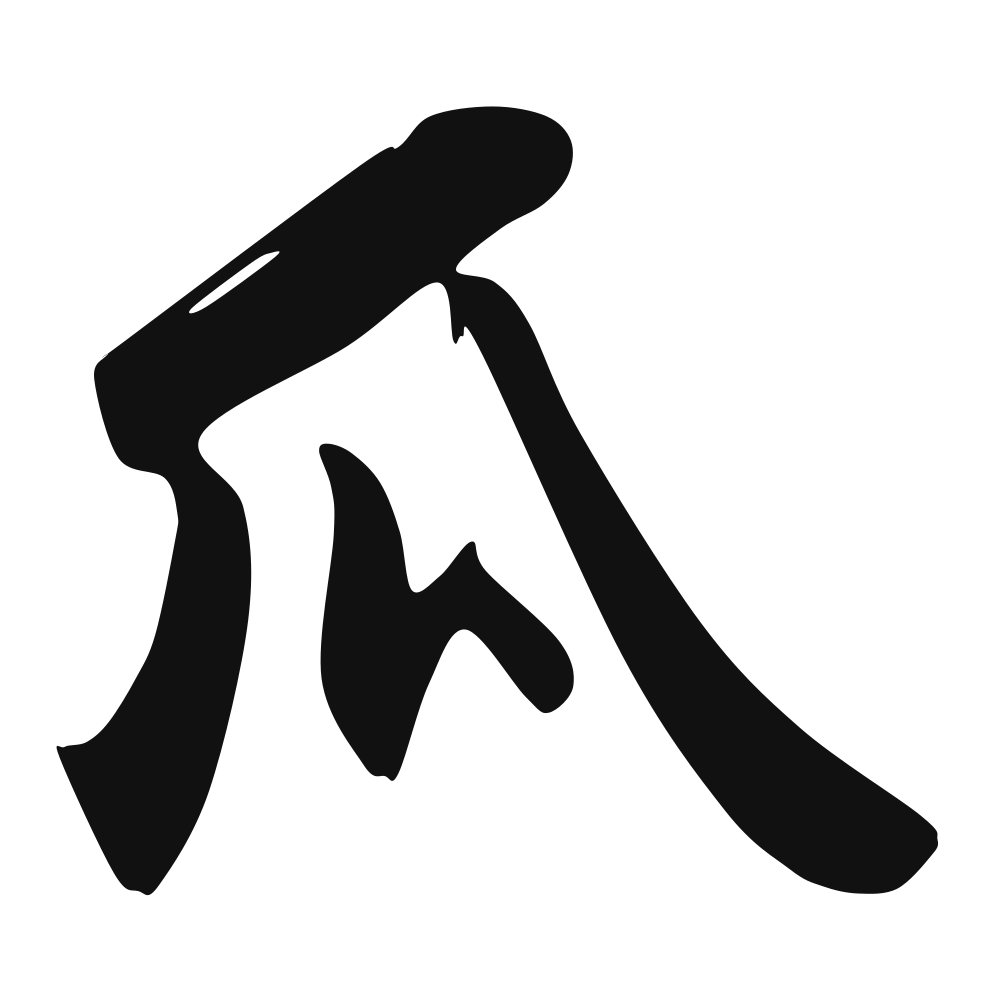
瓜
melon; gourd; squash; (slang) a piece of gossip
Closest English meanings
melon·gourd
The Calligrapher — Kǒng Línzhī 孔琳之
Liu Song calligrapher famed with Yang Xin as 'Yang-true, Kong-grass'; master of cursive script
南朝宋 calligrapher (), master of running script — known for 《日月帖》. Liu Song dynasty (Southern Dynasties)
Cultural Story
The pictograph shows a melon hanging from its vine, and the Book of Songs used the great-little melon vine, 绵绵瓜瓞, as an image of generations multiplying. 'Melon splitting', 瓜分, became the grim word for powers carving up a weak country's territory.
Common words & phrases
- 西瓜 watermelon
- 南瓜 pumpkin
- 瓜子 melon seeds
- 黄瓜 cucumber
- 瓜果 melons and fruits
Read the story behind the character
The melon never left the table: cold 西瓜 watermelon in summer, 黄瓜 cucumber in every salad, pumpkin porridge in grandma's kitchen, a bowl of 瓜子 sunflower seeds cracked during the Spring Festival gala. And the internet added new slang — onlookers 'eating melon' as drama unfolds.
Why this character belongs on skin
Round, heavy, and patient — the melon hangs all summer, asking nothing, until the day it is simply ready. In Chinese thought, 瓜 became a quiet emblem of fruitfulness, of lines that multiply and continue: the old phrase speaks of gourds trailing on, generation after generation, never breaking. It is the body's own promise — that what we tend will ripen, that sweetness takes time and cannot be hurried. To ink it is to make peace with the slow work of growing something that outlives you. We live in the age of the instant, the harvest forced, the fruit picked green. But the melon laughs at clocks. Carry 瓜 and you carry a vow to let things come to fullness in their own season, and a quiet hope that something of you will trail on, green and unbroken, after the season ends.
Own this character
Purchase delivers the original SVG of this glyph, brushed by Kǒng Línzhī 孔琳之, ready to place on skin, paper, or screen.