
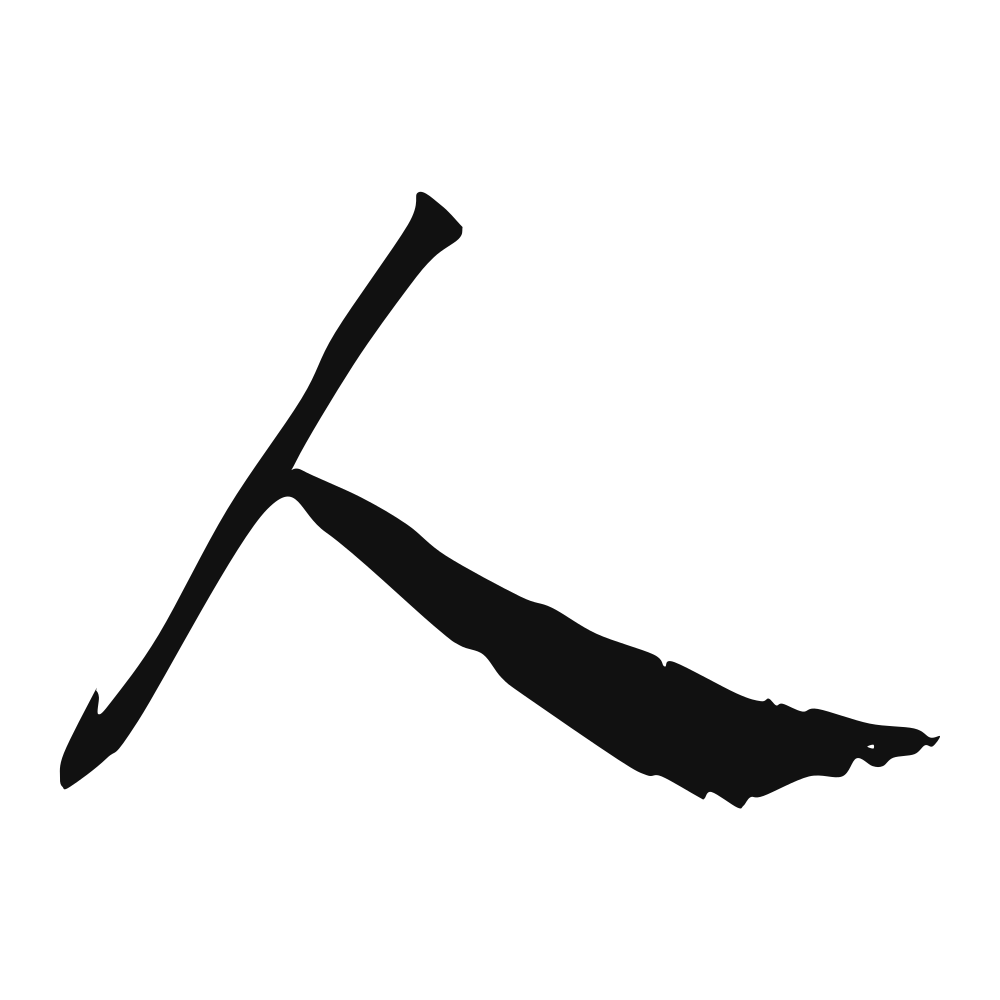
人
人 (rén) — person, human. Pictograph of a standing person in profile. Classical life: 仁者爱人 — the humane love others; 人 is the Confucian unit of care. Grammar: free morpheme — also: person; people
Closest English meanings
person·people·human·man·human being
The Calligrapher — Lǐ Jiànzhōng 李建中
Early-Song 'Li Xitai', a Tang-to-Song bridge figure famed for calm, classical running script.
Song calligrapher (945–1013), master of running script — known for 《土母帖》. Song dynasty
Etymology & Meaning · 字义溯源
2 · The Character: 人 人 (rén, 2nd tone) is, in Xu Shen, the crown of creation: 天地之性最貴者也 — 'the noblest of the natures of heaven and earth.' The form pictures a standing figure, arms and legs. The Liji (礼运) enlarges it: '人者,天地之德,陰陽之交,鬼神之會,五行之秀氣也' (humanity is the virtue of heaven and earth, the meeting of yin-yang, the confluence of spirits, the finest vapour of the Five Phases). The Shujing (吕刑) '一人有慶,兆民賴之' (one person blessed, the myriad rely on him); the Mengzi (万章下) asks of 其人 (that person). As a free morpheme 人 means 'person, humanity,' and is foundational — 人民, 人格, 仁者爱人. Honest disclosure: 人 is the radical of half the language and on skin is a single upright stroke-pair; it reads as 'person' or, in Japanese, as hito. It is strong alone (humanity itself) but abstract — pair with a virtue (仁, 真人) if you want a fuller idea. The Wuxing attribution is confident: 人 is Metal (金), the precious, defining edge.
Cultural Story
人 is the side view of a standing person, the most basic graph in the language, the figure that walks, works, dies. The 論語 is built on it: 仁, humanity, is 人 with two strokes, the person made good by relation. 人口 was counted for the tax; 老人 honored at the gate. The character is the species and the individual, the body that all the other words dress, feed, and bury.
Where a Western reader can stand: Li Jianzhong (945–1013), nicknamed Li Xitai, was an early Northern Song calligrapher who kept Tang structural solidity while adding a relaxed, personal warmth characteristic of early Song taste; Su Shi later esteemed him. 人 is the person, the noblest of creation. In his mellow running script the char becomes a calm, human figure — humanity written with a gentle breath, the individual as a friend rather than a monument. For the client seeking a calm, humanistic mark, this is the person at its most approachable: warm, unhurried, deeply civil.
Energy Reading
Metal (金)
Comparative symbology, not fortune-telling.
Common words & phrases
- 人们 people · everyone · folks
- 工人 worker · laborer · workman
- 老人 old person · elder · the aged
- 人口 population · people
- 本人 oneself · in person · I myself
Read the story behind the character
人们 is the vague people of headlines; 工人 the migrant on the site. 老人 is the priority seat and the parent; 人口 the statistic that decides a city's schools. 本人 is the I on the form, the party present. The character is the count and the category, the standing figure behind every role. You use it to name the human in the system, the worker, the elder, the self who signs.
Why this character belongs on skin
Two strokes leaning into each other, and that is a person. 人 is the most human character in the language — two legs in motion, two figures who cannot quite stand alone. The sages knew it: a human is not a solitary noun but a relationship, one stroke propping the other. We are the only animal that walks upright and wonders why. To wear 人 is to make peace with that double-ness — the part of you that needs and the part that is needed. It is the smallest possible confession of dependence, inked plainly so you never forget. In a culture that sells self-sufficiency like a religion, 人 is heresy and truth at once: you are not complete by yourself. Some marks shout; this one simply stands, two quiet lines holding each other up, the way we always have. Let it be the first word on your skin, the root of every story you'll tell.
Own this character
Purchase delivers the original SVG of this glyph, brushed by Lǐ Jiànzhōng 李建中, ready to place on skin, paper, or screen.