
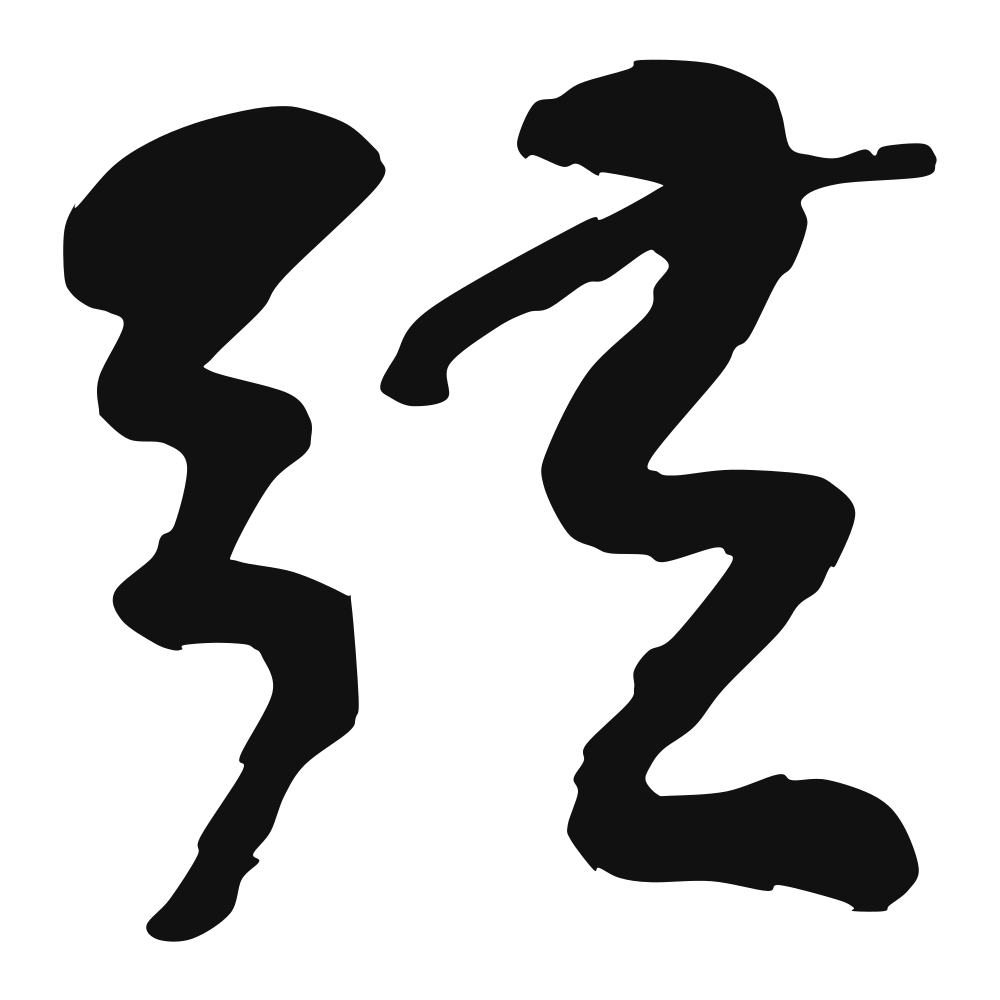
弦
bow string; string of musical instrument; watchspring; chord (segment of curve); hypotenuse
Closest English meanings
string·bowstring
The Calligrapher — Lǐ Jiànzhōng 李建中
Early-Song 'Li Xitai', a Tang-to-Song bridge figure famed for calm, classical running script.
Song calligrapher (945–1013), master of running script — known for 《土母帖》. Song dynasty
Etymology & Meaning · 字义溯源
2 · The Character: 弦 弦 (xián, 2nd tone) is defined in the Shuowen Jiezi as 弓弦也。从弓,象絲軫之形 — 'the bowstring; from 弓, with the shape of the silk on its peg.' Kangxi files it at 8 strokes under the 弓 radical. The string is the classical image for tuning a temperament. 《韓非子·觀行》 records that 西門豹之性急,故佩韋以自緩;董安于之心緩,故佩弦以自急 — the hot-tempered official wore soft leather to slow himself down; the sluggish one wore a bowstring to quicken himself. 《禮記·文王世子》 sets the school year by it: 春誦,夏弦, 'in spring recite, in summer play the strings.' And 《呂氏春秋·本味》 gives 伯牙絕弦 — when Zhong Ziqi died, Bo Ya cut his strings and never played again, the origin of 知音, 'the one who hears your tone.' Free morpheme, positive. Honest note: 續弦, literally 'to replace a broken string', is the old euphemism for a widower remarrying, and 弦 also names the half-moon.
Cultural Story
弦 is the string — of bow or lute. 孔子 taught with 弦歌, song and string together, and 伯牙 broke his zither when 子期 died, for no ear was left to hear the mountain and the water he played. The string is the line between two souls that can snap.
Where a Western reader can stand: Where a Western reader can stand: 'string / bowstring / chord' — the tension you tune rather than the note you resolve — carrying 知音, the friend who hears your tone, from Bo Ya's broken strings. Honest caveat: not 'harmony' (that is 和); 續弦 is a widower-remarries euphemism; and 弦 also names the quarter-moon. Li Jianzhong's unhurried early-Song brush lands it as tone rather than strain, and his own 知音 came late — Su Shi admired him a generation after he died.
Common words & phrases
- 弦乐 string music
- 弓弦 bowstring
- 和弦 chord
- 心弦 heartstrings
- 管弦 orchestra · wind and string
Read the story behind the character
弦乐 is the section a film score hides its grief in, 和弦 the shape a guitarist fingers at a campfire, 心弦 the heart a speech is said to pluck. The bowstring is a wire and a chord; we still say the right sound touches the string no hand can see.
Why this character belongs on skin
Pluck it and the room becomes a different country. 弦 is the string—of the bow that looses the arrow, of the lute that looses the heart. The character is drawn from bow and dark, as if the string were a slender night stretched between two certainties, singing when struck. The musician knows a single 弦 can hold a whole grief; the archer knows the same string can end a war. To wear it is to honor the taut, the tuned, the readiness to sound or to strike at the slightest touch. Let it lie along your throat or your wrist, where vibration begins. It is a mark of the responsive—the one who feels the wind and answers, who does not need a great force to be moved. The ink is your string, kept always at pitch. Some lives are blunt instruments; yours is an instrument, and even in silence the tension hums, a quiet proof that you are alive and waiting for the hand that knows the tune.
Own this character
Purchase delivers the original SVG of this glyph, brushed by Lǐ Jiànzhōng 李建中, ready to place on skin, paper, or screen.