
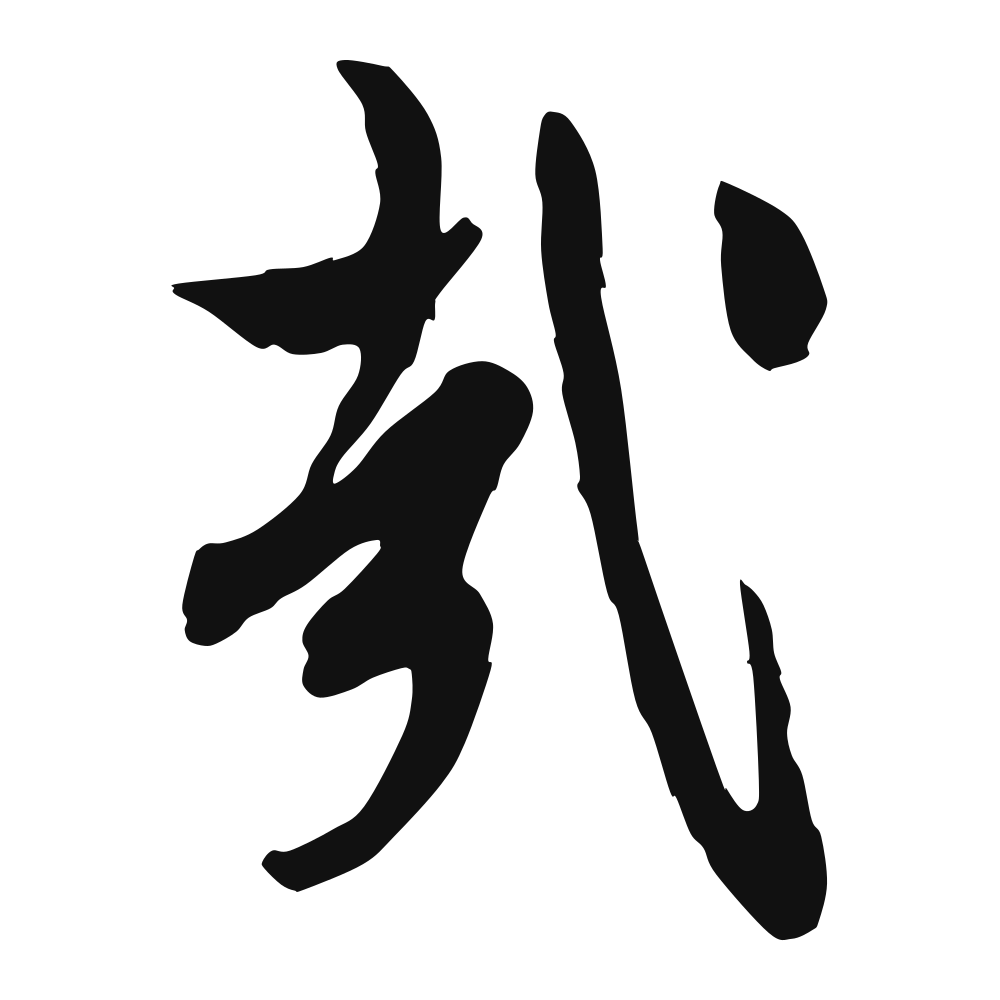
哉
(exclamatory or interrogative particle)
Closest English meanings
(exclamatory particle)
The Calligrapher — Lǐ Lóngjī 李隆基
Tang Emperor Xuanzong who wrote the Shitai Xiaojing in eight-division clerical script (bafen).
Tang calligrapher (), master of 八分/regular script — known for 唐玄宗,《石台孝经》. Tang dynasty
Cultural Story
In the classical tradition: 哉 is an exclamatory particle found throughout the classics; the 論語 ends reflections with it, and 孟子 cries 善哉, 'excellent!' or 'well said!' The historian laments 嗚呼哀哉, 'alas, dead and gone,' over fallen states, while a skeptic asks 何哉, 'why is this so?' A free spirit sighs 快哉, 'how delightful!' before the river wind. 哉 carries the ancient voice of judgment, wonder, and grief.
Common words & phrases
- 善哉 excellent! · well said!
- 怪哉 strange!
- 呜呼哀哉 alas · dead and gone
- 何哉 why? · how so?
- 快哉 how delightful!
Read the story behind the character
In the modern world: Though 哉 is classical, it survives in set phrases people still quote: a teacher praises a clever answer with 善哉 — excellent, well said — and a friend jokes 怪哉, strange indeed, at a weird coincidence. At a funeral scroll you may read 嗚呼哀哉, alas and gone, while a poet tweets 快哉, how delightful, after a good meal. It lends any sentence an old, ringing weight.
Own this character
Purchase delivers the original SVG of this glyph, brushed by Lǐ Lóngjī 李隆基, ready to place on skin, paper, or screen.