
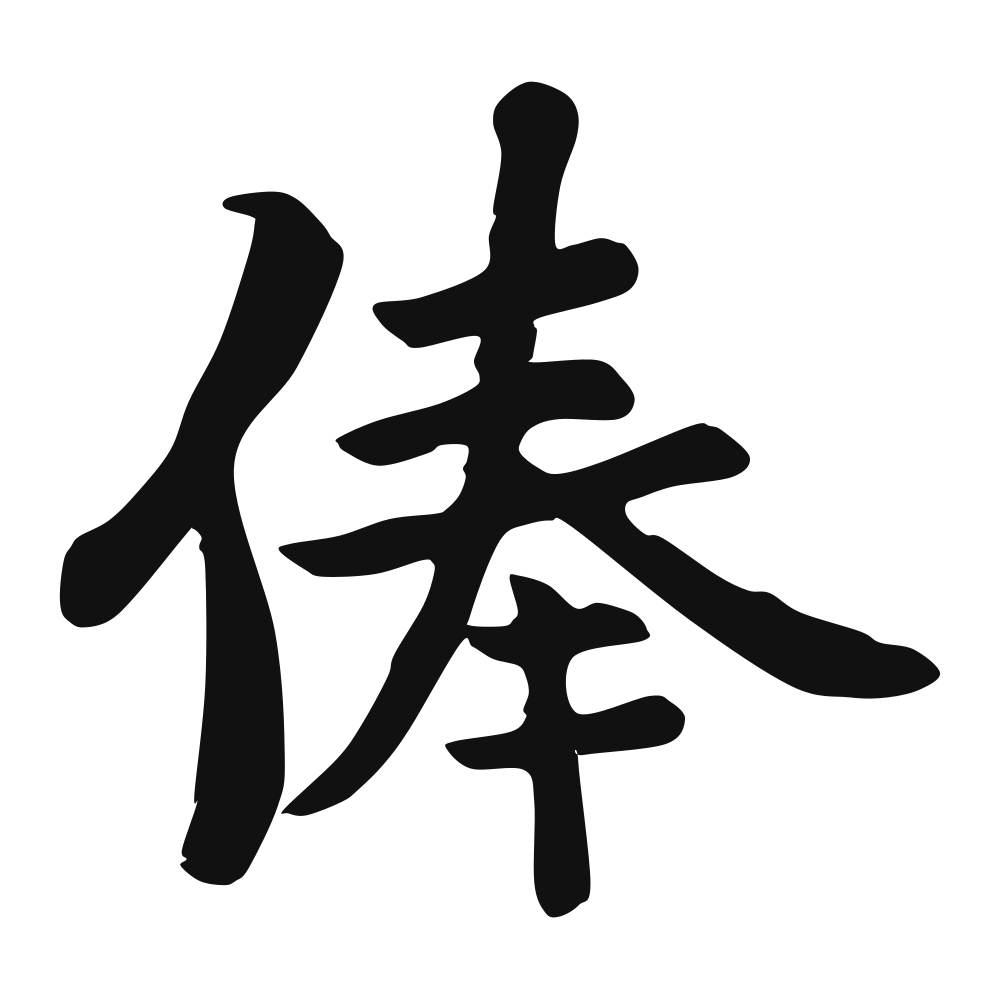
俸
(bound form) salary; stipend
Closest English meanings
salary·stipend·official pay
The Calligrapher — Lǐ Yōng 李邕
Tang running-script master famed for his stele inscriptions.
Tang calligrapher (678–747), master of running script — known for 《麓山寺碑》(李北海). Tang dynasty
Cultural Story
俸 is the official's pay. The 唐书 sets the 俸禄 by rank, grain and silk for the court; a retired clerk lived on 薪俸 from the county. To draw 俸 was to eat by the state's hand. The character is the wage that kept the ladder of office fed.
Common words & phrases
- 俸禄 official salary · stipend
- 薪俸 salary · pay
Read the story behind the character
A clerk checks the 俸禄 on the payslip; the retired man's 薪俸 arrives each month. The word now names any official salary — on the HR form, in the tale of the honest magistrate. Pay for public office, grain turned to digits — this character still signs the monthly wage that feeds a household.
Why this character belongs on skin
The character pairs a person with harvest: the paid rice of a lifetime's service. In the old empire, an official's stipend was measured in bushels of grain, and the whole moral drama of a career lived inside this one word. Would the salary be earned honestly? Would the office serve, or only collect? Confucian writing returns to it again and again—a shameful stipend was one taken without worthy work, an honorable one was grain bought with genuine care for the people. As a tattoo, this glyph is unexpectedly profound. It is for those who want their earnings to mean something: the nurse, the teacher, the craftsman, anyone who intends that what they take from the world be balanced by what they gave. Ink it on the forearm, the working arm, near where the wages actually flow from. It is a private audit, a vow: may every measure I receive be one I can look at in the mirror. Honest bread. Clean rice. No other kind.
Own this character
Purchase delivers the original SVG of this glyph, brushed by Lǐ Yōng 李邕, ready to place on skin, paper, or screen.