
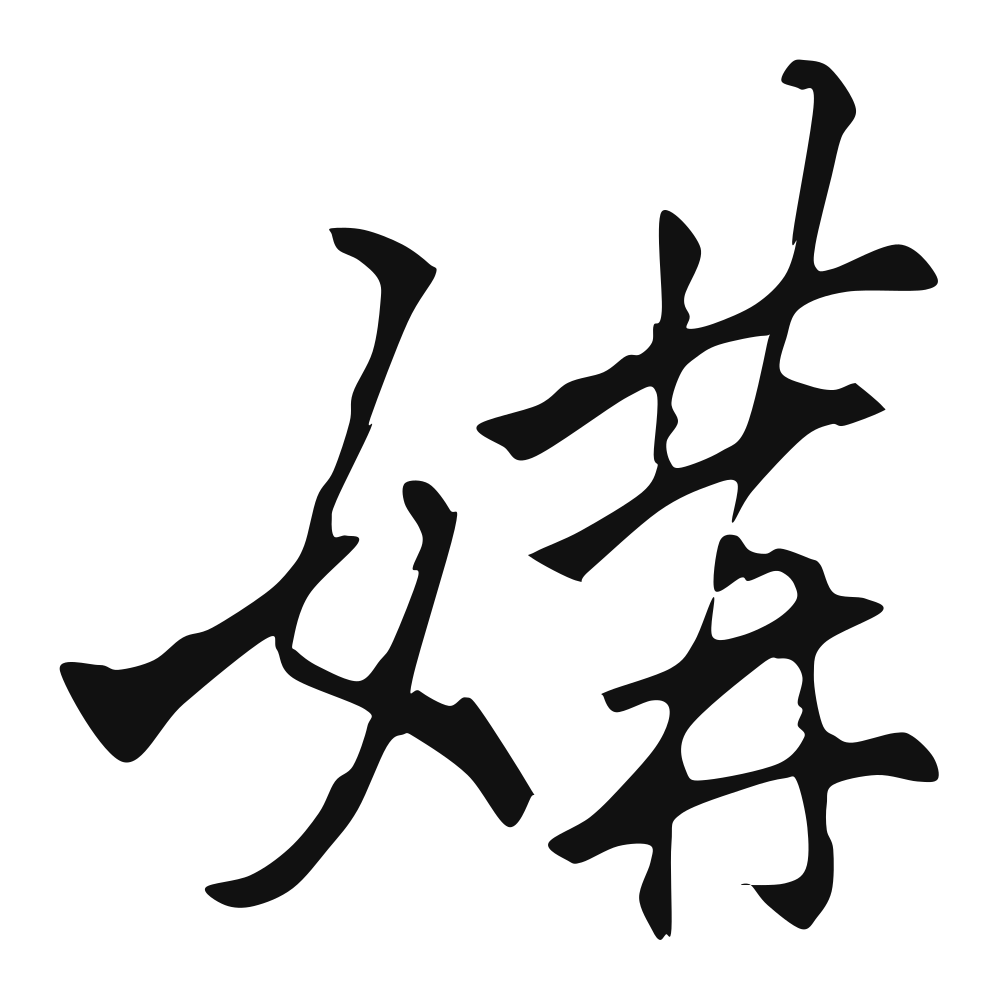
媾
to marry; to copulate
Closest English meanings
to marry·to ally·to copulate
The Calligrapher — Lǐ Yōng 李邕
Tang running-script master famed for his stele inscriptions.
Tang calligrapher (678–747), master of running script — known for 《麓山寺碑》(李北海). Tang dynasty
Cultural Story
The Spring and Autumn annals use 媾 for concluding peace between states: to 婚媾 was to wed two houses by treaty, while 交媾 named the joining of bodies in medical and Daoist manuals on conception. The word always meant a binding union, whether of clans or of flesh. Later histories reserve 媾和 for negotiated surrender.
Common words & phrases
- 婚媾 marriage alliance
- 媾和 make peace · conclude peace
- 交媾 copulate · coitus
Read the story behind the character
News desks write 媾和 when rival governments sign a truce, and 交媾 appears in biology textbooks explaining reproduction. Dating columns borrow 交媾 only as clinical shorthand. The classical sense of two parties literally joined survives mostly in diplomatic prose and the dry language of medicine, far from any romance.
Why this character belongs on skin
It begins the way all unions begin — two strangers standing close enough that breath mingles before names are spoken. 媾 is the old word for coming together, for marriage, for negotiation and intimacy alike: the meeting of hands, houses, even warring clans who found peace in a shared bed and called it statecraft. Confucius saw kinship as the root of all order — the family as the first government, tenderness as the first law — and this character is where order takes its first risk. There is boldness in it. To 媾 is to bet your life on contact, to believe that closeness will not destroy you, that the border crossing is survivable and sweet. Every love is a small diplomatic miracle: two sovereignties agreeing to be changed. Ink does that too — it crosses the skin's quiet border and stays, a foreign power you invited. Something in you already knows you were never meant to remain untouched. Wear the joining. Open the gate.
Own this character
Purchase delivers the original SVG of this glyph, brushed by Lǐ Yōng 李邕, ready to place on skin, paper, or screen.