
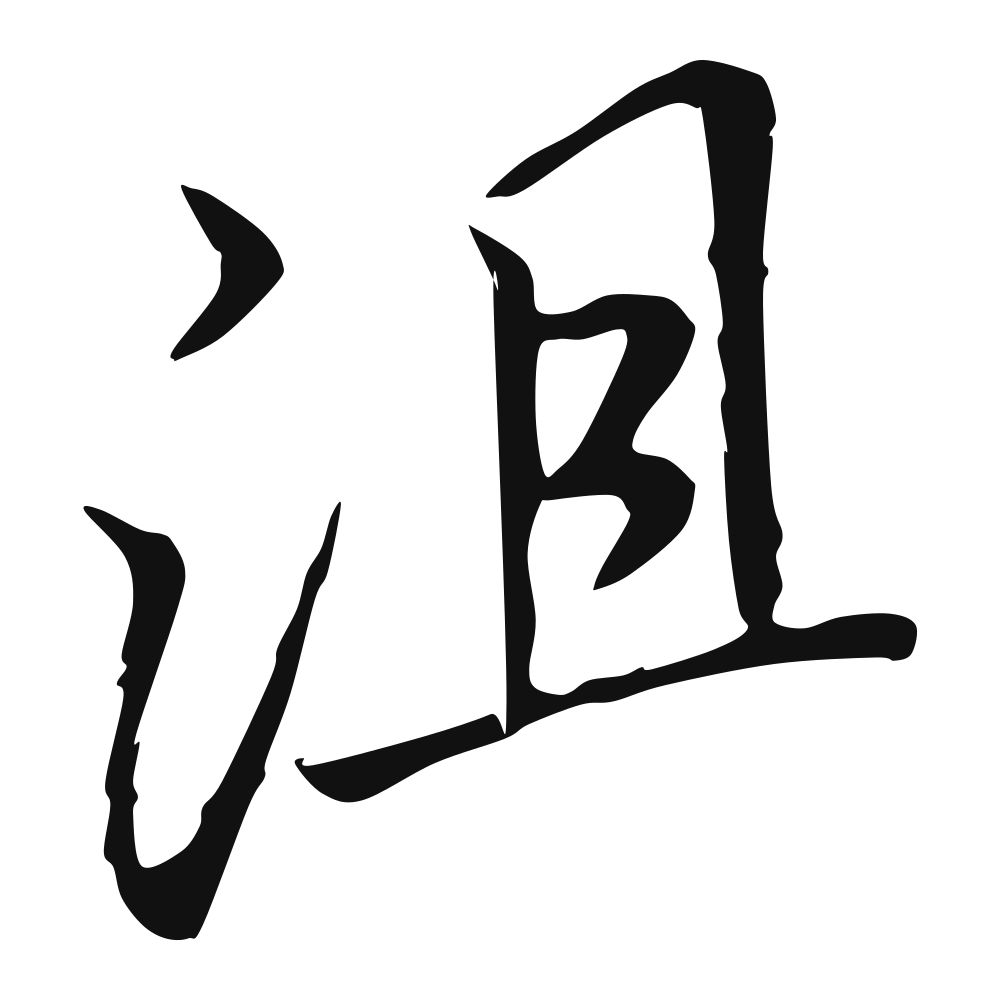
沮
to destroy; to stop
Closest English meanings
stop·dampen·dispirited
The Calligrapher — Lǐ Yōng 李邕
Tang running-script master famed for his stele inscriptions.
Tang calligrapher (678–747), master of running script — known for 《麓山寺碑》(李北海). Tang dynasty
Cultural Story
沮 means to dampen or halt; the 說文 gives to stop, to wet. A counselor might 沮遏 a rash act. The 論語 warns that worry 沮丧 the spirit. In histories a general's morale turns 沮丧 after a sudden, shameful defeat in the field.
Common words & phrases
- 沮丧 depressed · dispirited · frustrated
- 沮遏 check · prevent
Read the story behind the character
He felt 沮丧 (depressed, dispirited) after failing the exam. A wise friend 沮遏 (checks, prevents) his impulse to quit school. The team's mood turned 沮丧 (frustrated) when the client walked out. She 沮丧 (dispirited) slumped on the bus, replaying the harsh words.
Why this character belongs on skin
The fire was building, the plan was brave, and then something wet fell across it. 沮 is the water that checks you, the spring that seeps into the foundation and cools the ambition to nothing. We know it in the body as that sunk feeling, the will gone slack. But the character is not only defeat; it is also the natural stop, the necessary doubt that keeps a man from leaping off the cliff in the dark. To bear 沮 is to make peace with being dampened, with the days the spirit will not rise. The Stoics called it the obstacle; here it is simply water doing its quiet work. Let this mark sit close to the heart, a reminder that even stopped, you are still flowing, just underground, just for now.
Own this character
Purchase delivers the original SVG of this glyph, brushed by Lǐ Yōng 李邕, ready to place on skin, paper, or screen.