
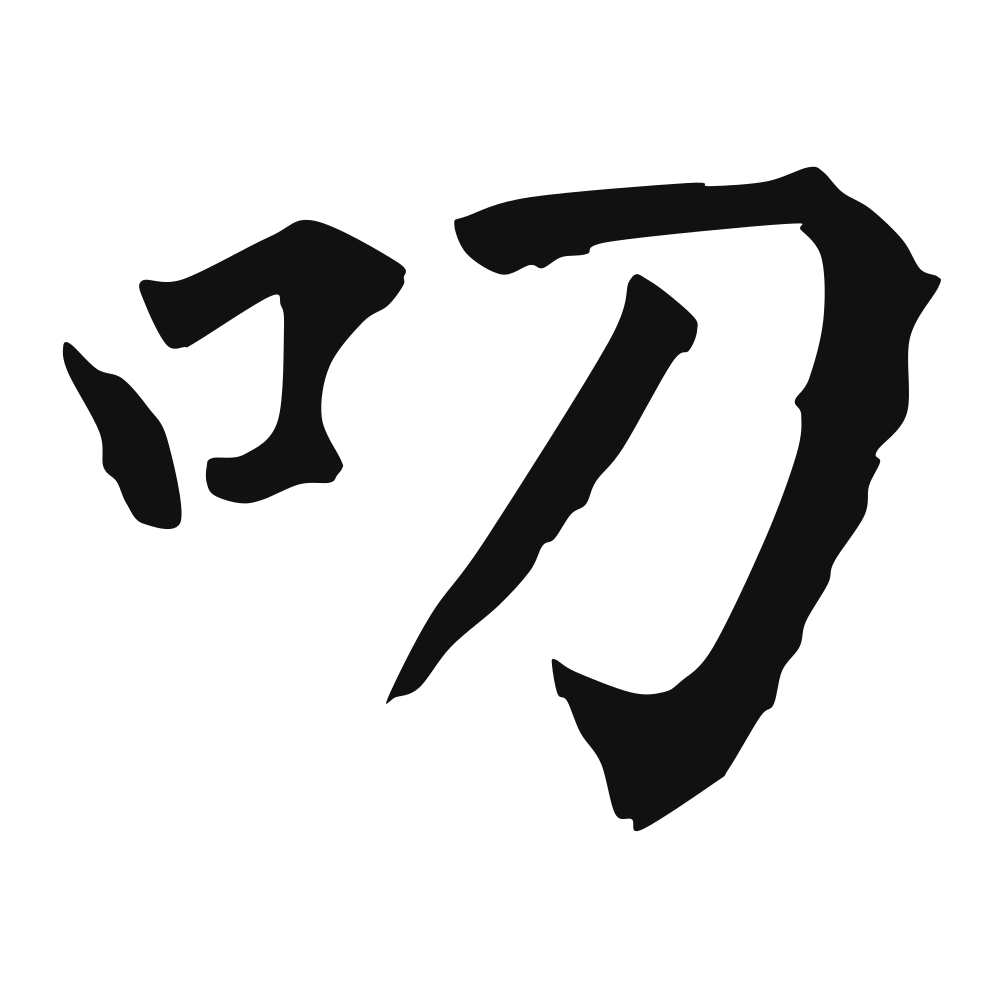
叨
garrulous; to receive the benefit of
Closest English meanings
talkative·chatter
The Calligrapher — Liǔ Gōngquán 柳公权
Tang regular-script master famed for 'bones' of strength; rival to Yan Zhenqing.
Tang calligrapher (778–865), master of regular script — Tang master of bone-strength regular script, paired forever with Yan Zhenqing as 'Yan sinew, Liu bone'. Tang dynasty
Cultural Story
叨 carried two tones: to chatter, and humbly, to receive. Wang Bo, in his Tengwang Pavilion preface, wrote that he had "humbly attended my father's teaching" -- 叨陪鲤对 -- borrowing the word for modest receipt of a benefit. At home the elder 唠叨, nagging from affection. The word held both the gift taken and the talk that will not stop.
Common words & phrases
- 唠叨 nag · chatter · wordy
- 叨扰 bother · disturb
Read the story behind the character
A grandmother 唠叨 about the cold and the missing scarf; a guest 叨扰 the host past midnight and apologizes at the door. The word runs the small courtesies and the small complaints -- the nag, the borrowed favor, the overstay. It names the talk that comes from caring and the apology that comes from having stayed too long, both spoken without much thought.
Why this character belongs on skin
We talk too much, and the talking is the love. 叨 is that — the endless chatter, the mother who will not stop reminding you to eat, the friend who runs on past the point because stopping would mean the moment ended. It is the mouth that cannot stay closed, not from foolishness but from fullness, from having too much life to contain. To carry 叨 is to honor the noise we make for each other, the redundant, tender唠叨 that proves someone is paying attention. Not every word needs to matter. Some need only to be said, again, by someone who cares. Ink it and you keep the sound of being fussed over, the small music of a voice that would rather talk to you than be quiet. The silence can wait.
Own this character
Purchase delivers the original SVG of this glyph, brushed by Liǔ Gōngquán 柳公权, ready to place on skin, paper, or screen.