
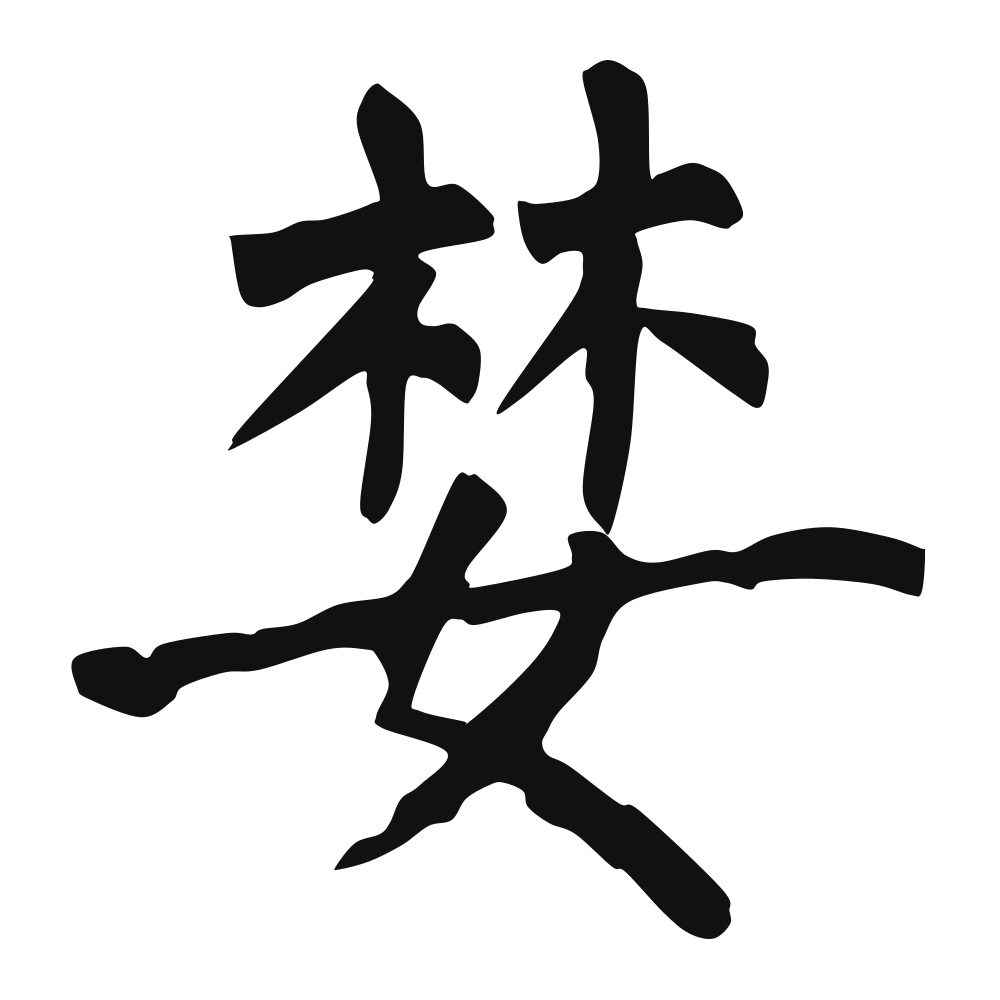
The Calligrapher — Liǔ Gōngquán 柳公权
Tang regular-script master famed for 'bones' of strength; rival to Yan Zhenqing.
Tang calligrapher (778–865), master of regular script — Tang master of bone-strength regular script, paired forever with Yan Zhenqing as 'Yan sinew, Liu bone'. Tang dynasty
Cultural Story
In the classical tradition 婪 joins "forest" and "woman" in a graph whose exact picture is debated; early texts use it for covetousness, and 貪婪 became the standing phrase for greed. Moralists warned that 婪, like a forest one cannot exhaust, devours restraint and invites ruin.
Common words & phrases
- 贪婪 greedy · avaricious
Read the story behind the character
In the modern world 婪 lives in the warning word 贪婪. A news story calls a corrupt official 贪婪; a fable teaches children that 贪婪 empties the soul. We joke about being 贪婪 for one more slice of cake, borrowing the serious word for playful excess. The character still names desire that overreaches.
Why this character belongs on skin
Two forests crown a single woman in this character, and the old scribes meant it as a warning: desire that reaches for more and more until the arms can hold no more. Lán is greed, the hunger that feeds and grows hungrier, the ghost with the narrow throat who eats the world and stays empty. The Buddhists knew this creature well—the preta, whose belly is a mountain and whose mouth is a needle, doomed to want forever. I have seen competent men devoured by a second house, a third watch, a name they could never quite reach. The character is not a scolding, though; it is a mirror. To bear lán is to name the hunger plainly, to drag it into the light where it loses a little of its power. The ink sits like a small dark flower on the skin—a confession, and maybe, a beginning of freedom from the hungry ghost.
Own this character
Purchase delivers the original SVG of this glyph, brushed by Liǔ Gōngquán 柳公权, ready to place on skin, paper, or screen.