
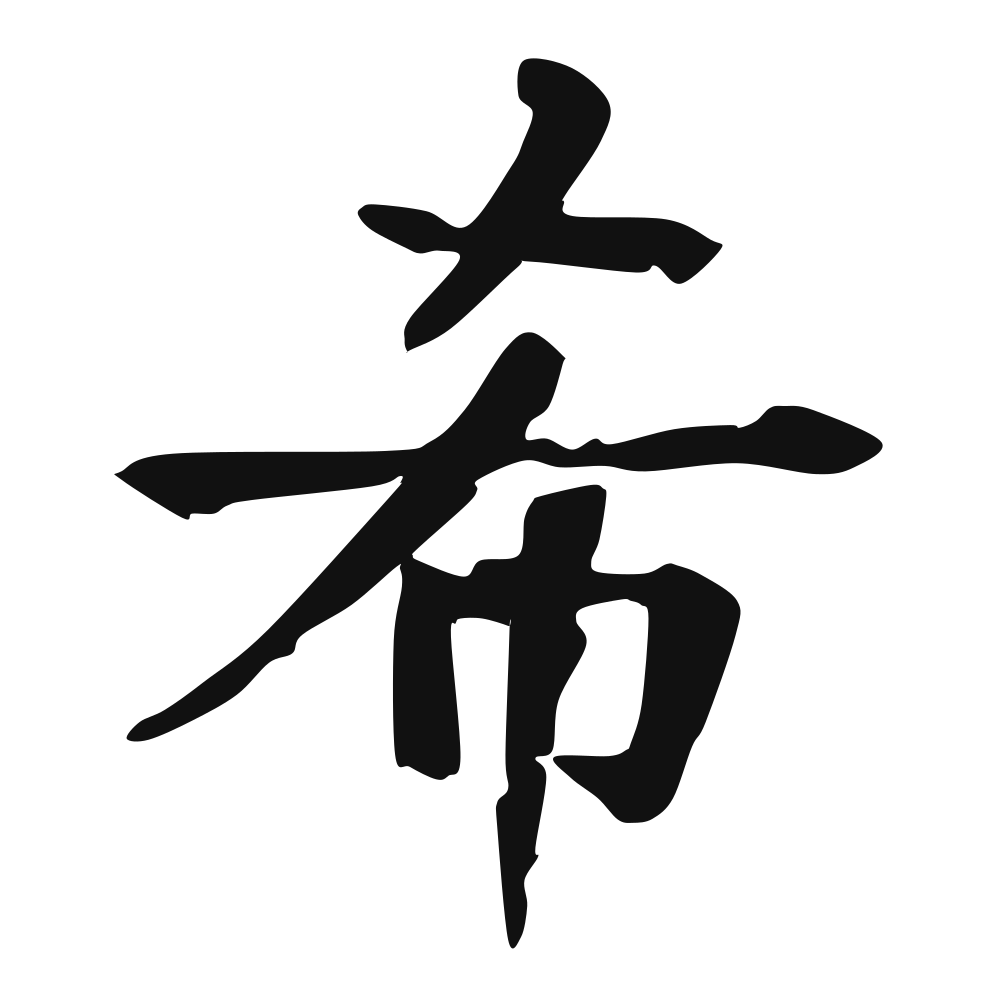
希
希 (xī) — hope, rare, scarce. Silk 巾 + 爻: a rare weave — extended to 'rare, hope'. Classical life: 希望 — hope; 希 is the thin thread of expectation. Grammar: free morpheme — also: to hope; to admire
Closest English meanings
rare·hope·few
The Calligrapher — Liǔ Gōngquán 柳公权
Tang regular-script master famed for 'bones' of strength; rival to Yan Zhenqing.
Tang calligrapher (778–865), master of regular script — Tang master of bone-strength regular script, paired forever with Yan Zhenqing as 'Yan sinew, Liu bone'. Tang dynasty
Cultural Story
希 began life as 稀, meaning 'sparse' or 'rare,' and Laozi prized the 'great sound that is 希 - faint, seldom heard.' In the Zhuangzi and later prose, 希 marked what is uncommon and refined, a note struck rarely. From that scarcity the word slid into 'to hope' and 'to desire,' as if hoping were reaching for something not yet present. Thus 希 carries both the rarity of a true thing and the longing to attain it.
Energy Reading
Water (水)
Comparative symbology, not fortune-telling.
Common words & phrases
- 希望 hope · wish
- 希奇 rare · strange
- 希罕 rare · uncommon
- 希求 seek · desire
- 希冀 hope · wish
Read the story behind the character
A child 希望 for snow on New Year's, hoping with all their heart, and shoppers find something 希奇, strange and rare, in an import store. Few people now say 希罕, rare, but grandmothers still use it for old treasures. You might 希求 a quiet weekend, desiring rest, and a poet 希冀 a better world. 希 is the small word behind every wish we scarce dare to voice aloud.
Own this character
Purchase delivers the original SVG of this glyph, brushed by Liǔ Gōngquán 柳公权, ready to place on skin, paper, or screen.