
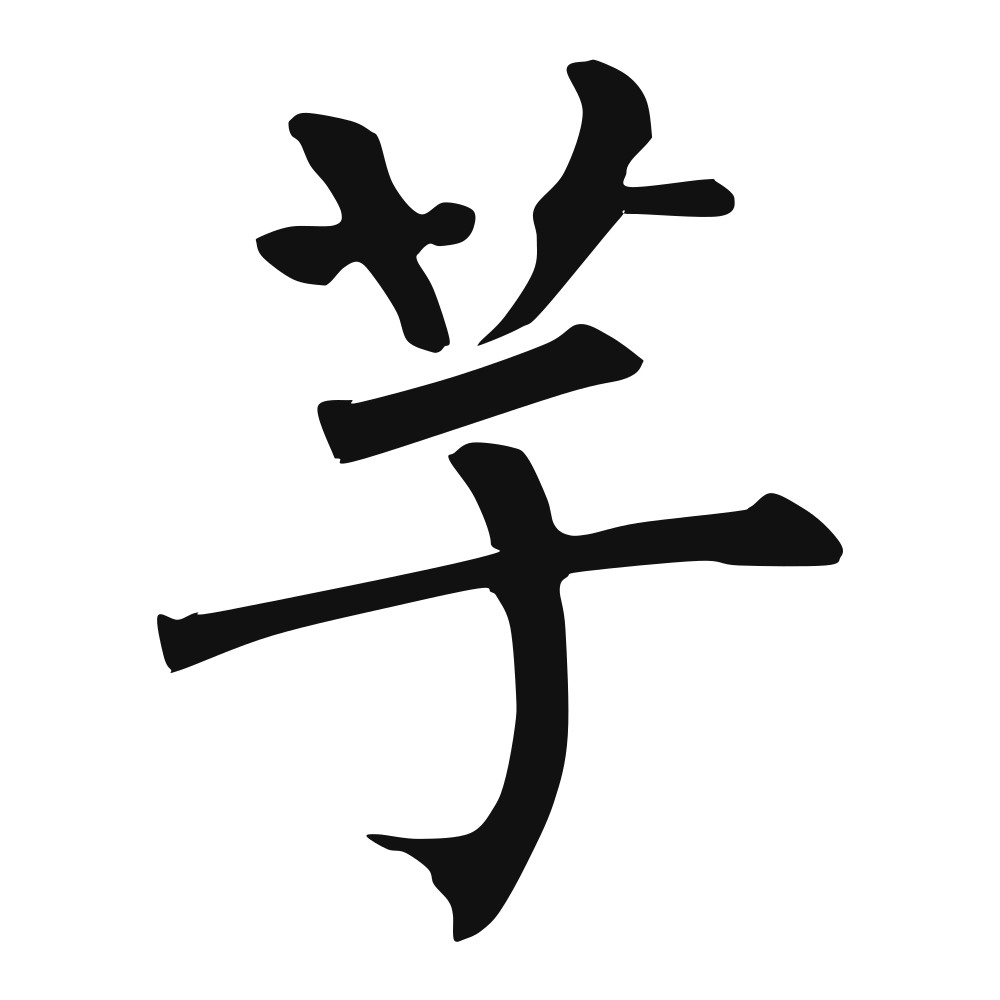
芋
taro; Colocasia antiquorum; Colocasia esculenta
Closest English meanings
taro
The Calligrapher — Liǔ Gōngquán 柳公权
Tang regular-script master famed for 'bones' of strength; rival to Yan Zhenqing.
Tang calligrapher (778–865), master of regular script — Tang master of bone-strength regular script, paired forever with Yan Zhenqing as 'Yan sinew, Liu bone'. Tang dynasty
Cultural Story
The Shiji records that beneath Minshan the soil grew taro so plentiful locals nicknamed the corms crouching owls, and households stored them against famine like buried treasure. Farming manuals rated it the poor man's staple: starchy, patient in storage, ready to fill a bowl when the rice jar ran low after a bad harvest.
Common words & phrases
- 芋頭 taro
- 山芋 sweet potato · yam
Read the story behind the character
A night market vendor splits steaming taro balls into a dessert bowl, milk tea shops stir them into brown-sugar lattes, and office workers queue for a roasted sweet potato, here a mountain taro in some dialects, held in both gloved hands. A freezer of frozen taro paste outsells ice cream every single winter.
Why this character belongs on skin
Not every root is a metaphor, but this one earns it. 芋 is taro, the humble tuber pulled from wet earth, leaves broad as a stranger's hands. In the southern villages they boil it at dusk, and the steam smells like survival. The character carries the grass radical and the sound of a thing that grows low and patient, asking nothing of the sun but time. There is a lesson in the root vegetable for anyone who has felt unseen: what feeds you often grows in the dark, swollen and quiet, unseen until the harvest. To mark yourself with 芋 is to honor the plain sustenance — the love that shows up as rice, the friend who stays when the drama ends. It is not a romantic character. It is a faithful one. Let it rest on your body like a small, honest meal that kept you alive.
Own this character
Purchase delivers the original SVG of this glyph, brushed by Liǔ Gōngquán 柳公权, ready to place on skin, paper, or screen.