
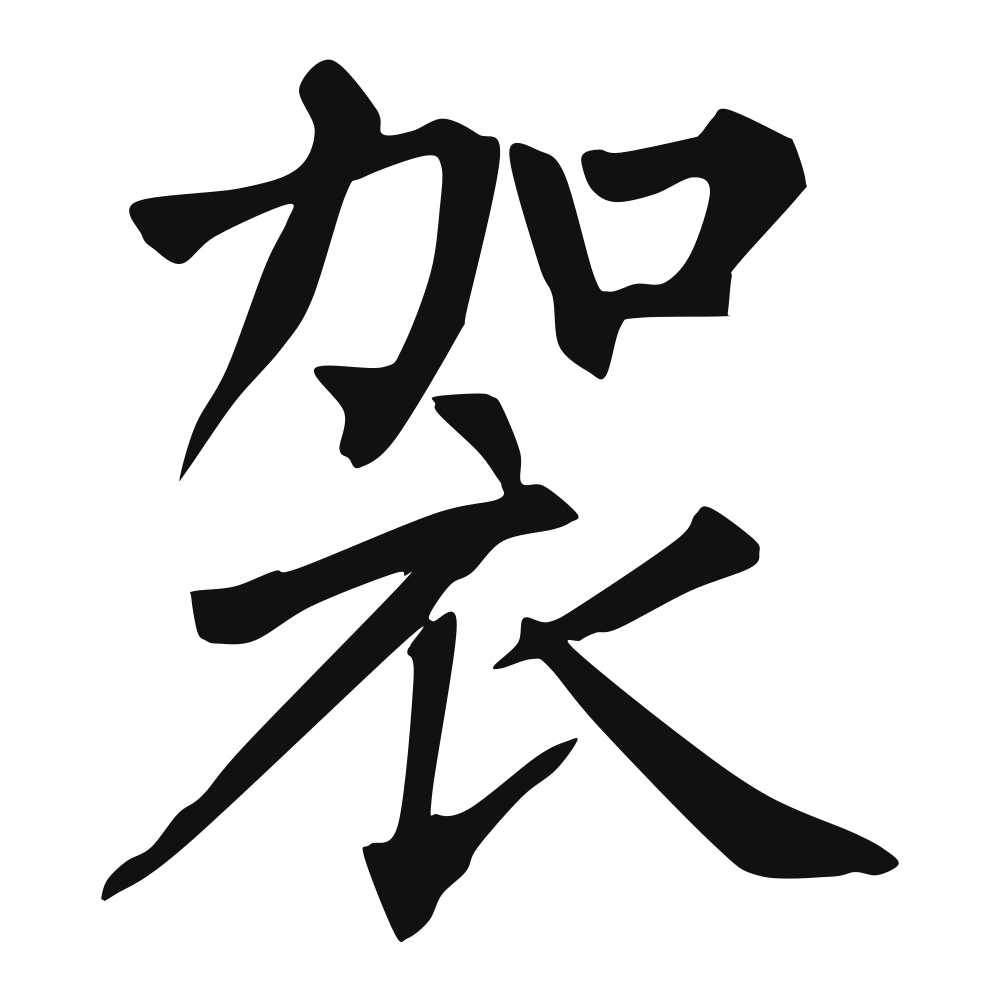
袈
usually seen in: kasaya (robe of a Buddhist monk or nun) (loanword from Sanskrit) (袈裟)
Closest English meanings
kasaya
The Calligrapher — Liǔ Gōngquán 柳公权
Tang regular-script master famed for 'bones' of strength; rival to Yan Zhenqing.
Tang calligrapher (778–865), master of regular script — Tang master of bone-strength regular script, paired forever with Yan Zhenqing as 'Yan sinew, Liu bone'. Tang dynasty
Cultural Story
In Journey to the West the Tang emperor gifts the monk Xuanzang a brocade kasaya, the jinlan jia sha, to wear on his journey for the scriptures, a robe as credential as much as cloth. The Famen Temple later yielded a Tang imperial jia sha among its relics. The garment marks the bearer as set apart.
Common words & phrases
- 袈裟 kasaya · monk's robe
Read the story behind the character
A monk in a hillside temple arranges his jia sha, the patchwork robe, before the morning chant, and a museum case displays another behind glass. The character exists almost only in this one compounded word for the Buddhist habit, the cloth that signals a life withdrawn from the ordinary trades of the street.
Why this character belongs on skin
The robe is sewn from scraps — torn cloth collected from wherever cloth dies, washed, dyed the color of dead leaves, stitched into one garment that belongs to no fashion and no vanity. That is the kasaya, and this character is its voice. The Buddha asked his followers to wear the world's leftovers on purpose, so that nothing they owned could own them back. It sounds like poverty. It is closer to freedom: the man with a patched coat sleeps without fear of stains. Most of us carry our wardrobes like arguments we are always winning. The monk carries a rag and calls it enough. To wear this mark is to keep that joke close — that the richest thing a person can own is the certainty of having little. Let the ink sit light, like the robe it honors.
Own this character
Purchase delivers the original SVG of this glyph, brushed by Liǔ Gōngquán 柳公权, ready to place on skin, paper, or screen.