
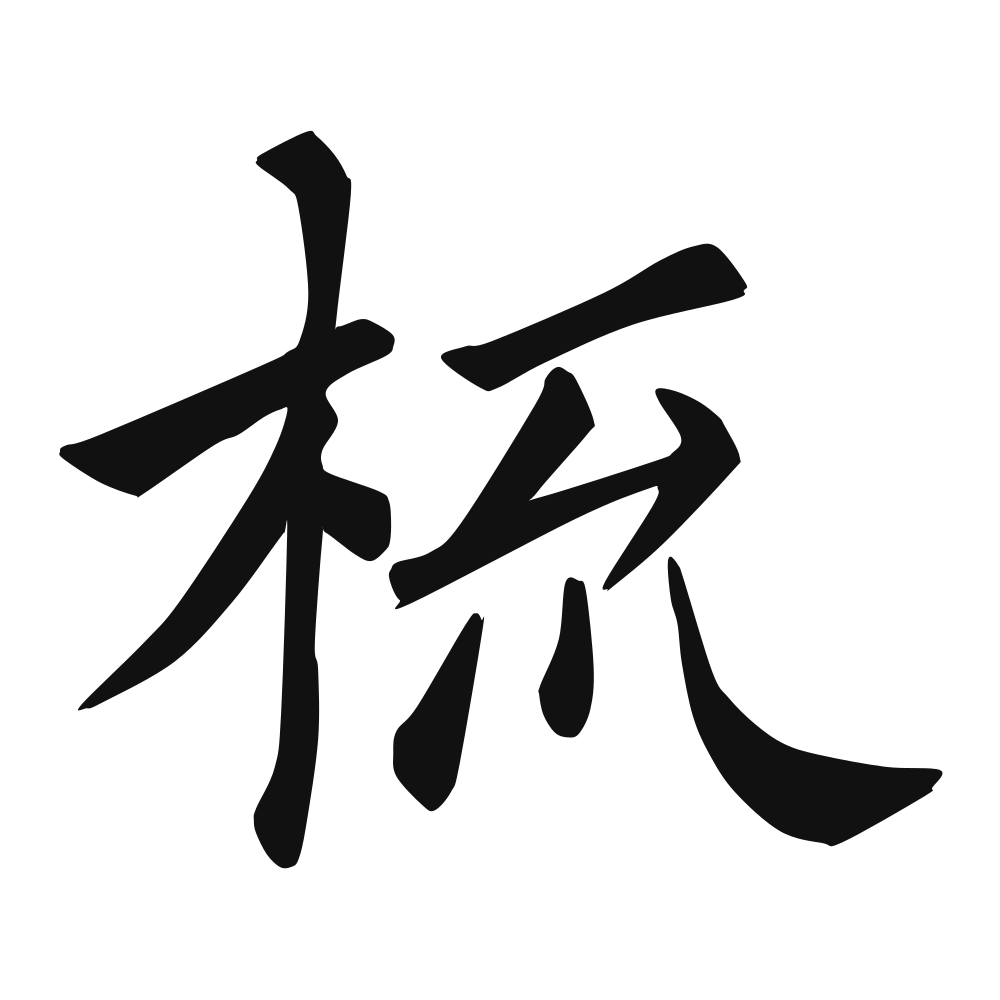
The Calligrapher — Lù Jī 陆机
Jin calligrapher of clerical-cursive script, author of the Pingfu Letter (Pingfu tie), earliest surviving work.
Jin calligrapher (), master of cursive script — known for 《平复帖》(存世最早墨迹). Jin dynasty
Cultural Story
梳 is the toothed comb of 木 or bone that orders the hair — the 梳頭 the first act of a day or a wedding, the 梳妆 the dressing table by the mirror. The character is the small tool that turns tangles into lines, the quiet discipline of appearance before a face meets the world outside.
Common words & phrases
- 梳子 comb
- 梳理 comb · sort out
- 梳头 comb hair
- 梳妆 dress and make up
Read the story behind the character
梳 is the comb and the sort: 梳子 the thing lost in a drawer, 梳头 the morning ritual, 梳妆 the vanity and its mirror. 梳理 is also what an editor does to a messy draft, or a manager to a strategy. The character is the teeth that straighten hair and, by metaphor, a confused plan.
Why this character belongs on skin
At first light she lifts the comb and draws it slowly through the dark river of her hair, and the small violence of the day is undone before it begins. Shū is the comb, but it is also the ordering of chaos, the patient return of lineage to a single clear stream. I think of a mother at a window, of a soldier smoothing his uniform before the mirror, of anyone who believes the world can be met with composure if the self is first composed. There is an erotics to the gesture—the hand that tends is the hand that loves—and a metaphysics too: to comb is to confess that disorder is not fate but a thing with a remedy. To bear shū is to keep a ritual in a restless age. The ink runs like teeth through the skin, a quiet order you chose, proof that some part of you still believes in the calm morning.
Own this character
Purchase delivers the original SVG of this glyph, brushed by Lù Jī 陆机, ready to place on skin, paper, or screen.