
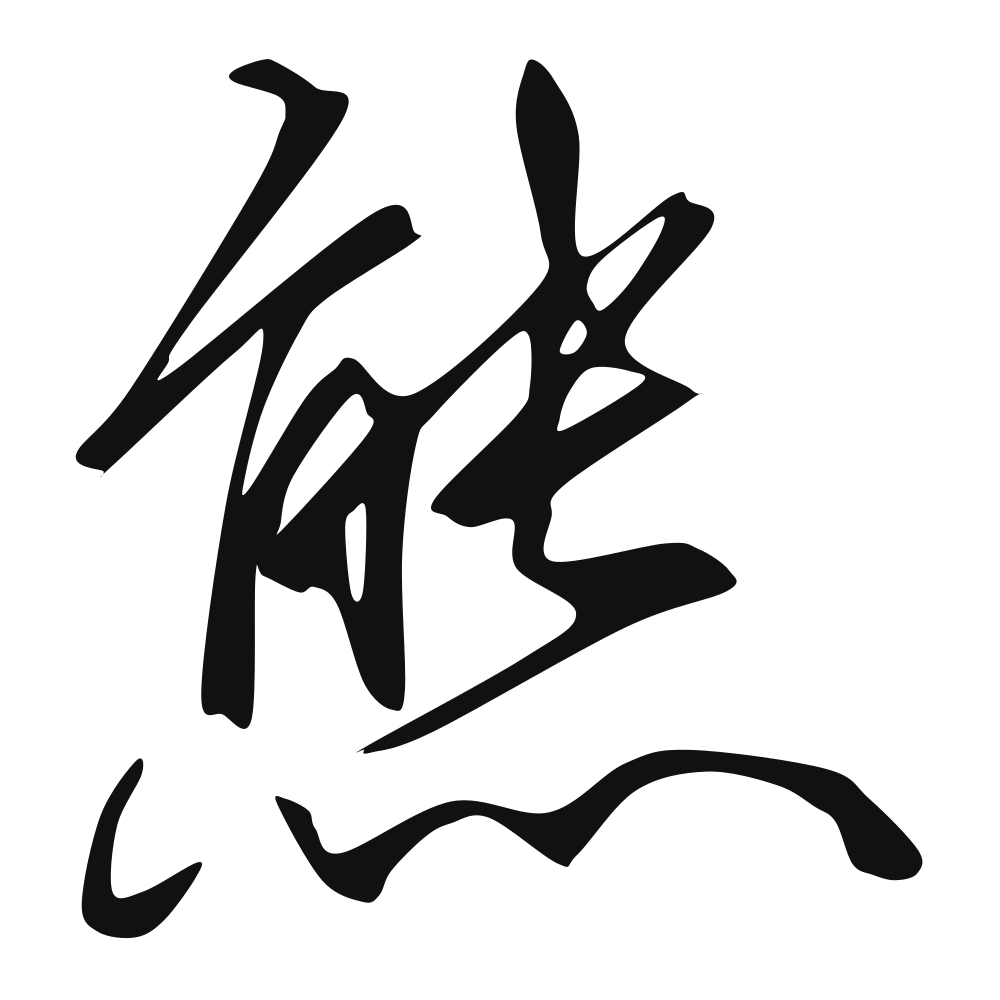
熊
surname Xiong; bear; (coll.) to scold; to rebuke; (coll.) weak; incapable
Closest English meanings
bear
The Calligrapher — Lù Jī 陆机
Jin calligrapher of clerical-cursive script, author of the Pingfu Letter (Pingfu tie), earliest surviving work.
Jin calligrapher (), master of cursive script — known for 《平复帖》(存世最早墨迹). Jin dynasty
Cultural Story
熊 is the bear, and 熊熊 the blaze — the beast and the blaze share a name. The 诗经 and 山海经 people the wild with bears of omen, and 熊 the totem of northern tribes. Later, 熊熊 described raging fire. The character roams from mythic forest to furnace, a creature of strength and a flame of equal, untamed intensity in the classical imagination.
Common words & phrases
- 熊猫 panda
- 狗熊 black bear
- 熊掌 bear's paw
- 熊熊 blazing · flaming
- 北极熊 polar bear
Read the story behind the character
You love the 熊猫 at the zoo, fear a 狗熊 in folk tales, and crave 熊掌 in legend. A 北极熊 trends in climate news, and 熊熊 flames fill a fire video. From a conservation post to a winter barbecue, 熊 is the bear we protect and the blaze we watch — wild, warm, and impossible to ignore.
Why this character belongs on skin
Say the word and something heavy and warm enters the room. 熊 is the bear—but strip off its animal radical and what remains means a great blaze of fire, which tells you how the ancients saw it: a furnace that walks, a winter with fur. In old legends the bear is a mediator between worlds, hibernating its way through death each winter and rising again, shameless, hungry, magnificent. There is warmth in this character too: a bear-hug's rough theology, the mother bear's absolute devotion. And bear in old China meant prowess itself—a hero was a bear hero. You contain all of this: the weight, the fire, the tenderness that growls. Wear the bear. Walk into winter like you own the season.
Own this character
Purchase delivers the original SVG of this glyph, brushed by Lù Jī 陆机, ready to place on skin, paper, or screen.