
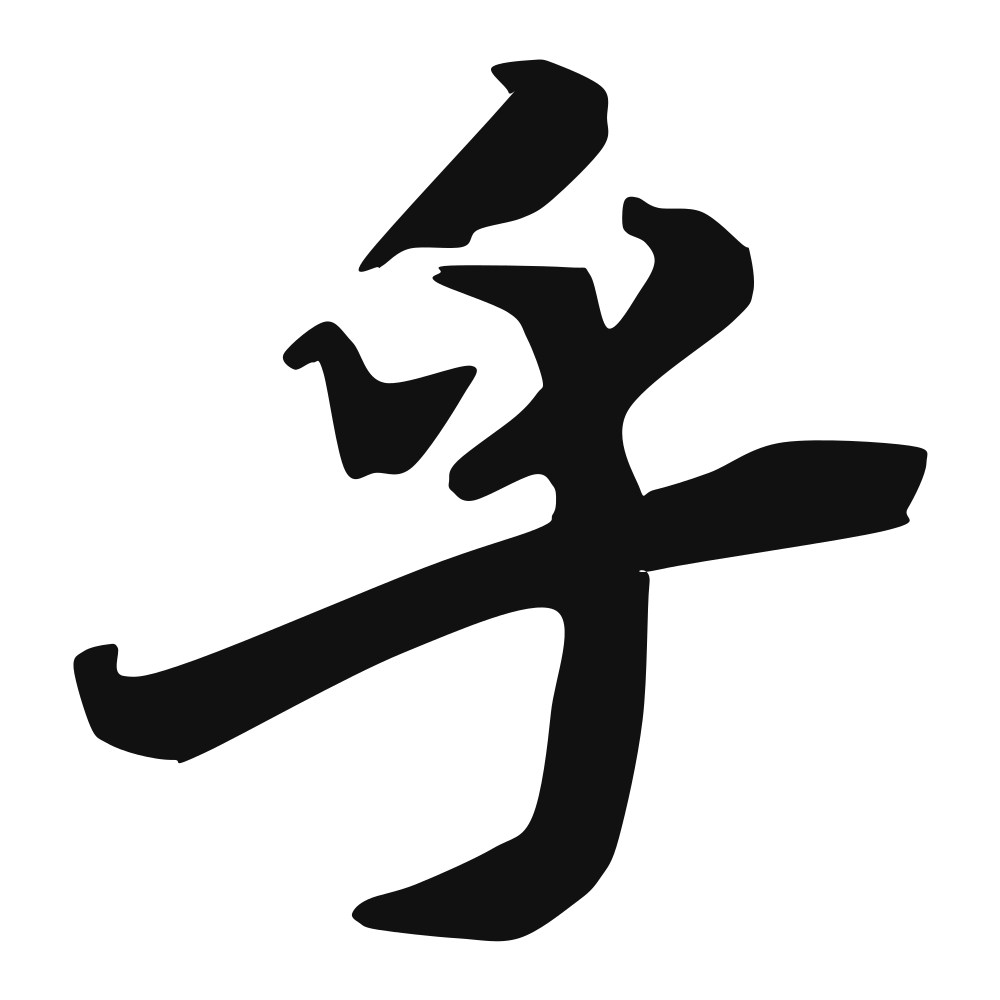
乎
(classical particle similar to 於|于[yu2]) in; at; from; because; than; (classical final particle similar to 嗎|吗[ma5], 吧[ba5], 呢[ne5], expressing question, doubt or astonishment)
Closest English meanings
(particle)·at·from
The Calligrapher — Lù Jiǎnzhī 陆柬之
Tang calligrapher and nephew of Yu Shinan; his running-script 'Essay on Literature' survives
Tang calligrapher (), master of running script — known for 《文赋》. Tang dynasty
Cultural Story
乎 is the breathy particle that gave classical questions their rise at the end, 不亦说乎, is it not a joy. The 論語 leans on it; it is the spoken punctuation of Confucius's classroom, the lift in the voice before the student answers. Originally it meant at or from; it softened into the sound of inquiry itself, the tongue rounding a thought into a question.
Common words & phrases
- 在乎 care about · mind
- 几乎 almost · nearly
- 似乎 seem · as if
- 关乎 concern · bear on
- 近乎 nearly · close to
- 出乎 beyond · exceed
Read the story behind the character
在乎 is whether you care, 我不在乎, I do not. 几乎 is the missed train by seconds; 似乎 the doubt you couch. 关乎 is what the policy brief says is at stake; 近乎 the line you are crossing. 出乎 is the surprise beyond expectation. The particle sense is gone from speech, but the character lives in these compounds, the register of nearness, doubt, and concern, the breath behind the words.
Own this character
Purchase delivers the original SVG of this glyph, brushed by Lù Jiǎnzhī 陆柬之, ready to place on skin, paper, or screen.