
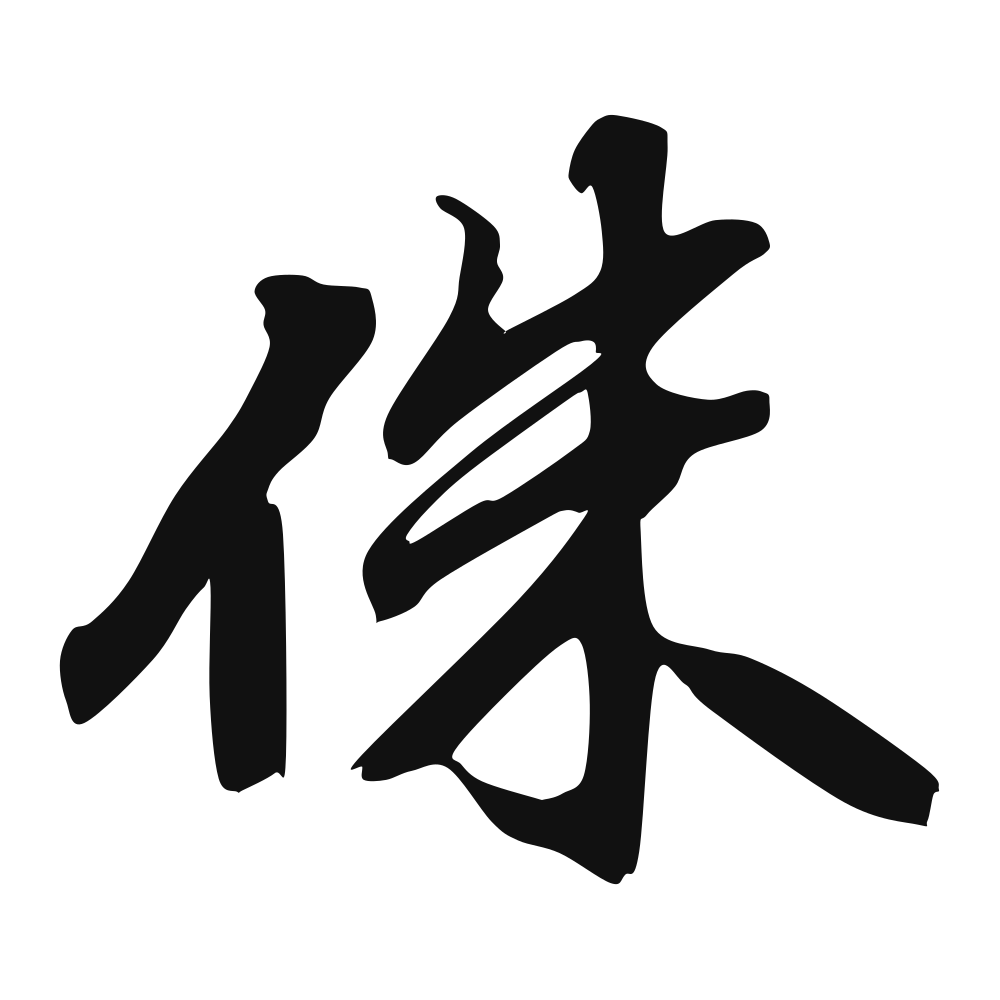
The Calligrapher — Lù Jiǎnzhī 陆柬之
Tang calligrapher and nephew of Yu Shinan; his running-script 'Essay on Literature' survives
Tang calligrapher (), master of running script — known for 《文赋》. Tang dynasty
Cultural Story
侏 names the very small. The 国语 mocks a 侏儒 at court who amused by his size; a 侏张 man swells with arrogant airs despite it. In the Han shows such figures drew crowds. To write 侏 is to mark the body that falls far below the common measure.
Common words & phrases
- 侏儒 dwarf
- 侏张 arrogant
Read the story behind the character
A stage actor plays a 侏儒 in the folktale; an online 侏张 commenter puffs up to mask a weak point. The word still tags the unusually small — in a theatre, a meme, a schoolyard taunt. Size and the false pride that mocks it both live inside this old character.
Why this character belongs on skin
侏 names the small ones — 侏儒, the person of little stature, the court jester of the old kingdoms who stood shortest in the room and often saw clearest. Here is the secret the character keeps: it is built from the person radical and a phonetic meaning dwarf or stunted, yet the ones history remembers from the courts of Zhou and Han are the jesters who could say to the emperor what the ministers dared not — Yu Huan, Chunyu Kun, turning wit into a needle that pierced policy. Smallness of frame, largeness of nerve. Every one of us is 侏 before something: the vast ocean, the deadline, the beloved, the dark. The question the character poses is not how tall you are but whether you will speak from where you stand. A tattoo of it is a wink and a dare at once — proof that you have made peace with your dimensions and kept your voice anyway. Small body, whole spirit. The jester always gets the last line.
Own this character
Purchase delivers the original SVG of this glyph, brushed by Lù Jiǎnzhī 陆柬之, ready to place on skin, paper, or screen.