
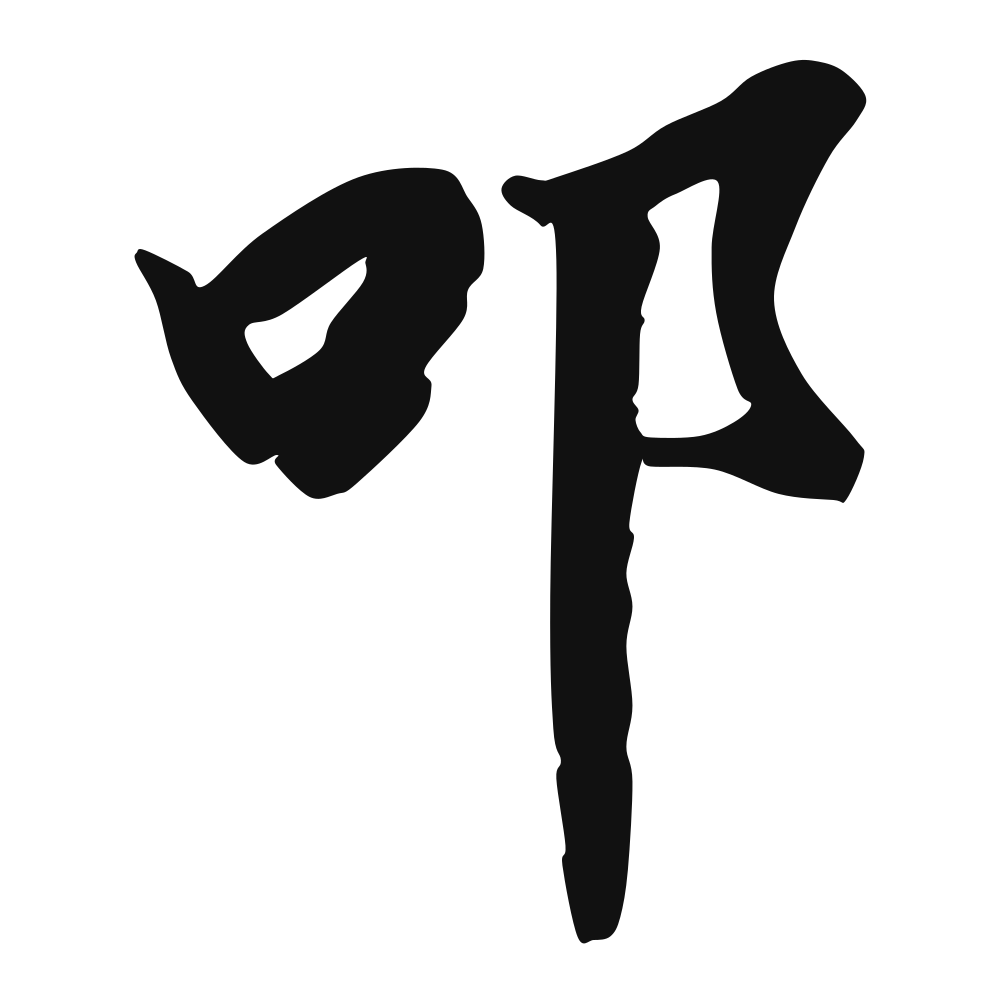
The Calligrapher — Lù Jiǎnzhī 陆柬之
Tang calligrapher and nephew of Yu Shinan; his running-script 'Essay on Literature' survives
Tang calligrapher (), master of running script — known for 《文赋》. Tang dynasty
Cultural Story
叩 was to knock, at a door or on the earth. The poet Jia Dao weighed "the monk pushes the gate" against "the monk knocks the gate" -- 推敲 -- and Han Yu settled it for him. At court one 叩头, touching the floor; at a stranger's house one 叩门. The word was the hand at the panel, asking to be let in.
Common words & phrases
- 叩头 kowtow · bow
- 叩门 knock at the door
- 叩问 inquire · ask
- 叩拜 kowtow in worship
- 叩击 tap · strike
Read the story behind the character
A visitor 叩门 and waits on the step; a worshipper 叩头 before the altar. A doctor 叩击 the back to hear the lung. The word keeps its physical knock -- at the door, on the floor, against the chest. It names the asking gesture, the ritual bow, the diagnostic tap, each a sounding on a surface that answers or stays silent.
Why this character belongs on skin
You lift your hand and the door becomes a question. 叩 is the knock — the knuckle against wood, the small formal tap that says I am here and I respect what is behind you. It is also the deep bow, the kowtow, the body folded in reverence before something larger. The character is a mouth and a knock together, address given to the sacred. To wear 叩 is to keep the gesture of asking, of approaching with humility rather than force. In a life of barging in, it is the remembered courtesy: that some doors deserve a knock, some truths a bow. Ink it where your own hand can find it. Let it be the small, repeated prayer — knock, and it shall be opened; bow, and you are already changed.
Own this character
Purchase delivers the original SVG of this glyph, brushed by Lù Jiǎnzhī 陆柬之, ready to place on skin, paper, or screen.