
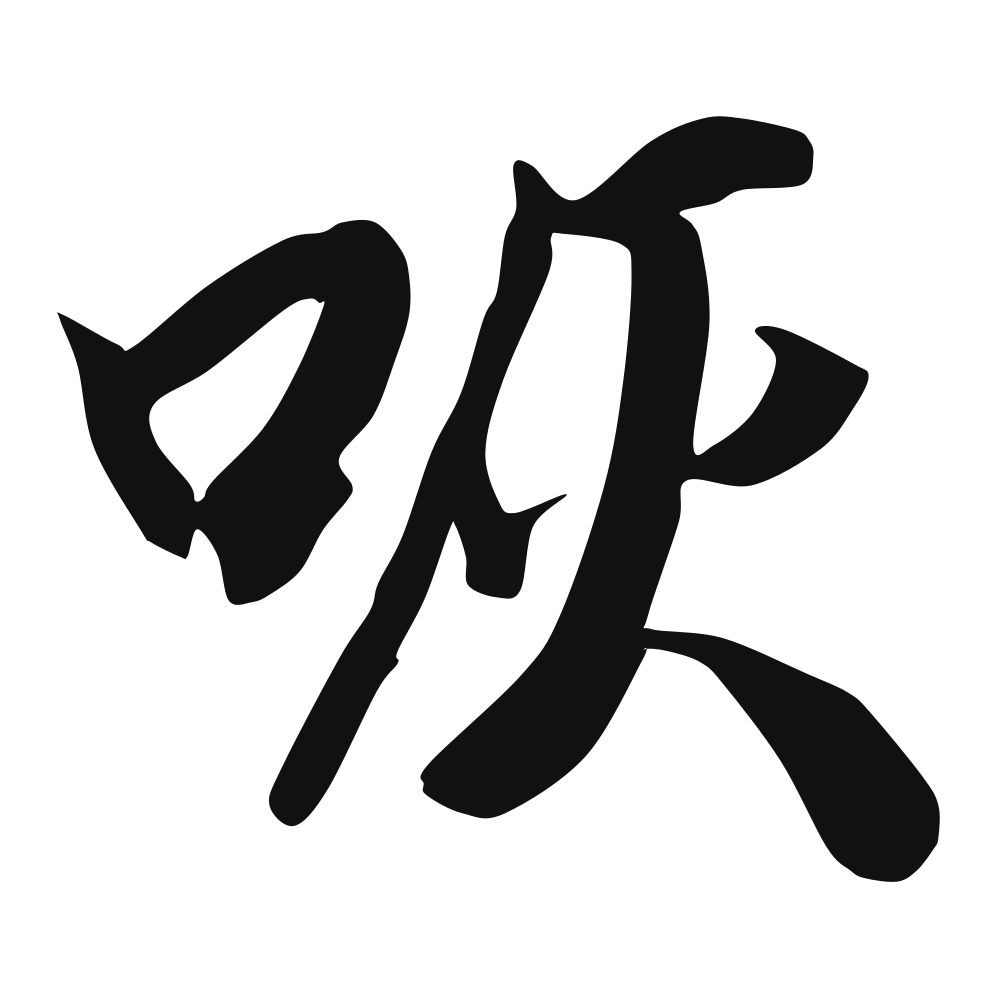
咴
neigh; whinny (sound made by a horse)
Closest English meanings
neigh
The Calligrapher — Lù Jiǎnzhī 陆柬之
Tang calligrapher and nephew of Yu Shinan; his running-script 'Essay on Literature' survives
Tang calligrapher (), master of running script — known for 《文赋》. Tang dynasty
Cultural Story
In the classical tradition: 咴 is a purely phonetic onomatopoeia built on the mouth radical to render the neigh of a horse, with no separate classical meaning in the Shuowen. In traditional life the horse was war, travel, and harvest; its 咴咴 neigh opened market mornings and announced a general's mount. Ballads of the frontier describe the 咴咴 of steeds in the dust, a sound of departure and of homecoming along the old roads.
Common words & phrases
- 咴咴 neighing
Read the story behind the character
In the modern world: At the grassland tourist camp the horses answer each other with 咴咴, neighing as children climb into the saddle for a photo. A delivery rider's electric bike has replaced the horse, but cartoons and kids' books still teach 咴咴 for a horse's call. When a toddler pretends to ride, he shouts 咴咴 and gallops down the living-room rug.
Why this character belongs on skin
咴 is the sound a horse makes—the bright, whinnying call of an animal announcing itself, mouth radical and all, the character practically pawing the ground. In Chinese war poetry, the neigh of horses is the sound of armies, of departure, of young riders riding out: 咴 and the frontier is suddenly real. There is something magnificent about a creature that answers the morning with its own voice at full volume—no apology, no strategy, just presence, declared. The Mongol horsemen built an empire on animals that made exactly this noise. To wear 咴 is to claim your voice at that register: the courage to be audible, to answer life with something loud and alive rather than the polite murmur. Ink for the ones whose arrival is always known. Let them hear you coming.
Own this character
Purchase delivers the original SVG of this glyph, brushed by Lù Jiǎnzhī 陆柬之, ready to place on skin, paper, or screen.