
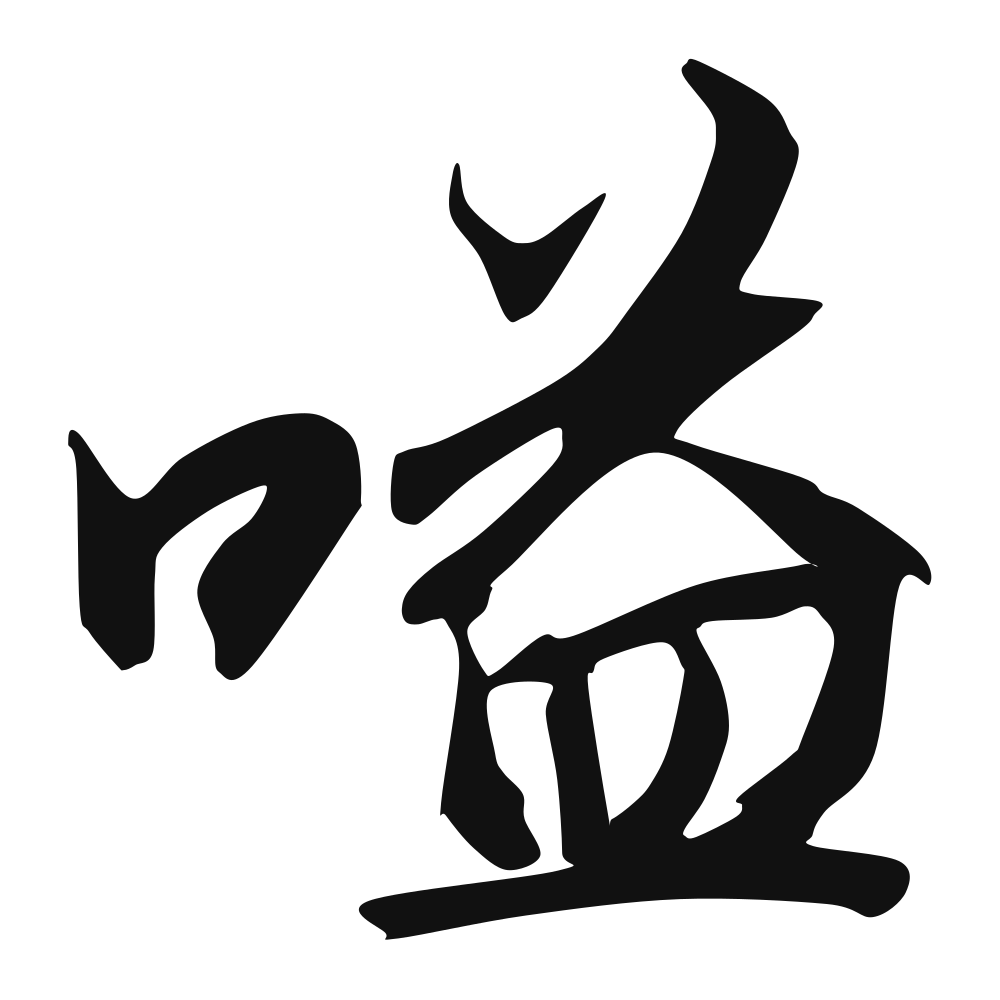
嗌
(literary) to choke; to have a blockage in the throat; Taiwan pr. [yi4]; (literary) the throat; (literary) (military) choke point
Closest English meanings
throat·to choke
The Calligrapher — Lù Jiǎnzhī 陆柬之
Tang calligrapher and nephew of Yu Shinan; his running-script 'Essay on Literature' survives
Tang calligrapher (), master of running script — known for 《文赋》. Tang dynasty
Cultural Story
The Shuowen gives 嗌 as 咽也, the throat, the narrow place where the swallow meets resistance. In the Huangdi Neijing the physician notes a dry 嗌 in certain fevers, and the word also carries the sense of choking — when food or grief catches at the throat and will not pass. Strategists, too, spoke of a 嗌 as a bottleneck of the land. Small and ancient, 嗌 names that vulnerable passage where breath, food, and feeling can all suddenly stick.
Common words & phrases
- 嗌喉 throat
Read the story behind the character
After burning his tongue on hot soup, a man feels pain at the 嗌喉 (throat); a child who swallows a grape the wrong way 嗌喉 and coughs until it clears. An elder with a chronic dry 嗌喉 sips warm water through the night, and a swimmer who takes in water mid-stroke 嗌喉 and surfaces spluttering. 嗌 names that tight spot where something nearly goes down the wrong way — a small, everyday hazard of eating, drinking, and breathing.
Why this character belongs on skin
There is a specific agony known to anyone who has lived long enough: the word that rises and jams. 嗌 is the throat itself, and the character carries the moments when that narrow passage fails us — the confession choking on its way out, the argument where the perfect sentence arrives two hours after the door closed, the love declared only in the hospital corridor. Everyone has a personal archive of the unsaid. The Greek tragedians built whole plots on it; Chinese poetry built a genre of it, the letter never sent, the 手势 finished in silence. What 嗌 offers is not consolation exactly but recognition — the throat as the truest bottleneck of a life, where feeling and courage compete for the same exit. Buddhism would call it one more place where attachment grips. But there is courage here too: the character reminds you that the jam is temporary, that words do eventually pass, that the unsaid can still, most years, be said. If your chest holds a sentence — wear 嗌 and open the gate. Speak it while the door is open.
Own this character
Purchase delivers the original SVG of this glyph, brushed by Lù Jiǎnzhī 陆柬之, ready to place on skin, paper, or screen.