
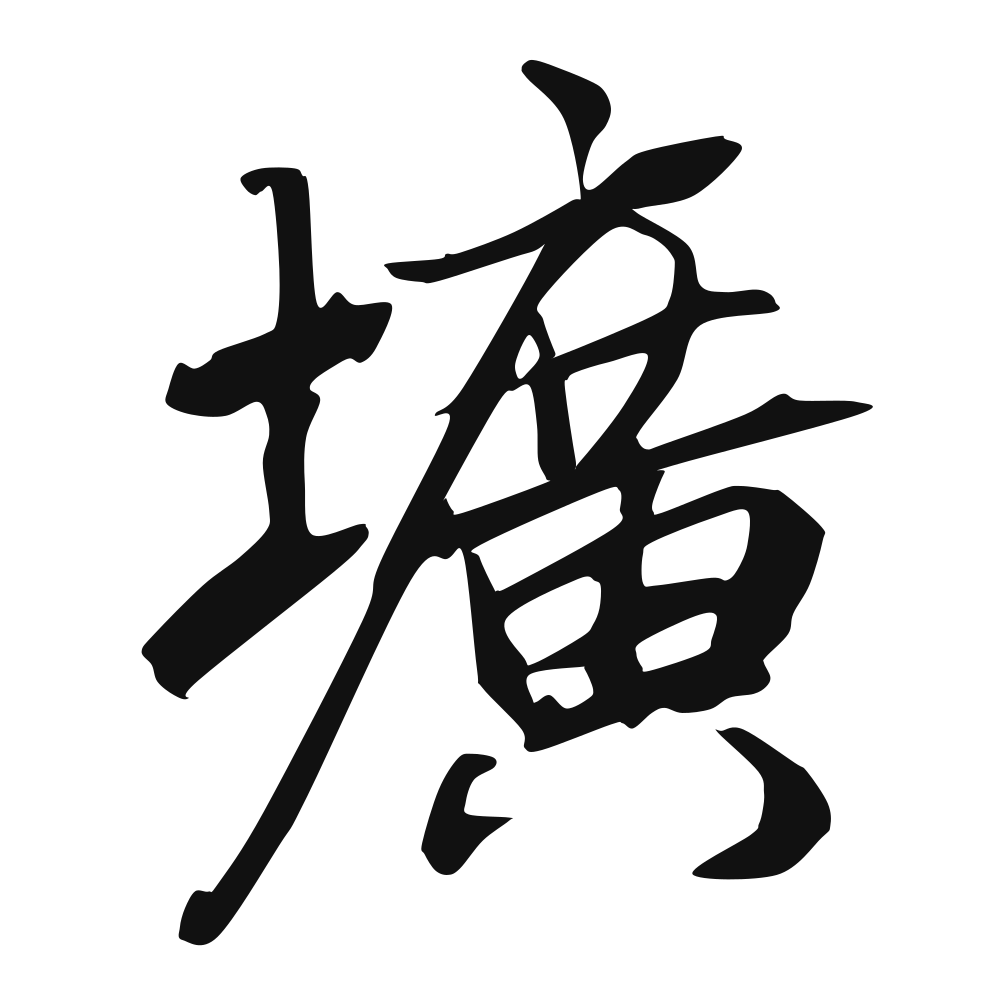
The Calligrapher — Lù Jiǎnzhī 陆柬之
Tang calligrapher and nephew of Yu Shinan; his running-script 'Essay on Literature' survives
Tang calligrapher (), master of running script — known for 《文赋》. Tang dynasty
Cultural Story
The Rites of Zhou prescribed the 圹 — the grave pit — and its orientation by the seasons. A 生圹, dug in one's lifetime, was an act of stoic preparation the Tang literati sometimes recorded in verse. The 圹野 was open country beyond the fields, where the dead and the wanderer met the same horizon.
Common words & phrases
- 圹穴 grave · tomb
- 生圹 tomb prepared in life
- 圹野 open country
Read the story behind the character
The 圹穴 is dug the morning of the village funeral. An old man tends the 生圹 he prepared a decade back. The 圹野 beyond the town is slated for the new road. A surveyor marks the 圹 line where the extension will break ground next spring.
Why this character belongs on skin
There is a word for the grave that is older than fear of it. 圹 names the burial pit — the dug earth, the final chamber — and in classical texts it extends to the wild openness beyond: empty moors, the vast vacancy at the edge of things. Mencius wrote of the 圹壤, the wilderness of the soul left untended; grave and void share one character, as if the ancients understood that both are simply ground that has been opened. To sit with this word is not morbid. The old texts speak of resting in the 圹 peacefully, and Zhuangzi laughed at death as a return, the earth reclaiming what it lent. A grave is not an ending; it is a room the earth builds for you, patient as a mother. To wear kuàng is to walk with mortality at your side instead of behind you — and strangely, that companion makes every hour more vivid, more sensual, more worth staying awake for. The ground waits. Meanwhile, live.
Own this character
Purchase delivers the original SVG of this glyph, brushed by Lù Jiǎnzhī 陆柬之, ready to place on skin, paper, or screen.