
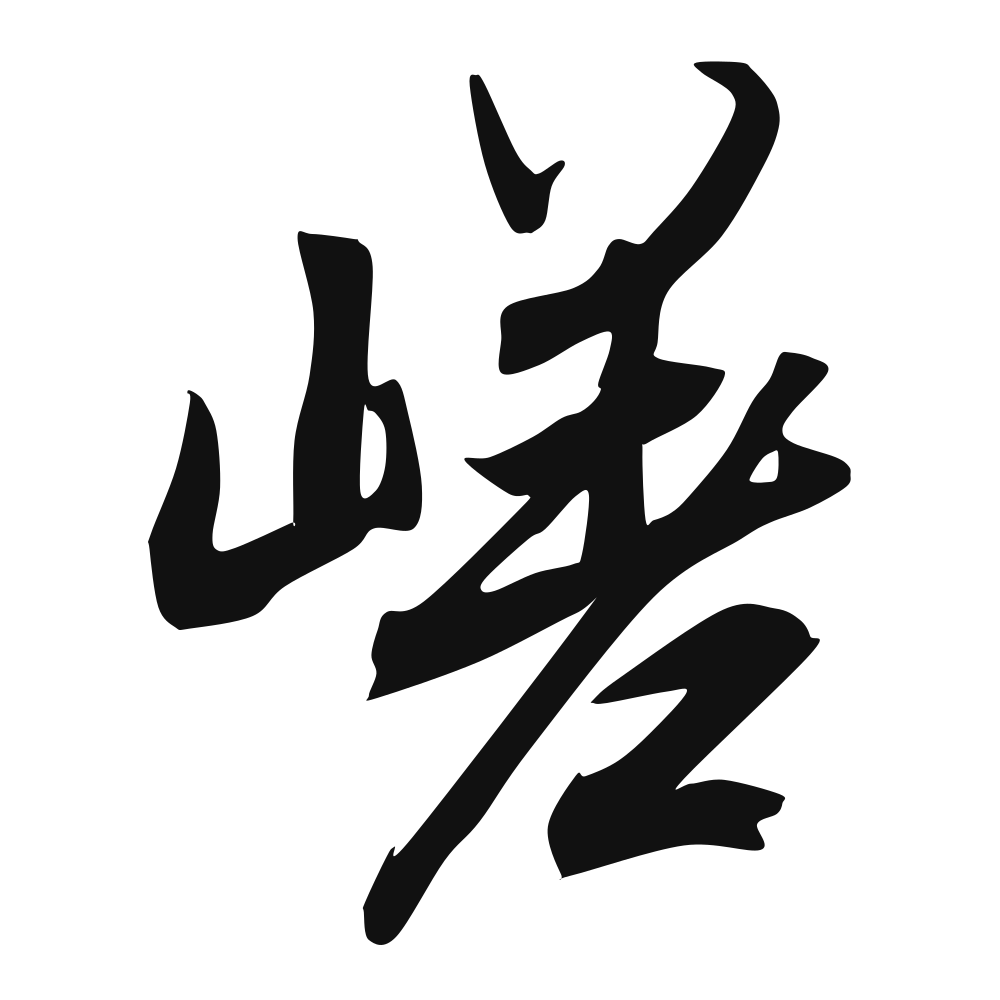
嵯
lofty (as of mountain)
Closest English meanings
high·rugged peaks
The Calligrapher — Lù Jiǎnzhī 陆柬之
Tang calligrapher and nephew of Yu Shinan; his running-script 'Essay on Literature' survives
Tang calligrapher (), master of running script — known for 《文赋》. Tang dynasty
Cultural Story
Cuo means high and jagged, the Shuo Wen giving it a mountain's uneven height. It lives in cuo e (towering, rugged peaks), a favorite of the Chu Ci and Tang verse for crags torn into the sky. The pair paints not smooth height but a ragged, broken loftiness, the mountain as a jagged crown, beautiful precisely because it will not be neat.
Common words & phrases
- 嵯峨 towering · rugged peaks
Read the story behind the character
A travel clip shows the cuo e (towering, rugged peaks) of the Karst hills at dawn, and a painter copies old cuo scrolls for an exhibit. You call a colleague's messy cuo hair peak-chic as a joke, and a hike through the cuo ridges leaves your legs shaking. Though cuo is rare alone, a map of the gorges is full of cuo-named lookout points.
Why this character belongs on skin
Pair it with its old partner and you get 嵯峨 — the phrase Tang poets used for mountains so jagged and grand that words had to stack like the peaks themselves. This character is the first half of that grandeur, the leaning towers of stone, cliffs thrown together in attitudes no architect would dare. Japan borrowed the whole phrase for its own sacred mountain district, 嵯峨野, where the bamboo whispers and the temples sit below the old crags. There is a beauty that is also a kind of defiance: rock that never agreed to be smooth, and outlasted everything that tried. You know the feeling — being too much for the room, too jagged for the résumé. This ink sides with the cliffs. The world smooths what it can; the mountain declines.
Own this character
Purchase delivers the original SVG of this glyph, brushed by Lù Jiǎnzhī 陆柬之, ready to place on skin, paper, or screen.