
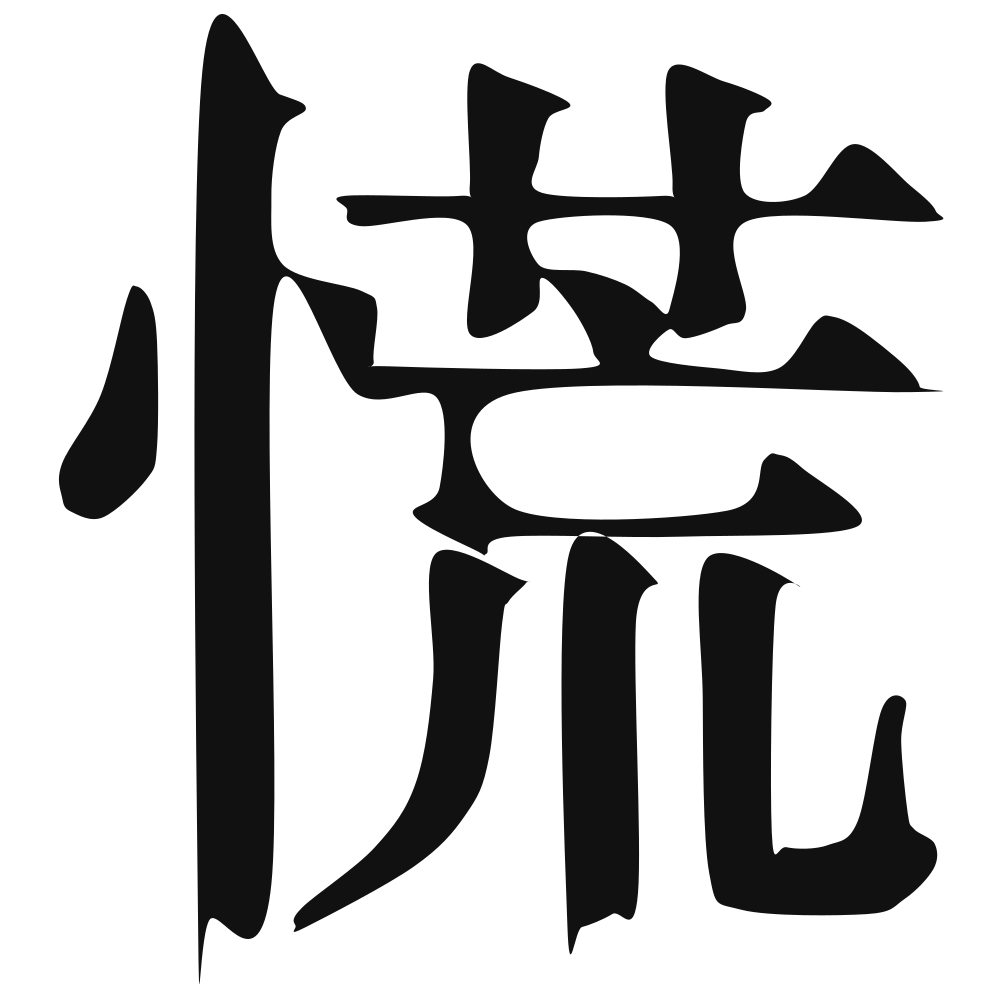
慌
to get panicky; to lose one's head; (coll.) (after 得[de2]) unbearably; terribly
Closest English meanings
flustered·nervous·panic
The Calligrapher — Lù Jiǎnzhī 陆柬之
Tang calligrapher and nephew of Yu Shinan; his running-script 'Essay on Literature' survives
Tang calligrapher (), master of running script — known for 《文赋》. Tang dynasty
Cultural Story
慌 is a late word for the mind that loses its feet. The old tongue used 乱 or 扰 for the same scatter; 慌 grew up in the vernacular as the panic of the person who cannot keep the pieces. The heart with 荒, waste, is a mind gone to weed. It is the fluster, the spin.
Common words & phrases
- 慌张 flustered · nervous · in a hurry
- 惊慌 alarmed · panicked · startled
- 心慌 palpitate · nervous · flustered
- 慌乱 flustered · confused · in panic
- 慌忙 hurriedly · in a flurry
Read the story behind the character
慌 is the daily scramble: 慌张 the lie told too fast, 惊慌 the fire alarm, 心慌 the chest at the interview. 慌乱 is the kitchen at service, 慌忙 the exit. It names the state of being behind and knowing it, the visible loss of composure.
Why this character belongs on skin
慌 is panic with a heart radical, next to a character meaning wild, desolate, overgrown — the mind as abandoned field, weeds everywhere, no path home. Everyone knows the territory: the phone call at 3 a.m., the letter with the tax office's seal, the moment in the exam hall when the whole year of study evaporates. But note the folk wisdom buried in the character's usage: 慌 means to be scattered, which implies that calm is a kind of gathering. The Zen teachers would say the weeds and the path are the same field. Ink this small, maybe where only you can see it — a private flag planted in your wildest ground, marking where you learned to stand still until the panic passed.
Own this character
Purchase delivers the original SVG of this glyph, brushed by Lù Jiǎnzhī 陆柬之, ready to place on skin, paper, or screen.