
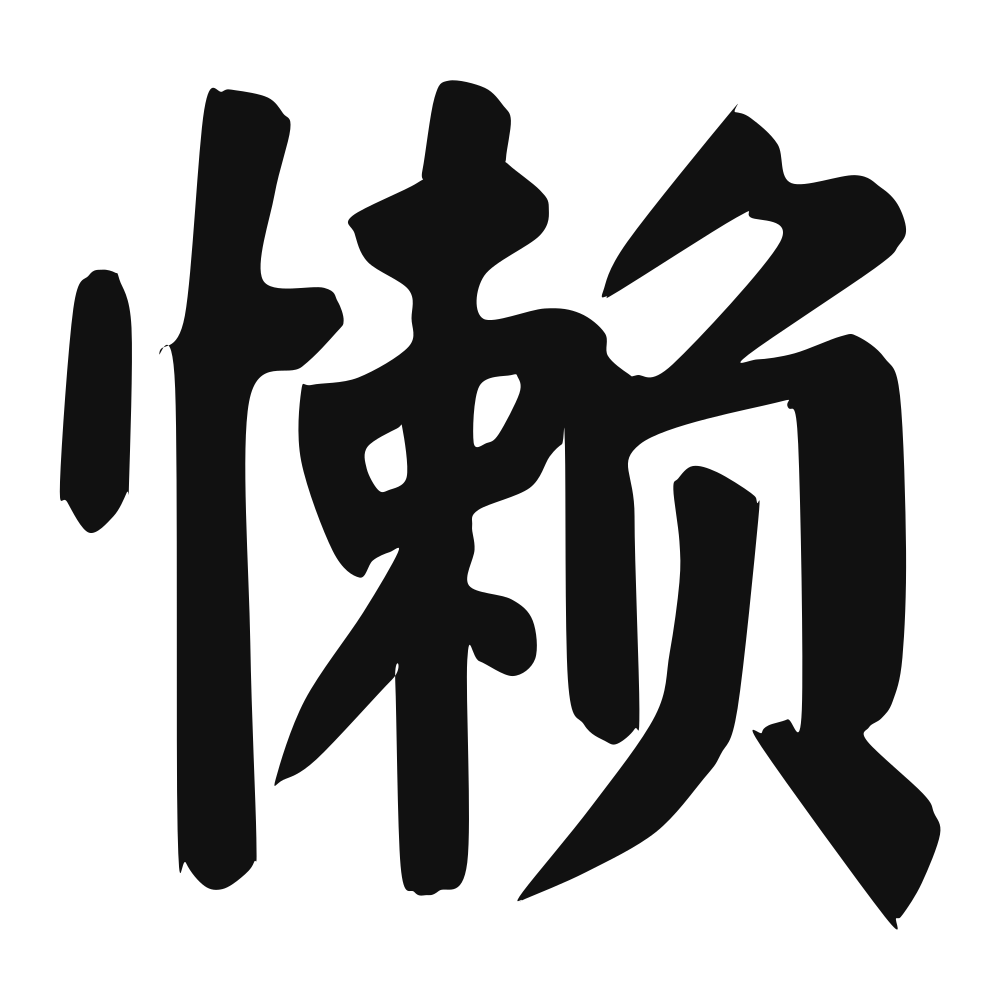
The Calligrapher — Lù Jiǎnzhī 陆柬之
Tang calligrapher and nephew of Yu Shinan; his running-script 'Essay on Literature' survives
Tang calligrapher (), master of running script — known for 《文赋》. Tang dynasty
Cultural Story
懒 is the refusal to rise that the sages always condemned. The farm manuals and the household admonitions warn against the 懒 son who lets the season pass, and the word kept its moral weight. The heart with 赖, to depend, is inertia that leans. It is the stillness with a name attached.
Common words & phrases
- 懒惰 lazy · indolent
- 懒得 too lazy to · not feel like
- 偷懒 loaf on the job · be lazy
- 懒散 sluggish · lazy · negligent
Read the story behind the character
懒 is the honest vice: 懒惰 the Sunday, 懒得 the call you won't make, 偷懒 the worker caught sitting, 懒散 the posture of the whole afternoon. It names the pull downward everyone feels and few defend, the rest that tips into refusal.
Why this character belongs on skin
The heart radical hides on the left of 懒, beside 赖, dependence—lazy, the ancients hint, is a condition of the heart leaning too hard on something. Confucian teaching had no patience for it; the recluse tradition, though, had its own defense, and the greatest of the recluses, Tao Yuanming, resigned his post rather than bow for five pecks of rice and went home to loaf among chrysanthemums. Even the Bible lets the koala of the soul have its Sabbath; rest is commandment, and only excess makes it vice. Modern life has confused the two—burnout called diligence, stillness called sin. 懒 tattooed on the body is a wink and a manifesto: the deliberate afternoon, the nap as philosophy, the refusal to hustle for the sake of hustling. Cats have made a four-thousand-year religion of it and been worshipped for it. Place it somewhere idle could find it—an ankle, a shoulderblade—and let it bless the sweetest of all radical acts: doing gloriously, unapologetically nothing.
Own this character
Purchase delivers the original SVG of this glyph, brushed by Lù Jiǎnzhī 陆柬之, ready to place on skin, paper, or screen.