
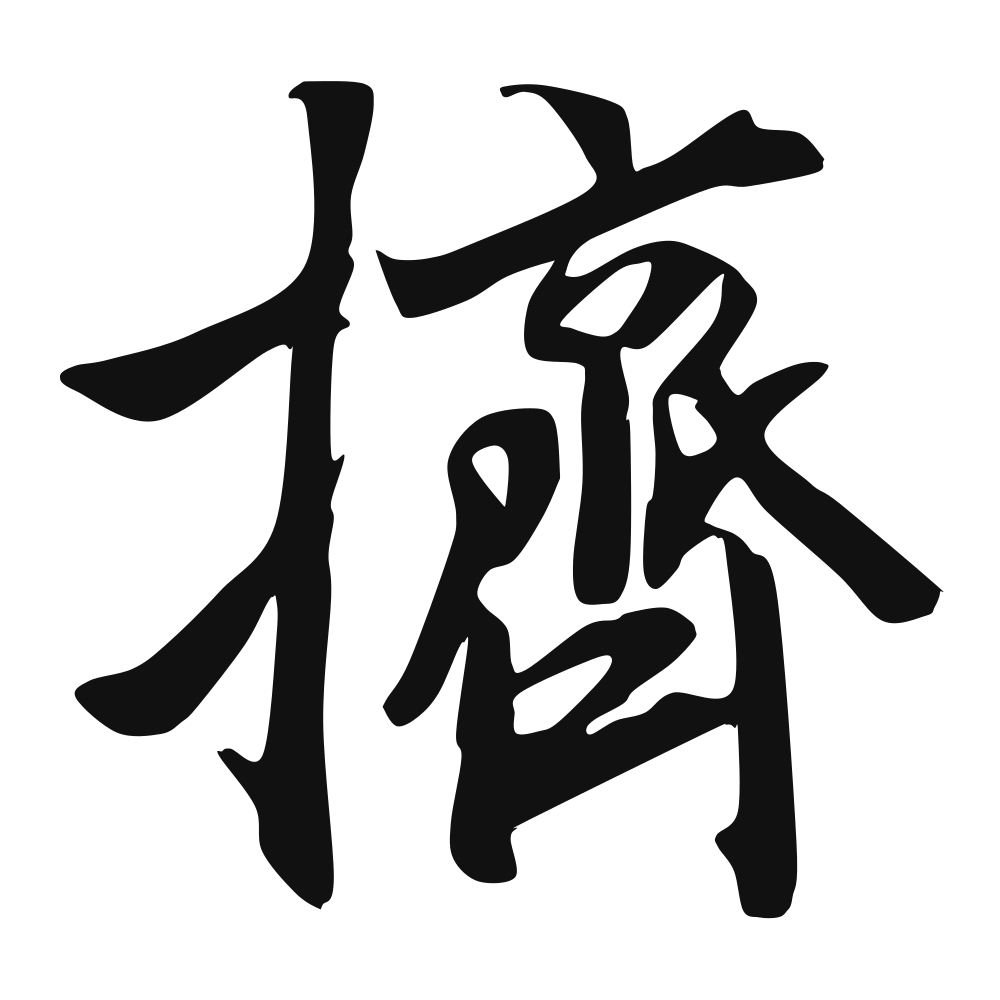
挤
to crowd in; to cram in; to force others aside; to press; to squeeze; to find (time in one's busy schedule)
Closest English meanings
crowd·squeeze
The Calligrapher — Lù Jiǎnzhī 陆柬之
Tang calligrapher and nephew of Yu Shinan; his running-script 'Essay on Literature' survives
Tang calligrapher (), master of running script — known for 《文赋》. Tang dynasty
Cultural Story
The spoken 擠 is bodies pressed into one space until the shape gives. The old books said 迫 or 壓; 擠 is the bus and the market, the crowd as a physical substance. It took the city to invent the word the classics did not need, and the market crowd was the first substance the poets refused to describe because no metaphor was thick enough.
Common words & phrases
- 拥挤 crowded
- 挤压 squeeze · press
- 挤满 packed · crowded
- 排挤 squeeze out · exclude
- 挤出 squeeze out
Read the story behind the character
The train is 擁擠; a rival is 排擠d out; a tube is 擠壓d. The crowd is an office and a tube of paste now. The press that once meant only too many bodies means any force that squeezes something smaller than itself out of the frame, and the tube of paste is only the market crowd, miniaturized and capped.
Why this character belongs on skin
The crowd does not apologize for its weight. Shoulder to shoulder, breath to breath, we are pressed into one warm, indifferent mass, and somehow we survive the pressing. The character is the squeeze — to crowd, to press close, to make room by force where there was none. In the market at dawn, in the doorway of the fleeing train, the body learns that closeness is both danger and salvation. The Buddhists say we are interdependent, threaded together whether we like it or not. To be squeezed is to be reminded you are not alone, even when alone would be easier. Carry 挤 where you have been pressed and did not break — the ribcage, the shoulder that held the line. The ink stays; the pressure passes. You were made to be among.
Own this character
Purchase delivers the original SVG of this glyph, brushed by Lù Jiǎnzhī 陆柬之, ready to place on skin, paper, or screen.