
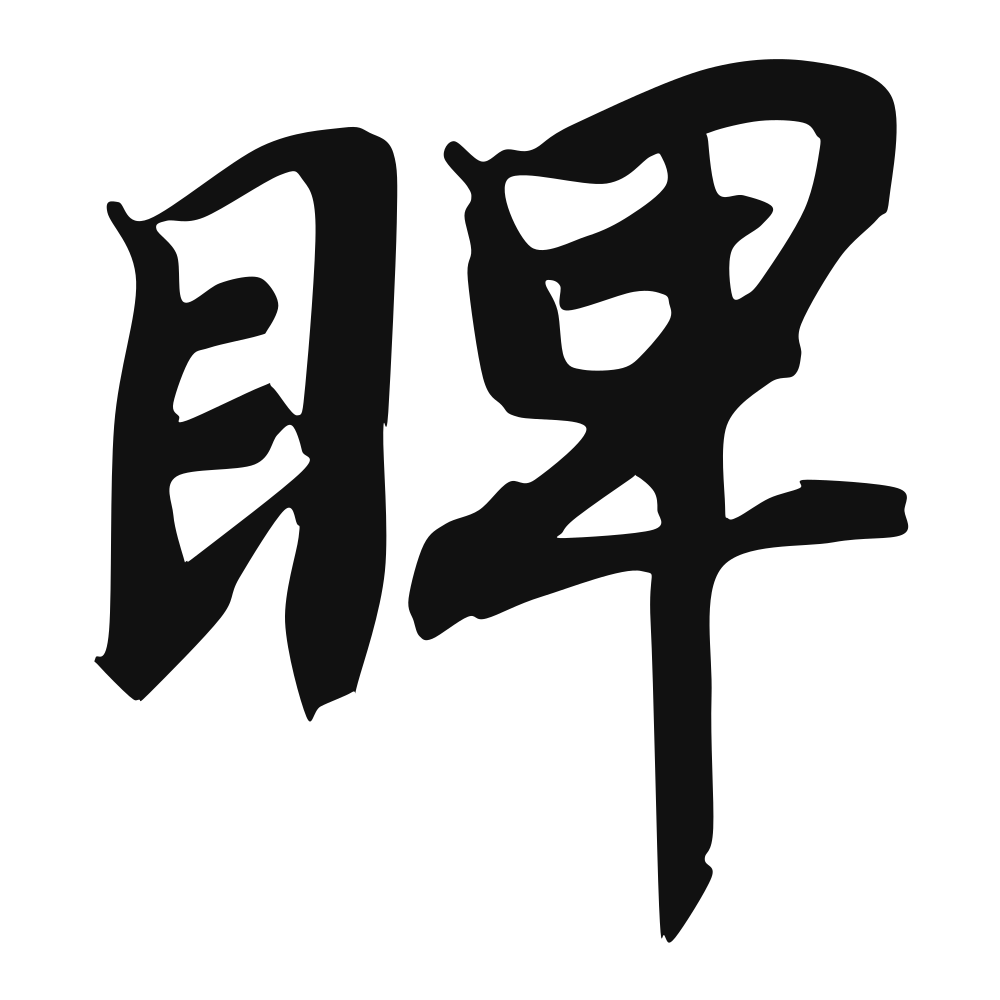
睥
Taiwan pr. [bi4]
Closest English meanings
look askance·glance
The Calligrapher — Lù Jiǎnzhī 陆柬之
Tang calligrapher and nephew of Yu Shinan; his running-script 'Essay on Literature' survives
Tang calligrapher (), master of running script — known for 《文赋》. Tang dynasty
Cultural Story
睥睨 is the proud sidelong glance, chin lifted. Ancient texts gave it to the powerful surveying rivals from above, and builders borrowed the word for the parapet teeth on city walls — the 睥睨 from which watchmen looked down on every approaching stranger.
Common words & phrases
- 睥睨 look down upon · glance sideways
Read the story behind the character
睥睨 lives in wuxia novels and costume dramas: the sect master 睥睨 the assembled heroes, the villain glances sideways before the duel, and esports casters describe a champion's 睥睨 glare at the podium. Everyday speech avoids it — which is exactly why writers prize it.
Why this character belongs on skin
睥睨 is a gaze with altitude: eyes half-lowered, surveying city walls, courtiers, the whole sweating theater of ambition from slightly above. Classical writers gave the look to generals on ramparts and to sages on mountaintops — and to lovers, in the same breath, watching the beloved with amused, proprietary tenderness. The word keeps both temperatures. There is the contemptuous version, cold as marble, and there is the other one: the affectionate disdain of someone who knows you entirely and adores you anyway, watching you fail magnificently at something with a half-smile. Zhuangzi's perfected man 睥睨 the dusty world not from arrogance but from altitude — he has seen how small the prizes are. To wear 睥 is to claim that vertical gaze for yourself: the raise of the chin before the battle, the slow blink at life's little summons, the look that says I see the whole board — and I am not impressed, and I am here anyway.
Own this character
Purchase delivers the original SVG of this glyph, brushed by Lù Jiǎnzhī 陆柬之, ready to place on skin, paper, or screen.