
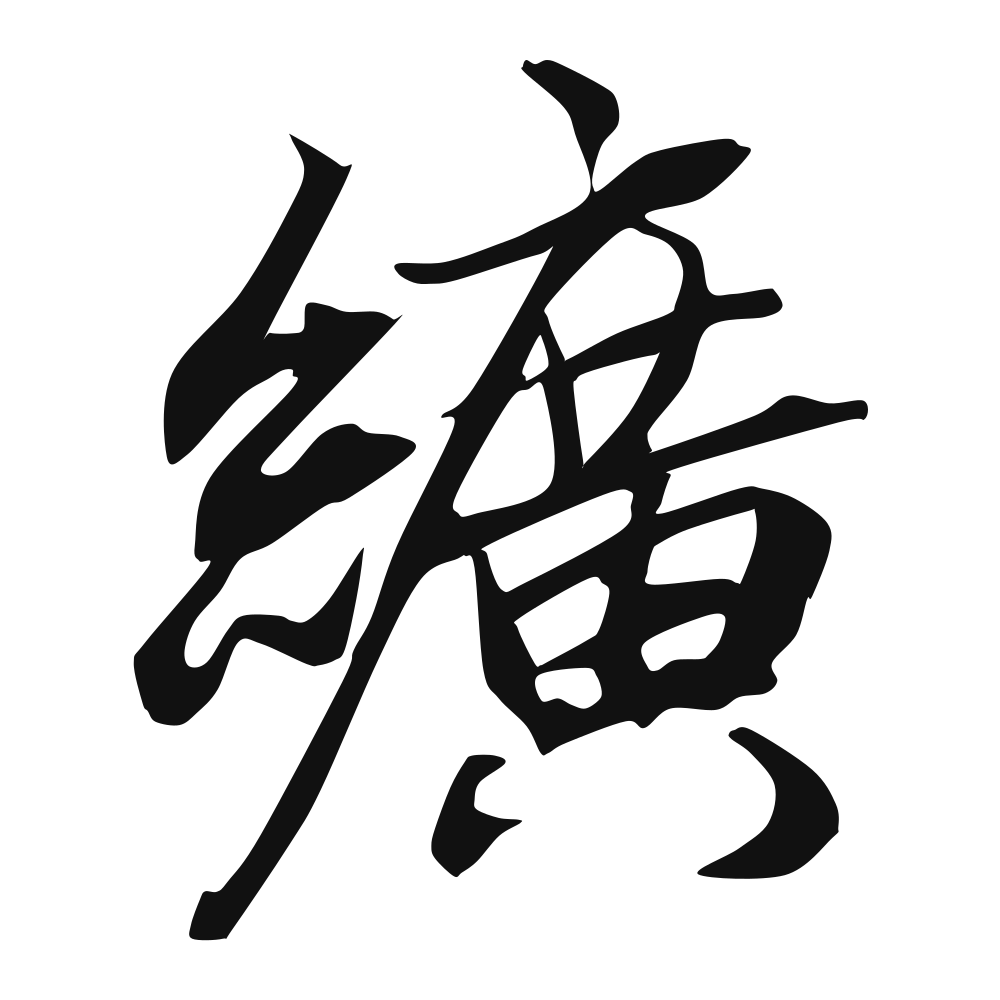
纩
fine floss-silk or cotton
Closest English meanings
silk wadding·silk floss
The Calligrapher — Lù Jiǎnzhī 陆柬之
Tang calligrapher and nephew of Yu Shinan; his running-script 'Essay on Literature' survives
Tang calligrapher (), master of running script — known for 《文赋》. Tang dynasty
Cultural Story
纩 meant silk floss, the downy waste of the cocoon teased apart for warmth. The Shuowen defines it simply as beaten silk wadding, stuffed layer upon layer into the winter robes of nobles. The Liji describes padded garments sewn shut like cocoons, while the Analects praises Zilu, who stood proudly beside fox-fur wearers in a ragged coat stuffed not with 纩 but with coarse hemp.
Common words & phrases
- 绵纩 silk wadding
- 纩衣 padded silk garment
- 重纩 thick silk wadding
Read the story behind the character
Today 纩 survives almost only in books and costume dramas. A historical novel might describe a grandmother sewing 重纩, double-thick silk wadding, into a son's travel coat before a northern winter, and museum labels for 纩衣 explain how padded silk garments kept scholars warm. Modern winter coats hold down or synthetics, so 绵纩 now reads as pure antiquarian charm.
Own this character
Purchase delivers the original SVG of this glyph, brushed by Lù Jiǎnzhī 陆柬之, ready to place on skin, paper, or screen.