
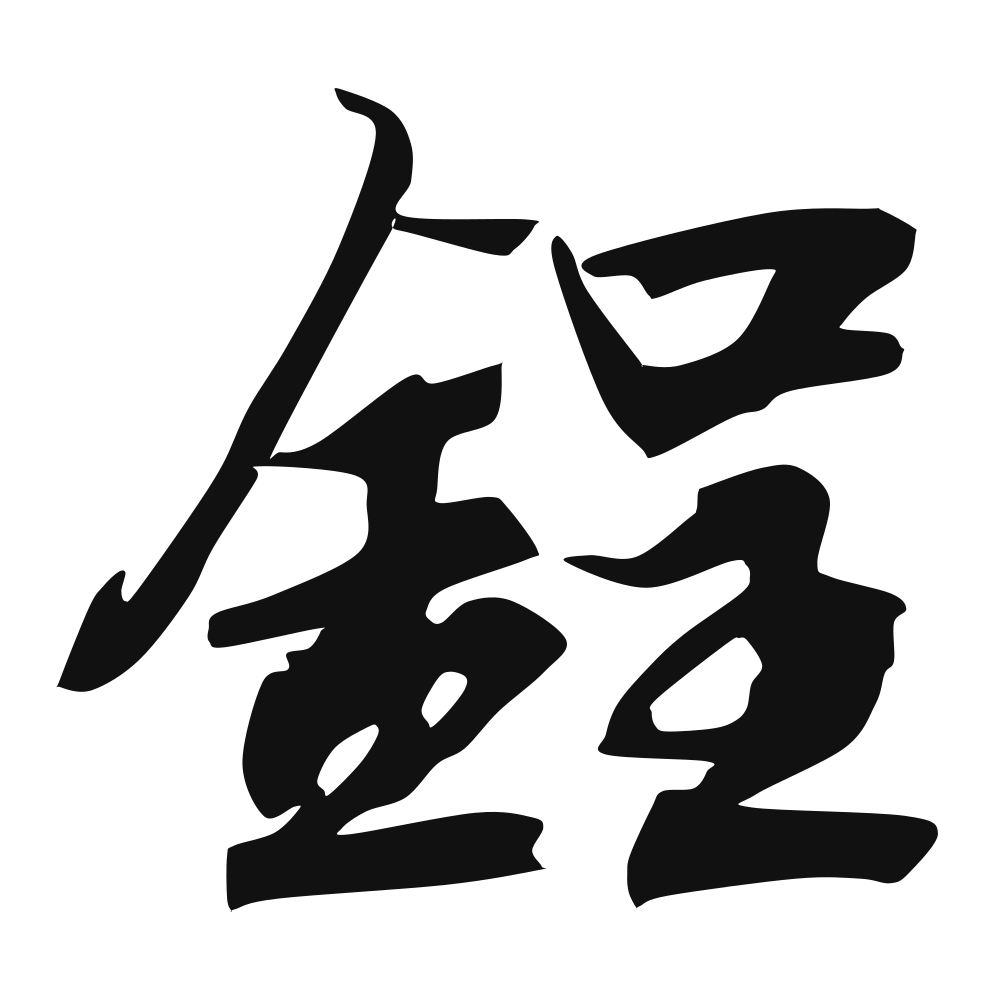
锃
polished; shiny
Closest English meanings
shiny·glossy·polished
The Calligrapher — Lù Jiǎnzhī 陆柬之
Tang calligrapher and nephew of Yu Shinan; his running-script 'Essay on Literature' survives
Tang calligrapher (), master of running script — known for 《文赋》. Tang dynasty
Cultural Story
锃 pairs metal with 呈 and paints the gleam of a surface rubbed to brightness. It is the shine that comes only from diligent polishing, the proud lustre of a floor or blade buffed until it throws back the light. To 锃 is to be made new.
Common words & phrases
- 锃亮 shiny bright · gleaming
- 锃光 glossy · polished
- 锃明 bright and shiny
Read the story behind the character
We say a floor or a blade is 锃亮, gleaming bright; 锃光 and 锃明 describe that same polished lustre. The word appears whenever something has been buffed until it throws back the light—clean, new and proud.
Why this character belongs on skin
锃 is the character for that hard, wet shine — metal polished until it looks lit from beneath, a blade drawn from oil, shoes sharpened to mirrors on a wedding morning. It is not the passive gleam of gold in a case; it is earned light, the result of friction and attention, a surface somebody cared for. Japanese swordsmiths folded steel a thousand times not only for strength but for this: a blade so finished it becomes a mirror in which the wielder sees his own face honestly. Confucius taught that the noble person polishes himself the way a craftsman polishes jade — cutting, filing, carving — and that the polishing is never done. Shine, in this character, is a discipline wearing its reward. To wear it as ink is to say: I am maintained. I am looked after, by my own hands. The world respects what gleams, but you will know the truer secret — that the gleam is only the visible half of devotion.
Own this character
Purchase delivers the original SVG of this glyph, brushed by Lù Jiǎnzhī 陆柬之, ready to place on skin, paper, or screen.