
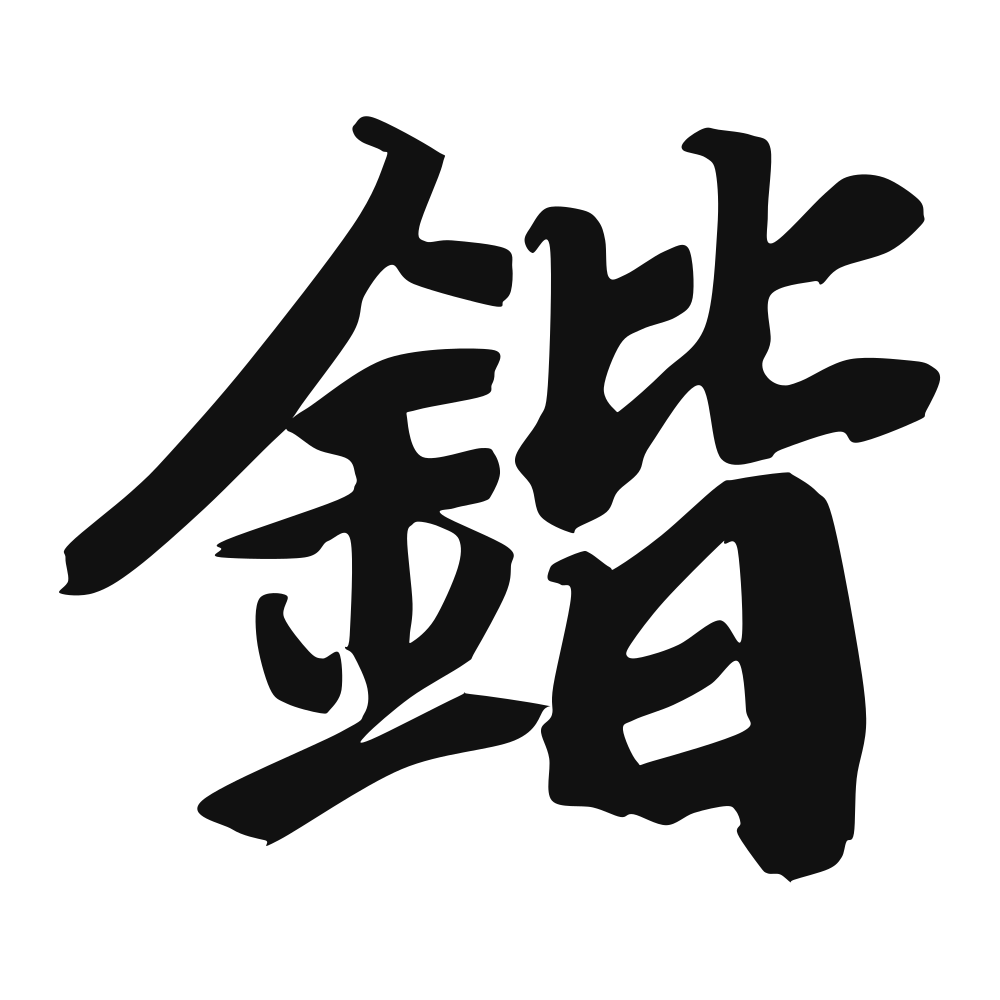
锴
high quality iron
Closest English meanings
fine iron·good steel
The Calligrapher — Lù Jiǎnzhī 陆柬之
Tang calligrapher and nephew of Yu Shinan; his running-script 'Essay on Literature' survives
Tang calligrapher (), master of running script — known for 《文赋》. Tang dynasty
Cultural Story
锴 pairs metal with 皆 and, in the《説文》, simply means iron—the people of Jiujiang, it notes, called iron 锴. It is the good, sound metal of the smith, the dependable stuff of blades and tools, carrying the old praise of iron done right and strong.
Common words & phrases
- 锴铁 fine iron · good steel
Read the story behind the character
We speak of 锴铁, fine iron or good steel, the dependable stuff of blades and tools. Though rare in daily speech, 锴 carries the old praise of iron done right—strong, clean and worthy of the forge.
Why this character belongs on skin
There is iron, and then there is iron worth trusting. 锴 names the second kind — the refined metal, folded and fired until every impurity has been persuaded to leave, pure enough to hold an edge. The old texts reached for it when they wanted a metaphor for a person of unimpeachable character, someone whose word behaves like well-tempered steel: it does not bend under flattery or shatter under pressure. What the forge teaches is uncomfortable. The fire that purifies is the same fire that hurts; the hammer that shapes is the same hammer that strikes. Nobody comes through intact by accident. Character, like a blade, is a series of deliberate choices made at high temperature — a hard conversation, a principle kept when it cost something, a flaw acknowledged and worked out. To wear 锴 is to claim that process as your own: not raw ore, not yet, but metal becoming itself.
Own this character
Purchase delivers the original SVG of this glyph, brushed by Lù Jiǎnzhī 陆柬之, ready to place on skin, paper, or screen.