
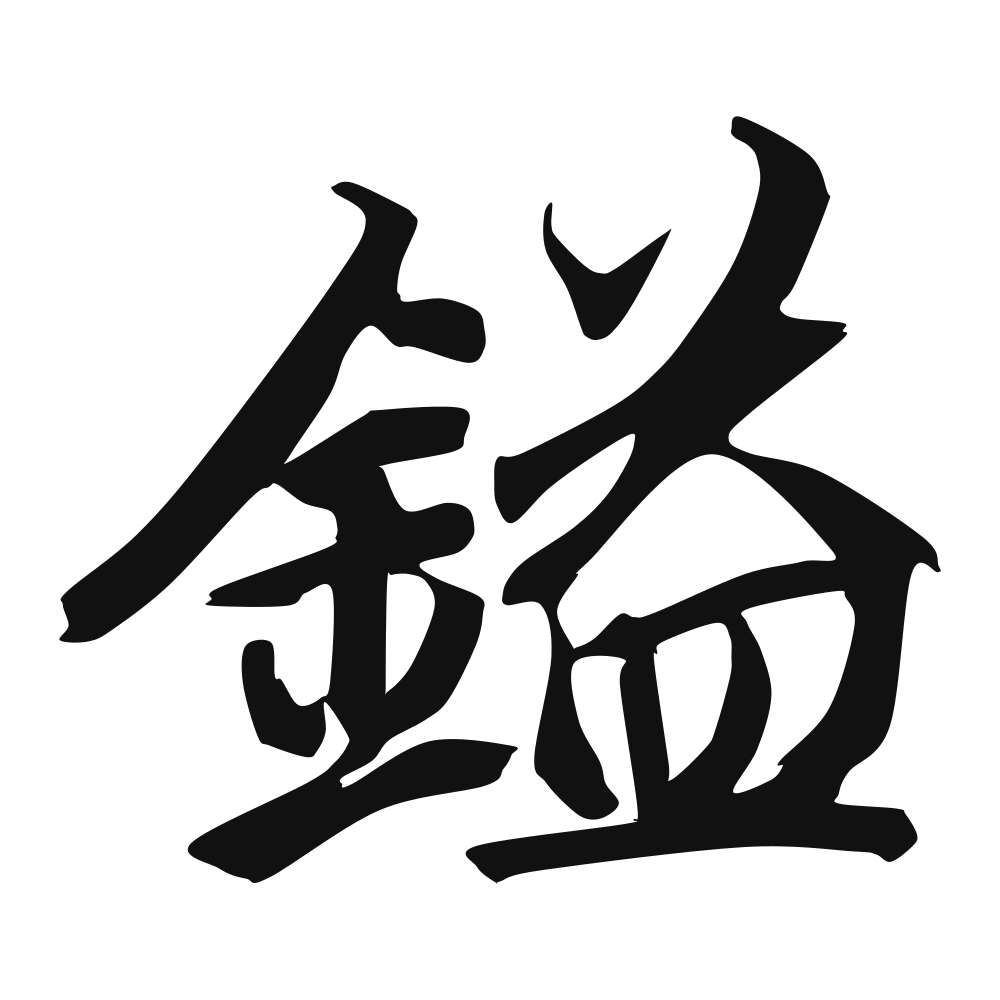
镒
ancient unit of weight equal to 20 or 24 liang 兩|两[liang3]
Closest English meanings
ancient weight unit·yi
The Calligrapher — Lù Jiǎnzhī 陆柬之
Tang calligrapher and nephew of Yu Shinan; his running-script 'Essay on Literature' survives
Tang calligrapher (), master of running script — known for 《文赋》. Tang dynasty
Cultural Story
镒 pairs metal with 益 and names an ancient unit of weight—twenty or twenty-four 两 of gold, a fortune clasped in the hand. Records speak of 百镒, a hundred yi of gold, pledged among lords, and of 镒金, gold counted by the 镒.
Common words & phrases
- 百镒 hundred yi of gold
- 镒金 gold measured in yi
Read the story behind the character
Records speak of 百镒, a hundred yi of gold, pledged or gifted among lords, and of 镒金, gold counted by the 镒. The character is the ghost of a fortune once weighed out in shining metal.
Why this character belongs on skin
A unit of weight, twenty or twenty-four liang of precious metal — the measure in which honor was paid in the old states, when a minister's loyalty or a hostage's freedom was counted out on scales and the scales did not blink. The metal radical and a stroke for measure: value made countable, generosity rendered in grams. Mencius was offered gold in sums like these and weighed them against righteousness — and the scales he used are the interesting part, because everyone owns a set and few know what theirs weighs. Every life runs on some unit — money, hours, attention, the currency you secretly count when deciding what things cost. The character asks which one you weigh your days in, and whether the price was fair. Ink the ancient ounce of gold where you'll see it when you bargain — with employers, with lovers, with yourself. Not to remind you of price. To remind you of scale.
Own this character
Purchase delivers the original SVG of this glyph, brushed by Lù Jiǎnzhī 陆柬之, ready to place on skin, paper, or screen.