
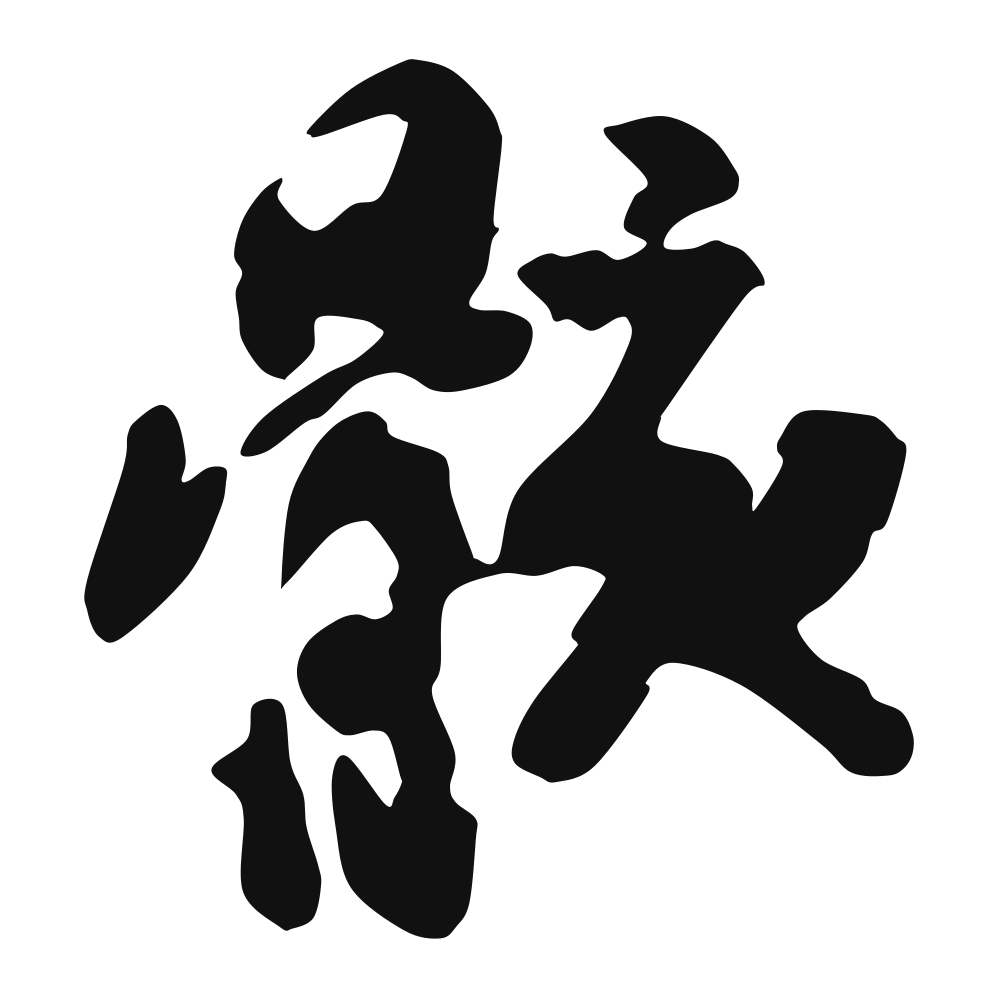
The Calligrapher — Lù Jiǎnzhī 陆柬之
Tang calligrapher and nephew of Yu Shinan; his running-script 'Essay on Literature' survives
Tang calligrapher (), master of running script — known for 《文赋》. Tang dynasty
Cultural Story
骸 adds 亥 to the bone radical and is glossed in the 《説文解字》 as 骨也, "bone," specifically the shin. Over time it widened to mean the bones of the whole body, and then the body or corpse itself.
Common words & phrases
- 骸骨 bones · skeleton
- 残骸 remains · wreckage
- 尸骸 corpse · dead body
- 形骸 body · physical form
- 遗骸 remains · corpse
Read the story behind the character
骸 appears in 骸骨, bones or a skeleton, and 遗骸, the remains of the dead returned home. 残骸 is wreckage—of a plane or ship—while 尸骸 and 形骸 name the body and its physical form. The word lingers where loss and memory meet.
Why this character belongs on skin
The bones that remain. The character means remains, a body after the breath has left it, and it does not flinch — the flesh radical beside the bone radical, the whole transit from surface to truth in one stroke. Hamlet held a skull in a churchyard and got his philosophy; Chinese poets wrote of old battlefields white with them, and drew from both the same cold comfort — that what you are now is temporary and therefore urgent, that every hour is spent at cost and none of it is refundable. But there is strange tenderness here too: remains are what the living gather up and bury with care, what love insists on handling gently, what armies stop for. Memento mori has never gone out of fashion because it has never once been wrong. Wear the word itself, close to the bone where it lives. It is not morbid. It is a deadline, kept close and beautiful.
Own this character
Purchase delivers the original SVG of this glyph, brushed by Lù Jiǎnzhī 陆柬之, ready to place on skin, paper, or screen.