
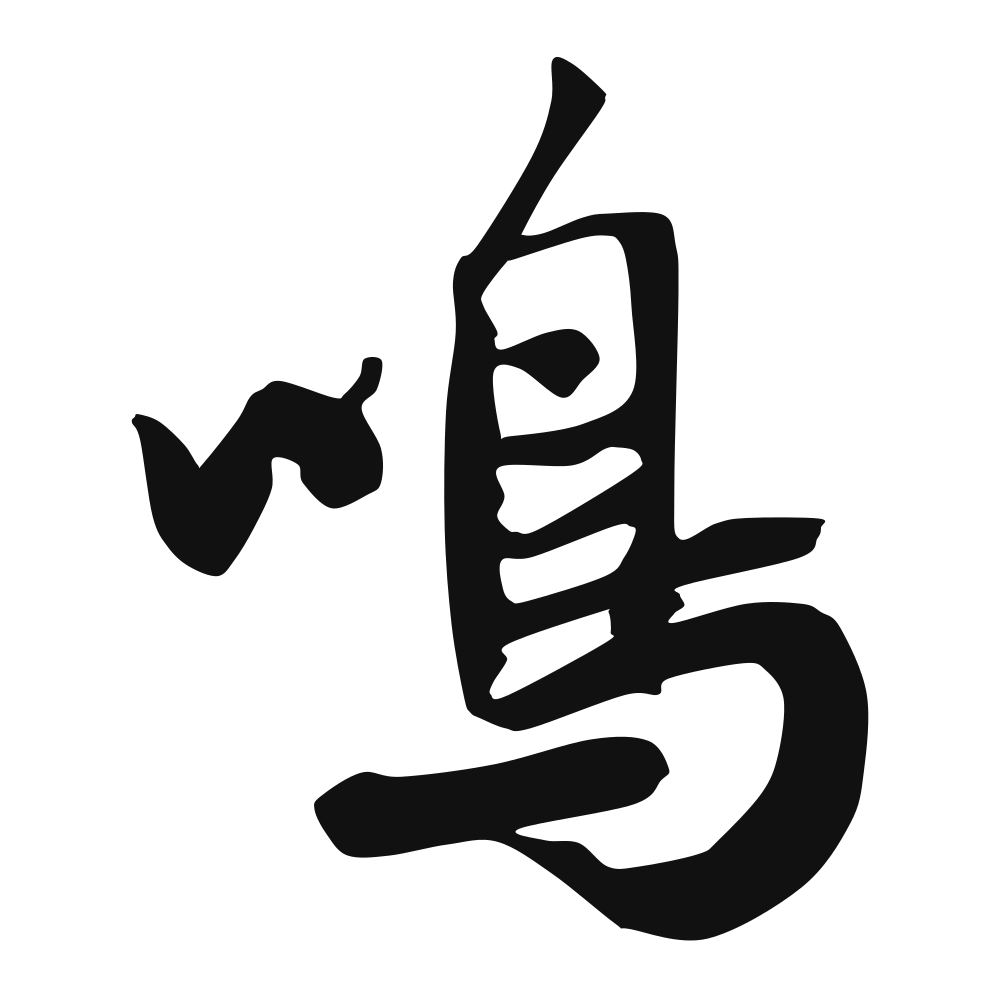
鸣
to cry (of birds, animals and insects); to make a sound; to voice (one's gratitude, grievance etc)
Closest English meanings
cry·sound·ring
The Calligrapher — Lù Jiǎnzhī 陆柬之
Tang calligrapher and nephew of Yu Shinan; his running-script 'Essay on Literature' survives
Tang calligrapher (), master of running script — known for 《文赋》. Tang dynasty
Cultural Story
《説文解字》explains 鸣 as “鸟声也” (a bird's voice), a compound ideograph joining 鳥 and 口—a bird and a mouth, hence a cry. Bronzeware forms already pair the two elements. The sense widened from birdsong to any sounding forth: bells, thunder, even a person's voiced protest or thanks across the centuries.
Common words & phrases
- 鸣叫 cry · chirp
- 雷鸣 thunder · roar
- 鸣谢 express thanks
- 鸣笛 whistle · toot
- 哀鸣 cry in pain · wail
- 共鸣 resonance · sympathy
Read the story behind the character
A sparrow 鸣叫 (chirps) at dawn and 雷鸣 (thunder) rolls in a storm. We 鸣谢 (express thanks) in book prefaces and 鸣笛 (toot) a horn in traffic. An animal in pain 哀鸣 (wails), and two strangers feel 共鸣 (resonance) at a concert—one character carrying every cry from bird to heart.
Why this character belongs on skin
不鸣则已,一鸣惊人 — stay quiet, then astonish the world with a single cry. 鸣 is the bird's call, the bell's struck note, the moment of sound that changes everything. We are told to wait, to be good, to make no noise until we are permitted — but 鸣 knows some cries cannot be scheduled. The first time you said I am, that was 鸣. The first time you sang in a room full of your own kind, that was 鸣 too. It does not have to be constant. The proverb honors the silence as much as the cry; it only asks that when you speak, you mean it to the bone. To ink 鸣 is to keep the bird awake inside you, ready. Let it rest near your chest, a small character that remembers you can be still and still be dangerous, still and still, one day, astonish everyone.
Own this character
Purchase delivers the original SVG of this glyph, brushed by Lù Jiǎnzhī 陆柬之, ready to place on skin, paper, or screen.