
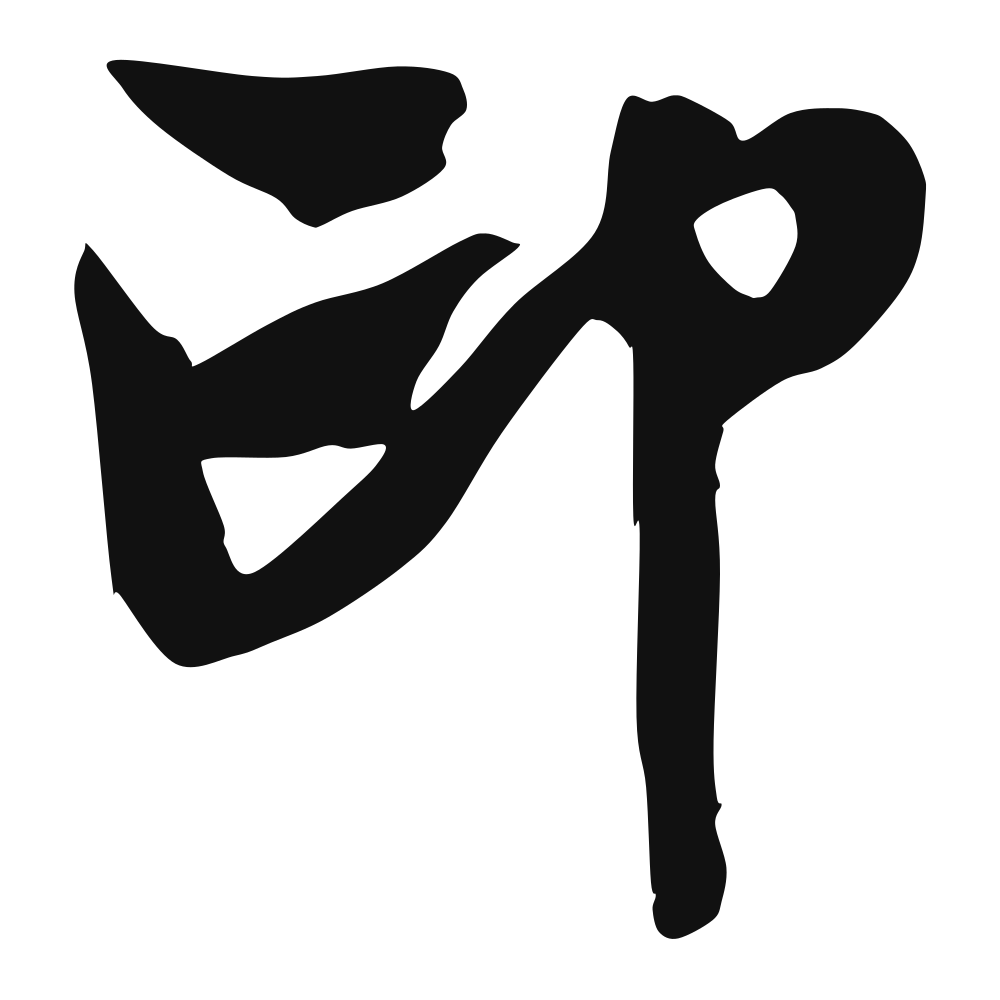
印
surname Yin; to print; to mark; to engrave; a seal; a print; a stamp; a mark; a trace; image
Closest English meanings
seal·print·stamp·mark
The Calligrapher — Mǐ Fú 米芾
Song eccentric genius of dynamic, 'flying' running script.
Song calligrapher (1051–1107), master of running script — Song eccentric genius ('crazy Zhang, idiot Mi') whose running script alternates discipline with glee. Song dynasty
Cultural Story
The First Emperor's 傳國玉瓽 — a jade seal cut with “受命於天” — stood for the right to rule, and lost it meant a dynasty's end. 印章 later sealed every contract and letter; 印刷 began with wood blocks, then Bi Sheng's movable type. 印象 is what a face leaves, the seal of a moment.
Common words & phrases
- 印象 impression
- 印刷 print · printing
- 印花 stamp · print
- 印章 seal · stamp
- 脚印 footprint
- 打印 print
Read the story behind the character
A 印章 stamps the paper a deal needs; 印刷 is the press a publisher runs. 印花 is the tax mark on a bottle, 脚印 the track a dog leaves in snow, and 打印 the page a student sends. The word strikes from the carved stone to the inkjet in the corner.
Why this character belongs on skin
Before the word, there was the press of a hand into clay — the ruler's seal, the lover's thumbprint, the mark that said this is mine and this is real. 印 is exactly that: the stamp, the impression, the trace left when one thing presses against another and does not fully let go. A tattoo is the most intimate 印 of all, a seal pressed into the living body, read by no court but your own. We are hungry for proof that we were here, that the feeling was true, that the person was worth marking. The character carries that hunger honestly. To wear it is to admit you wanted a sign made permanent, a small official stamp on the document of a life. Some marks fade. This one was always the point — the imprint you chose, the evidence you left, the quiet seal of having meant something enough to keep.
Own this character
Purchase delivers the original SVG of this glyph, brushed by Mǐ Fú 米芾, ready to place on skin, paper, or screen.