
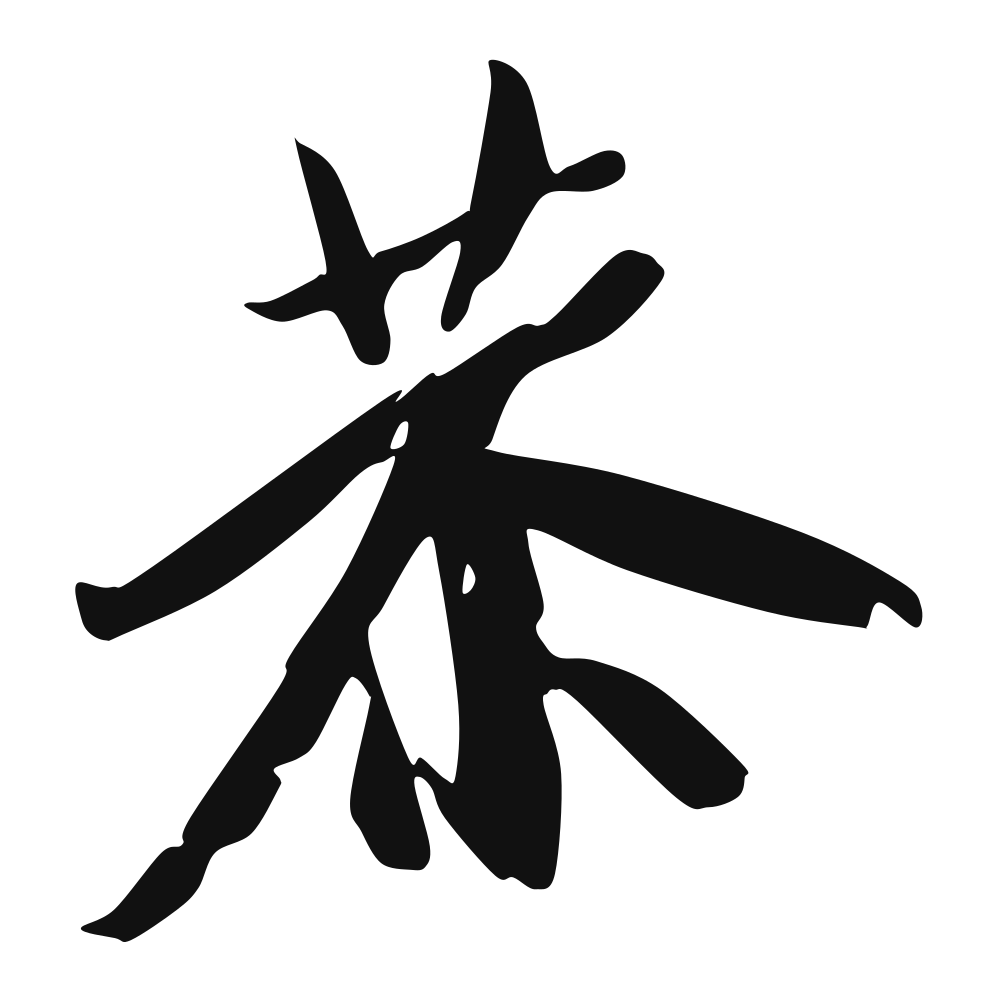
The Calligrapher — Mǐ Yǒurén 米友仁
Song painter-son of Mi Fu; co-inventor of 'cloud-mist' ink play.
Song calligrapher (), master of running script — known for 米芾之子,《潇湘奇观图》题. Song dynasty
Etymology & Meaning · 字义溯源
2 · The Character: 恭 恭 (gōng, 1st tone) is glossed by the Shuowen Jiezi as 肅也。从心共聲 — 'reverent, solemn; from 心 (heart) and 共 (together) as sound.' The Liji distinguishes: 在貌為恭,在心為敬 — 'reverence shown in bearing is 恭, in the heart is 敬.' Kangxi files it at 10 strokes (often under 心 or 小). As a word 恭 means respectful, courteous. 《書·洪範》 lists 貌曰恭 — 'in appearance, be reverent.' 《論語·顏淵》 says 君子敬而無失,與人恭而有禮 — 'the noble is reverent and without fail, courteous to others and ritually proper.' 《論語·學而》 names it among the five: 溫良恭儉讓. Honest note: 恭 is gentle deference; it can read as self-effacing rather than strong, and 恭維 means 'to flatter,' a trap to know. The graph also names the bearing owed at court and altar — the outer, performable face of 恭敬.
Cultural Story
恭 is the reverence that shows in the body. 論語 ties it to 礼, the respect that becomes a gesture — the hands, the step, the lowered eyes. 恭喜 is the joy offered with the proper bend, and the word kept that outward care: honor performed, so the other can feel the weight you give them.
Where a Western reader can stand: Where a Western reader can stand: 'reverent / respectful' — the Latin reverentia or the Greek aidōs, outward deference in bearing. Honest caveat: 恭 is a safe, virtuous glyph (one of the five-constant-virtue-adjacent terms); pair it (恭敬, 謙恭) for 'courteous deference,' and Mi Youren's soft ink is genuine Song scholar-art — he inherited Mi Fu's studio, an honest lineage rather than a myth.
Common words & phrases
- 恭敬 respectful
- 恭喜 congratulations
- 恭维 flatter
- 谦恭 modest · respectful
- 恭候 await respectfully
- 恭贺 congratulate
Read the story behind the character
恭喜 is the text at the new year, 恭维 the flatter a smile hides, 恭候 the phrase a invite prints, 谦恭 the manner a servant learns. The bend is a message now; the care is often thin. We still perform the honor, and call the performing politeness, which the old text already warned was only 恭 when it touched the rite.
Why this character belongs on skin
Bow from the waist and mean it in the bone — that is gōng. Not the servant's flinch but the chosen humility, the respect that lowers the head because the thing before you is genuinely greater. The Confucian gentleman wore gōng like clean linen, an inward posture made visible; to greet the elder, the stranger, the dead, with the whole body's attention. The Christian kneels not from fear but recognition. A man who is gōng has nothing to prove and therefore proves everything. Wear it where you would bow — the chest, the folded hands. Let it be the mark of a reverence that is not weakness but the rarest strength: the power to honor what stands above you, and mean it, entirely, with the open hand and the bent neck and the quiet, unashamed heart.
Own this character
Purchase delivers the original SVG of this glyph, brushed by Mǐ Yǒurén 米友仁, ready to place on skin, paper, or screen.