
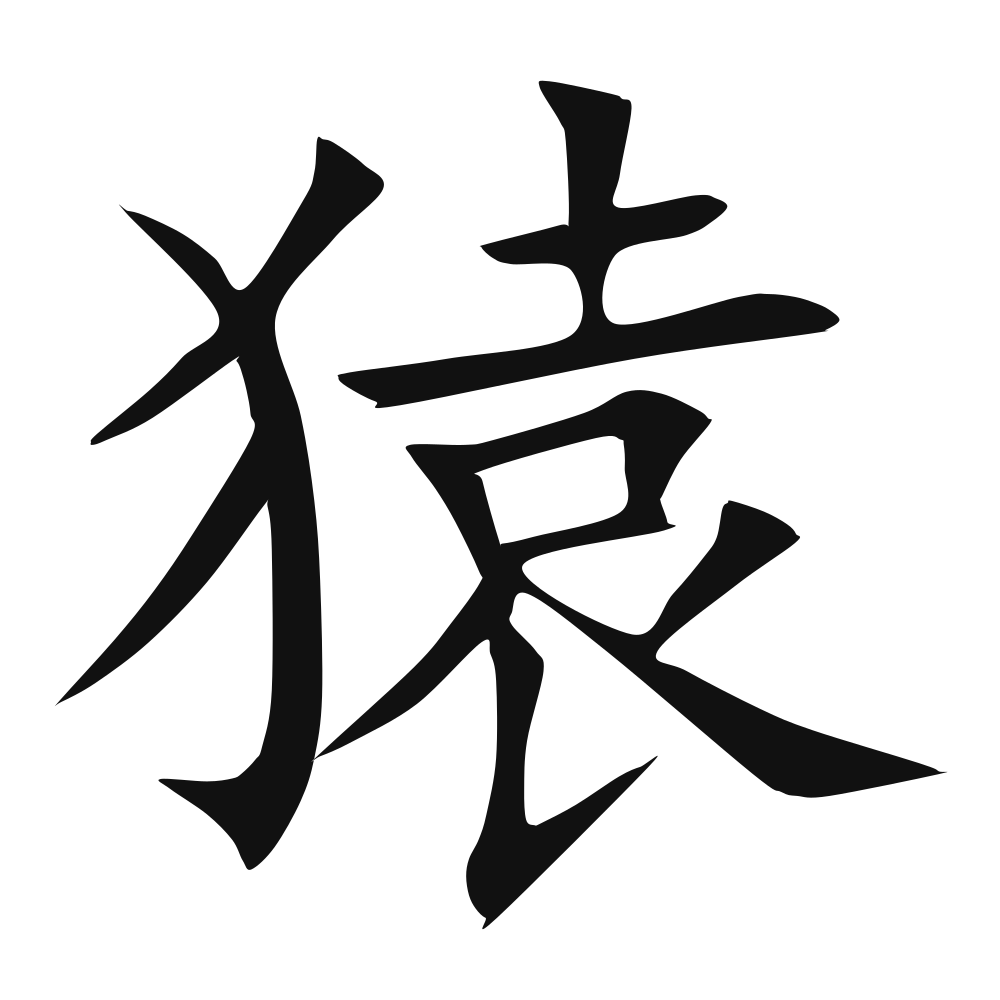
The Calligrapher — Mǐ Yǒurén 米友仁
Song painter-son of Mi Fu; co-inventor of 'cloud-mist' ink play.
Song calligrapher (), master of running script — known for 米芾之子,《潇湘奇观图》题. Song dynasty
Cultural Story
猿 is the long-armed ape, mournful singer of classical poetry; 李白 wrote of 猿啸 in the gorge, and 水经注 notes their cries echoing the Yangtze cliffs. The 心猿 (restless monkey-mind) of 心經 warns that desire leaps like an ape, never still for long.
Common words & phrases
- 猿猴 apes · monkeys
- 猿人 ape-man · hominid
- 长臂猿 gibbon
- 猿类 apes
- 心猿 restless mind
- 白猿 white ape
Read the story behind the character
Documentaries film 猿猴 (apes and monkeys) using tools, and 猿人 (ape-man) displays teach human evolution in museums. A 长臂猿 (gibbon) swings at the zoo, while 白猿 (white ape) legends inspire wuxia films. Buddhists still speak of 心猿 (restless mind), the thoughts that will not sit still.
Why this character belongs on skin
猿 is the gibbon, the ape of the high gorges — and in Chinese poetry it is the sound of grief made animal. The character gives it the dog-beast radical and a sound-word for its long, rising cry. Tang poets could not cross the Three Gorges without hearing them: gibbans crying from the sheer banks, their voices answering boatmen through the fog, until a whole afternoon of river travel felt like an elegy. The cry was said to break the hearts of travelers already broken by exile. And yet the gibbon itself was the hermit of the cliffs — arm-swinging through the canopy, never caged successfully, never domesticated, keeping its own alpine republic above the world of fields and taxes. The painters loved that freedom. To wear 猿 is to claim both things at once: the voice that mourns honestly into the gorge, and the wild body that will not come down for anyone.
Own this character
Purchase delivers the original SVG of this glyph, brushed by Mǐ Yǒurén 米友仁, ready to place on skin, paper, or screen.