
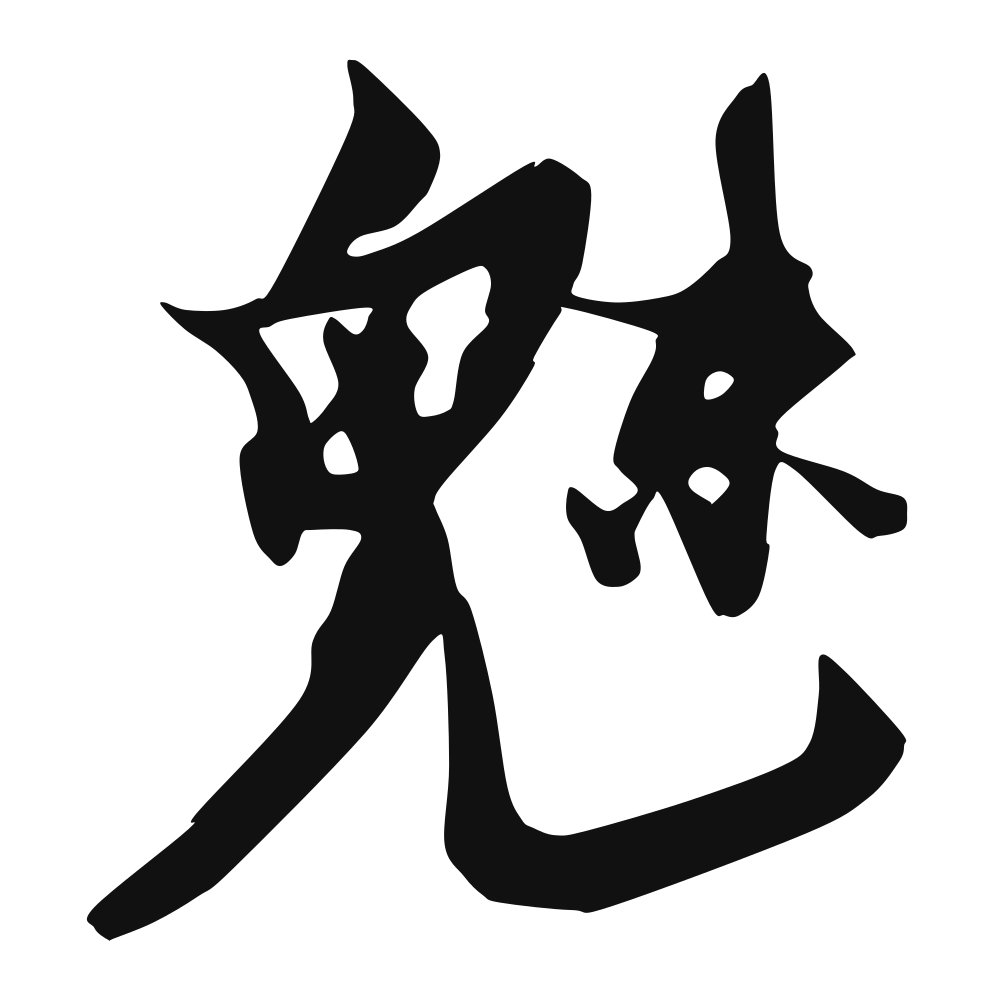
魅
demon; magic; to charm
Closest English meanings
demon·charm·to bewitch
The Calligrapher — Ní Yuánlù 倪元璐
Ming running-script master who died a loyalist's death, one of the late-Ming 'three trees'.
Ming calligrapher (), master of running script — late-Ming calligrapher-painter of jagged, personal running script. Ming dynasty
Cultural Story
魅 joins 鬼 with 未 and in old texts is a mountain or woodland spirit that lures travelers astray. The 《説文解字》 groups it with 魑魅, demons of hill and stream.
Common words & phrases
- 魅力 charm · glamour
- 鬼魅 ghost · demon
- 魅惑 to bewitch · to charm
- 妖魅 demon · evil spirit
Read the story behind the character
魅 means demon and charm: 鬼魅 ghosts and demons, 妖魅 an evil spirit. Yet 魅力 is sheer charm or glamour, and 魅惑 to bewitch. The character neatly spans fright and fascination—the same pull that scared and seduced our ancestors.
Why this character belongs on skin
魅 is the allure that has nothing to do with being liked and everything to do with being felt. Old texts used it for the fox spirit, the irresistible force that walks in human form and leaves everyone changed. You carry this and maybe you've been punished for it — the gaze that lingers too long, the presence that fills a room before you speak. They called it danger. But 魅 is just your magnetism refusing to be apologetic. The pull you feel toward your person, and they toward you, is not a flaw in the order of things; it is the order. Mark yourself with it. Let the character sit on your skin like a dare: I am not here to be safe. I am here to be impossible to ignore. Some powers were meant to be worn.
Own this character
Purchase delivers the original SVG of this glyph, brushed by Ní Yuánlù 倪元璐, ready to place on skin, paper, or screen.