
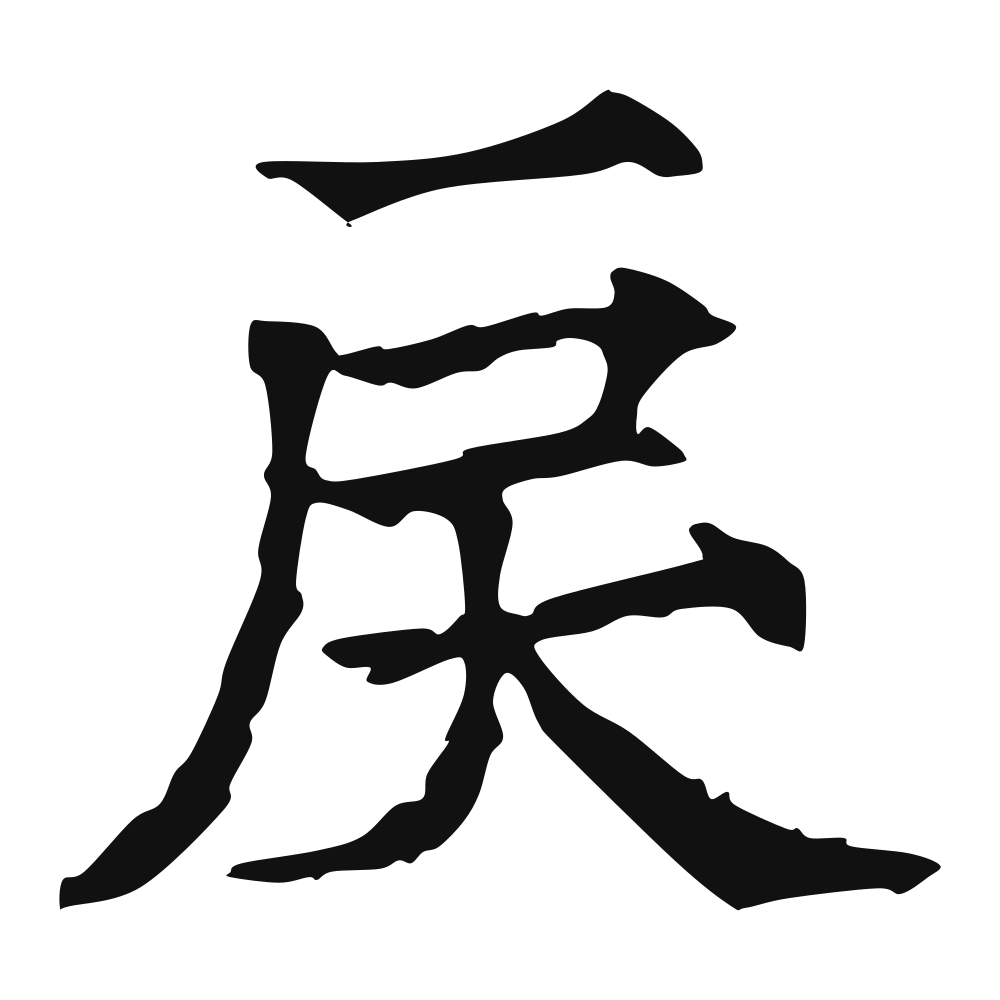
戾
to bend; to violate; to go against; ruthless and tyrannical
Closest English meanings
perverse·fierce·crime
The Calligrapher — Ōuyáng Tōng 欧阳通
Tang regular-script master known for powerful, square strokes.
Tang calligrapher (?–691), master of regular script — known for 《道因法师碑》. Tang dynasty
Cultural Story
戾 is the turn that goes wrong. The 詩經 and the histories use 暴戾 for the ruler who turns on his own, and the word always implies a violence that has bent from its course. The character shows a dog at a threshold, the guardian gone feral. It is the perversity, the cruelty that was not fated but chosen.
Common words & phrases
- 暴戾 violent · ferocious
- 乖戾 perverse · irritable
- 罪戾 crime · guilt
Read the story behind the character
戾 is the harsh word: 暴戾 the tyrant of the documentary, 乖戾 the colleague no one can read, 罪戾 the old charge of guilt. It names the temperament that breaks against others, the edge that cuts the hand that holds it. Mostly you meet it in judgment, not in speech.
Why this character belongs on skin
A dog pressed under a roof—戾's oldest picture is an animal jammed into a space too small, and everything fierce follows from that: twisted, violent, harsh as a winter gale off the plain. The classics write of 戾气, an air of cruelty that makes the very weather feel hostile, and of rulers whose wrath bent the law. Yet the character teaches by its own image—violence is what confinement does to a living thing. Every tradition that studied anger arrived at the same counsel: unbind the creature, or become it. To ink 戾 is to keep your shadow where you can see it, the storm acknowledged and therefore owned. There is a wild beauty in admitting you are not tame. The oldest warriors knew: power without honesty about rage is just a roof waiting to be broken.
Own this character
Purchase delivers the original SVG of this glyph, brushed by Ōuyáng Tōng 欧阳通, ready to place on skin, paper, or screen.