
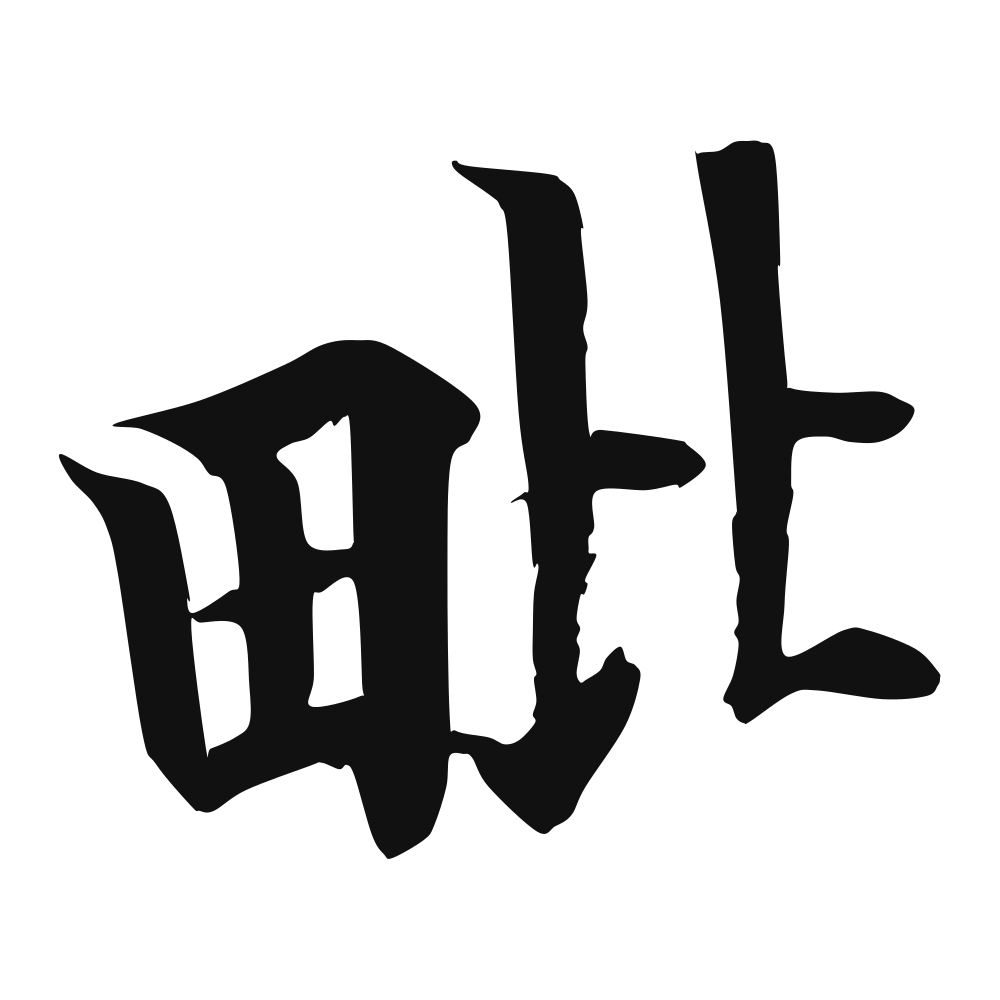
毗
to adjoin; to border on
Closest English meanings
adjacent·to border·to adjoin
The Calligrapher — Ōuyáng Tōng 欧阳通
Tang regular-script master known for powerful, square strokes.
Tang calligrapher (?–691), master of regular script — known for 《道因法师碑》. Tang dynasty
Cultural Story
毗 is built from 田 (field) and a phonetic, meaning 'to border, to adjoin', and by extension 'to help, to assist.' The 說文解字 gives '附也', to lean on, to be adjacent. In older texts it could mean mutual support between states or neighbors; geographically it marks what lies next to what, the shared edge of two things.
Common words & phrases
- 毗邻 adjacent · neighboring
- 毗连 to adjoin · to border
Read the story behind the character
毗 shows up in geography and property: two 毗鄰 (adjacent, neighboring) buildings share a wall, and the new district 毗連 (adjoins, borders) the old town. Though rare in casual talk, it appears on maps, in real-estate listings, and in news about border regions — anywhere one thing sits right up against another.
Why this character belongs on skin
Two houses sharing a wall. Two shoulders almost touching in the dark. 毗 means to be adjacent, to press close, to be joined at the edge — and it lives inside 毗连 and the old Buddhist name 毗卢, the shining Buddha of cosmic light, whose radiance touches everything without leaving anything. There is a philosophy in adjacency: we are not asked to merge, only to meet. One border, held long enough, becomes intimacy. The Confucians built the entire moral universe out of this — the person nearest you, the neighbor, the brother, the guest whose sleeve brushes yours at the table. 毗 is the grammar of nearness. It asks nothing grand: just that you remain where you are and still touch. A tattoo does this too — meaning pressed directly against skin, adjacent to the blood, closer than any book will ever sit. Choose 毗 and you choose a word that leans. A small character, shoulder against your shoulder, for whatever — or whoever — you refuse to be far from.
Own this character
Purchase delivers the original SVG of this glyph, brushed by Ōuyáng Tōng 欧阳通, ready to place on skin, paper, or screen.