
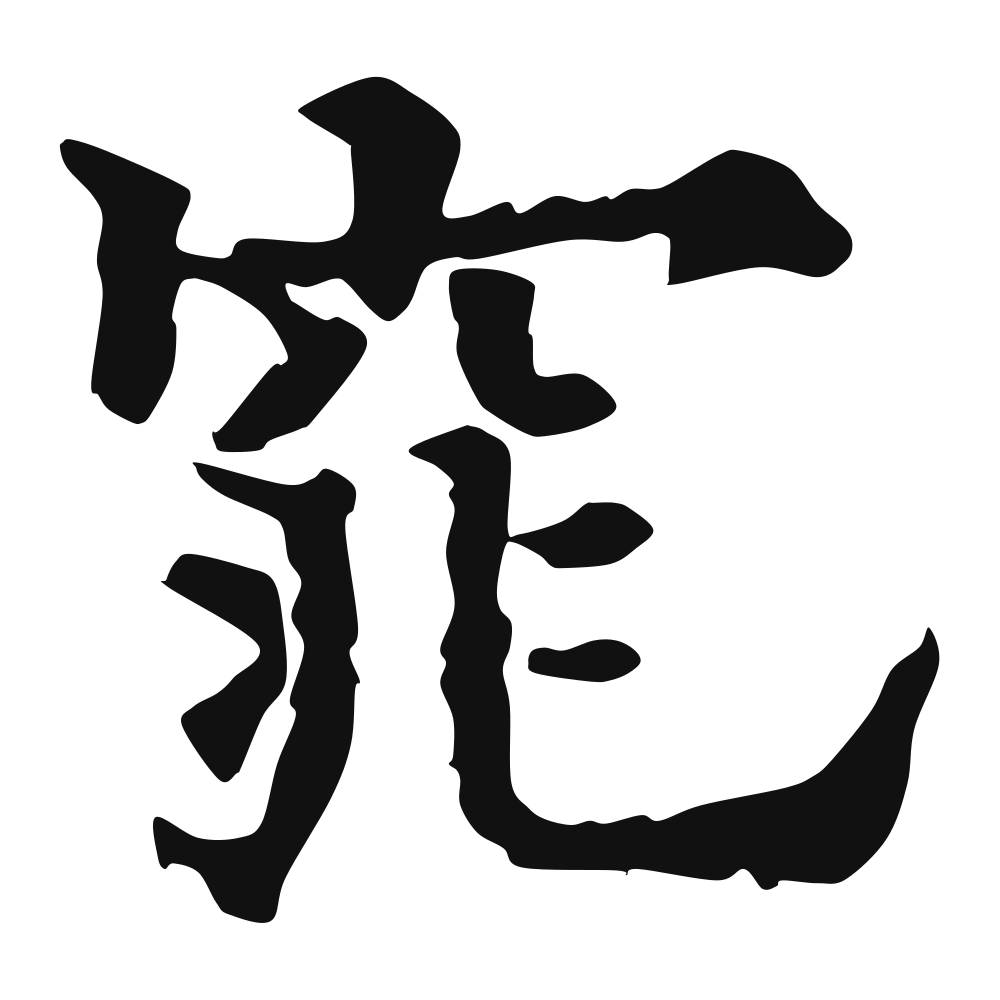
窕
quiet and secluded; gentle, graceful, and elegant
Closest English meanings
graceful·slender·elegant
The Calligrapher — Ōuyáng Tōng 欧阳通
Tang regular-script master known for powerful, square strokes.
Tang calligrapher (?–691), master of regular script — known for 《道因法师碑》. Tang dynasty
Cultural Story
窕 is the outward half of 窈窕 — slender and elegant where 窈 is deep and hidden. Together, in the Book of Songs' opening line, they praise the 窈窕淑女, the graceful maiden worthy of a gentleman. Garden writing borrowed the pair for scenery too: a winding walk that hides and then reveals, unfolding its depths by degrees.
Common words & phrases
- 窈窕 graceful · (of a woman) beautiful · reticent
Read the story behind the character
窕 almost never travels alone. Song lyrics and period dramas recycle 窈窕 — graceful, slender, elegant — as the ultimate compliment to a heroine, and fashion copy borrows the word for a flowing silhouette. Students usually meet the character in that one famous line of the Book of Songs, and remember it by 窕's slim upright shape.
Why this character belongs on skin
The first poem in the Book of Songs chases a woman 窈窕 — and 窕 is its living half: slender as a willow at dusk, a beauty deep and winding, like a cave that goes further in than light. The ancient definition is strangely architectural: wide and deep, the description of a river valley or a soul. That is the secret of 窕 — grace is not thinness. It is depth showing through motion, the way a dancer is beautiful because something interior is legible through the body, the way a narrow gorge holds a river you cannot see the end of. Desire begins here, honestly: at the curve that promises more. This ink is drawn to move like its meaning — a line of ink on skin that curves the way longing does, going deeper the longer you look, never giving away its whole depth at once.
Own this character
Purchase delivers the original SVG of this glyph, brushed by Ōuyáng Tōng 欧阳通, ready to place on skin, paper, or screen.