
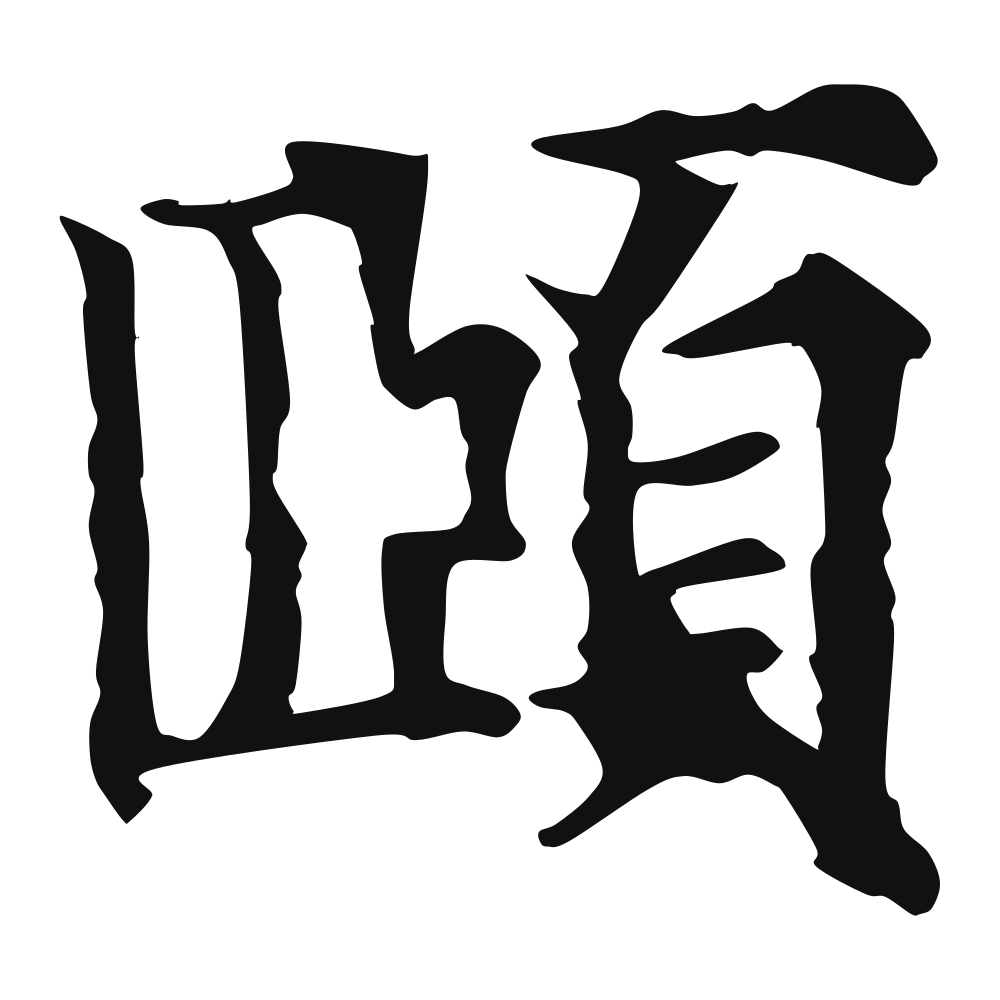
颐
(literary) chin; jaw; (literary) to foster; to nurture; to protect
Closest English meanings
cheek·to nourish·to care for
The Calligrapher — Ōuyáng Tōng 欧阳通
Tang regular-script master known for powerful, square strokes.
Tang calligrapher (?–691), master of regular script — known for 《道因法师碑》. Tang dynasty
Cultural Story
颐 builds on 頁 'head' with 臣 as sound, depicting the jaw and cheek, the part that chews. 《說文》 says 頤 is 顄也, the lower jaw. To move the jaw is to eat, so 颐 came to mean to nourish and care for oneself and others in peace.
Common words & phrases
- 颐和園 Summer Palace (Beijing)
- 颐養 to nourish · to recuperate
- 颐指气使 to order people about · commanding arrogantly
Read the story behind the character
颐 is the cheek and to nourish: 颐和園 is Beijing's Summer Palace, 颐養 to recuperate and keep well, and 颐指气使 to order others about with a toss of the chin. Retirees go south to 颐養; a boss who 颐指气使 soon loses his staff's trust.
Why this character belongs on skin
Look at the character and you see it: an open mouth framed by two cheeks, the ancient picture of yí—the jaw, the face at rest, and by extension the whole art of nourishment. It names the Yi hexagram in the I Ching, 'Mouth Corners,' whose judgment is simply: nourish yourself correctly, and attend to how you feed others. Sixty-four possible fates, and one of them is literally about eating well and speaking carefully. The Chinese never separated the two. The Summer Palace in Beijing is called Yíhéyuán—the garden of nourished harmony—because rulers who cannot keep their own bodies in peace cannot keep a country. There is sensuality in the claim: cheek, appetite, the slow pleasure of being fed. And discipline too, since what enters the mouth becomes what you are. Yí is ink for anyone learning that self-care is not indulgence but stewardship. Feed the body like it's borrowed. It is. Wear the word where a kiss would land.
Own this character
Purchase delivers the original SVG of this glyph, brushed by Ōuyáng Tōng 欧阳通, ready to place on skin, paper, or screen.