
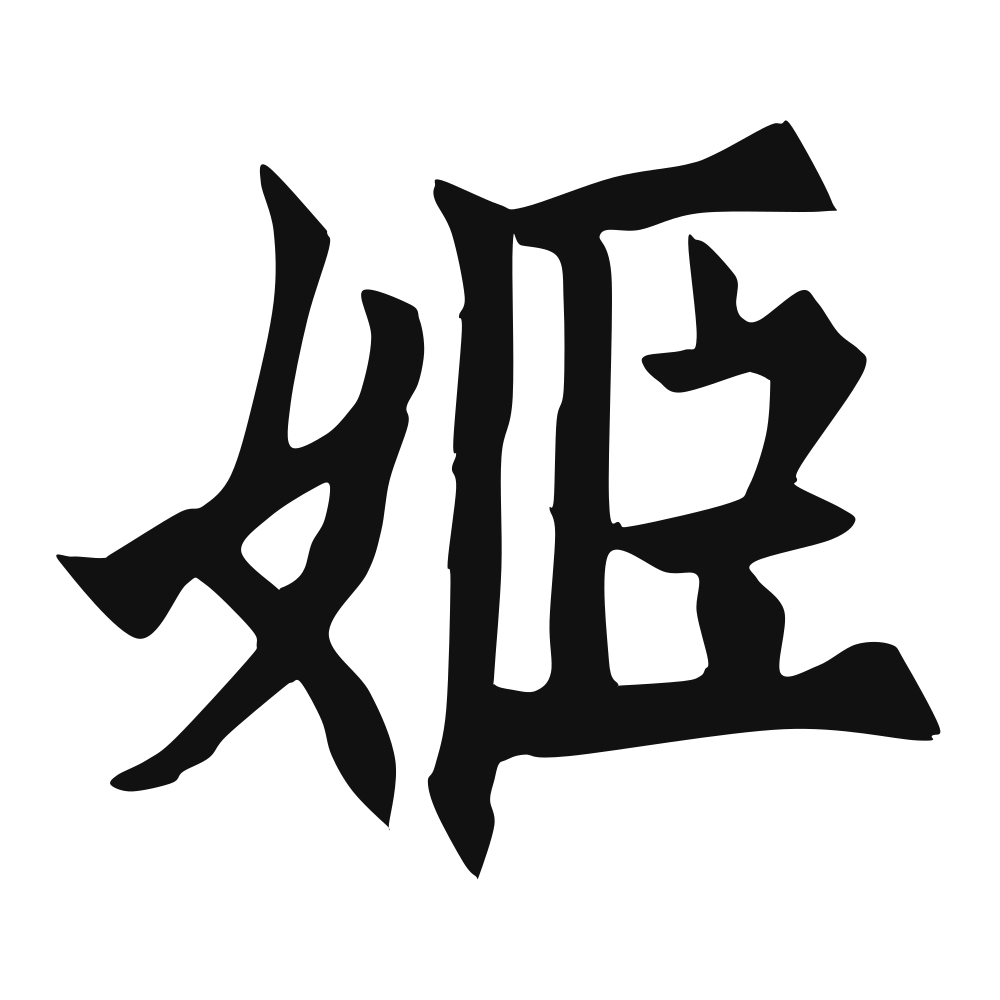
姬
surname Ji; family name of the royal family of the Zhou Dynasty 周代[Zhou1 dai4] (1046–256 BC); woman; concubine; female entertainer (archaic)
Closest English meanings
concubine·lady·surname
The Calligrapher — Ōuyáng Xún 欧阳询
Tang regular-script master whose 'Ouyang style' is a basic learning model.
Tang calligrapher (557–641), master of regular script/running script — Tang codifier of regular script; crisp, architectural strokes you could measure with a ruler. Tang dynasty
Cultural Story
In the classical tradition 姬 is weighty: it was the surname of the Zhou royal house, and broadly a beautiful woman or a courtesan skilled in song. The 歌姬 of banquet halls entertained lords with music and verse, while histories list 姬妾 among the households of the great, blending bloodline, art, and hierarchy.
Common words & phrases
- 歌姬 female singer · geisha
- 姬妾 concubines
Read the story behind the character
In the modern world 姬 survives in elegant echoes. A period drama features a 歌姬 singing for a warlord, and a genealogy notes 姬妾 among an ancestor's household. Though no one is titled 姬 today, the character still reads as graceful and archaic — a name that once meant "royal" and "songstress" at once.
Why this character belongs on skin
A surname that became a synonym for beauty — the character began as the clan name of the Zhou kings, the house that gave China its longest golden age, and slowly it came to mean a woman of grace and rank, a beauty with lineage. Concubines of emperors wore it in their titles; poets used it for the woman glimpsed across a courtyard, the one whose composure made the whole garden quieter. There is aristocracy in the word, but the feminine kind: power that does not need to raise its voice, charm with ancestry behind it. The ink claims that lineage for you — not borrowed elegance but earned, the old name translated into modern skin. Some beauty descends from kings. Yours, at least, now spells it.
Own this character
Purchase delivers the original SVG of this glyph, brushed by Ōuyáng Xún 欧阳询, ready to place on skin, paper, or screen.