
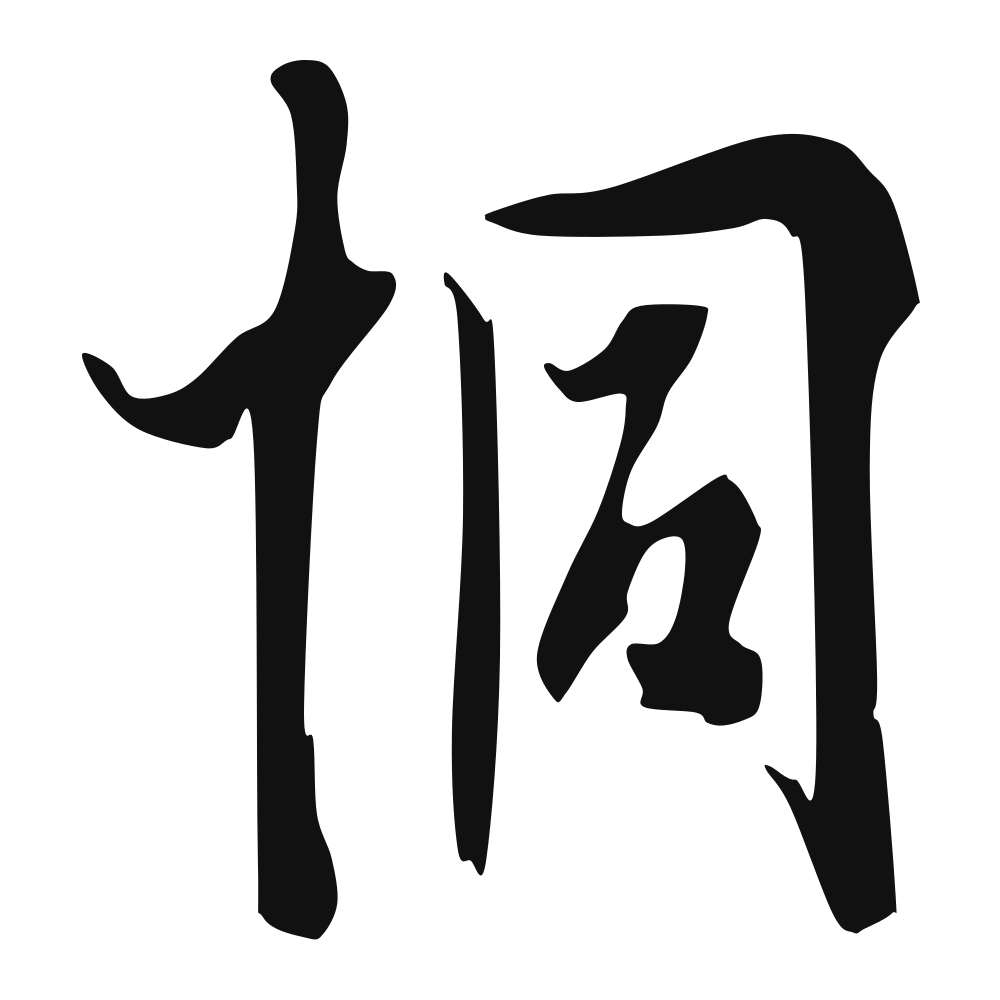
The Calligrapher — Ōuyáng Xún 欧阳询
Tang regular-script master whose 'Ouyang style' is a basic learning model.
Tang calligrapher (557–641), master of regular script/running script — Tang codifier of regular script; crisp, architectural strokes you could measure with a ruler. Tang dynasty
Cultural Story
恫 is the fear struck from outside — 恫吓, the threat meant to make the other flinch. The word is the raised voice that wants a cower, the awe misused as a weapon. A character for the fright that is aimed, not the fright that simply arrives on its own.
Common words & phrases
- 恫吓 threaten · intimidate
Read the story behind the character
恫吓 is the verb a ministry uses for a rival's warning, the bluster a headline quotes. The raised voice is a broadcast now; the flinch is the aim. We still aim the fright, and call it strength until it meets a steadier nerve, which the old word already knew was the only real test of the threat.
Why this character belongs on skin
Fear has a taste — copper and cold — and this character holds it: the heart radical beside a sound of striking, ancient texts using it for the dread that empties a kingdom or a single chest. The Book of Songs speaks of people's anguish and dread, rulers warned that terror is a currency that inflates into ruin. Here is what matters: the character keeps the heart in it. Fear is not a defect of the mind; it is the heart doing its ancient work, the sentry animal in us still counting shadows at the treeline. Warriors were never fearless — the samurai manuals say so plainly. They were men who moved with the fear beside them, giving it a seat, not the reins. Courage without dread is just ignorance wearing armor. This ink is not for the timid; it is for the honest, who admit the sentry lives in their chest and go out anyway. Name the fear. Then carry it like a blade you have learned to hold by the right end.
Own this character
Purchase delivers the original SVG of this glyph, brushed by Ōuyáng Xún 欧阳询, ready to place on skin, paper, or screen.