
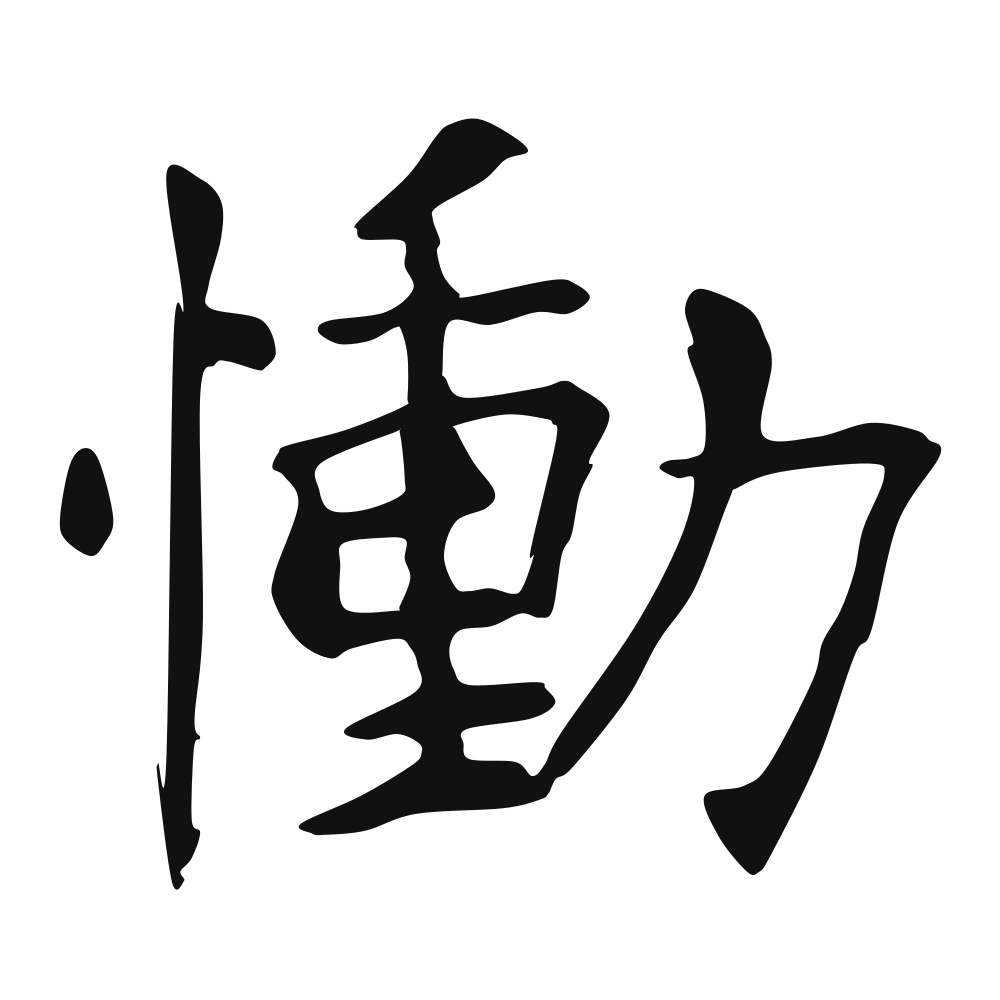
The Calligrapher — Ōuyáng Xún 欧阳询
Tang regular-script master whose 'Ouyang style' is a basic learning model.
Tang calligrapher (557–641), master of regular script/running script — Tang codifier of regular script; crisp, architectural strokes you could measure with a ruler. Tang dynasty
Cultural Story
恸 is grief that knocks the wind out of you. The 論語 records Confucius wailing over his favorite student Yan Hui: 颜渊死,子哭之恸 — he wept without restraint, and when told he was taking it too hard, asked who else he should grieve for. The character pairs the heart with 动, to move, so it is sorrow that moves the whole body, not a seated melancholy.
Common words & phrases
- 恸哭 wail · cry bitterly
- 悲恸 mourn · grieve
Read the story behind the character
恸 is a literary survivor. You will not hear it at the bus stop; it belongs to obituaries, memorial speeches, and 悲恸 the formal mourning notices pinned outside a home. 恸哭 appears on news of a mine collapse or a lost ship. It is the word for public, licensed weeping — the kind a community performs together rather than the quiet kind kept at home.
Why this character belongs on skin
There is sorrow, and there is this: grief with its mouth open. The character carries the heart radical — feeling itself — struck by something heavy enough to sound. When Confucius' beloved disciple Yan Hui died at thirty-two, the old teacher wailed this word: Heaven has destroyed me! Heaven has destroyed me! People scolded him for excess, and he answered: whom else would I grieve like this, if not for him? Even the master of composure broke. Even Christ, at the tomb, wept. The heart radical at the left is doing terrible, beautiful work — emotion so large it needs the whole body as an instrument. We live in a culture that apologizes for crying; the ancients understood that loud mourning honors what was loved. To wear this character is not morbidity. It is a promise: I will not feel my losses quietly or love anything halfway. The depth of the wail measures the depth of the bond. Grieve greatly. It means you lived greatly.
Own this character
Purchase delivers the original SVG of this glyph, brushed by Ōuyáng Xún 欧阳询, ready to place on skin, paper, or screen.