
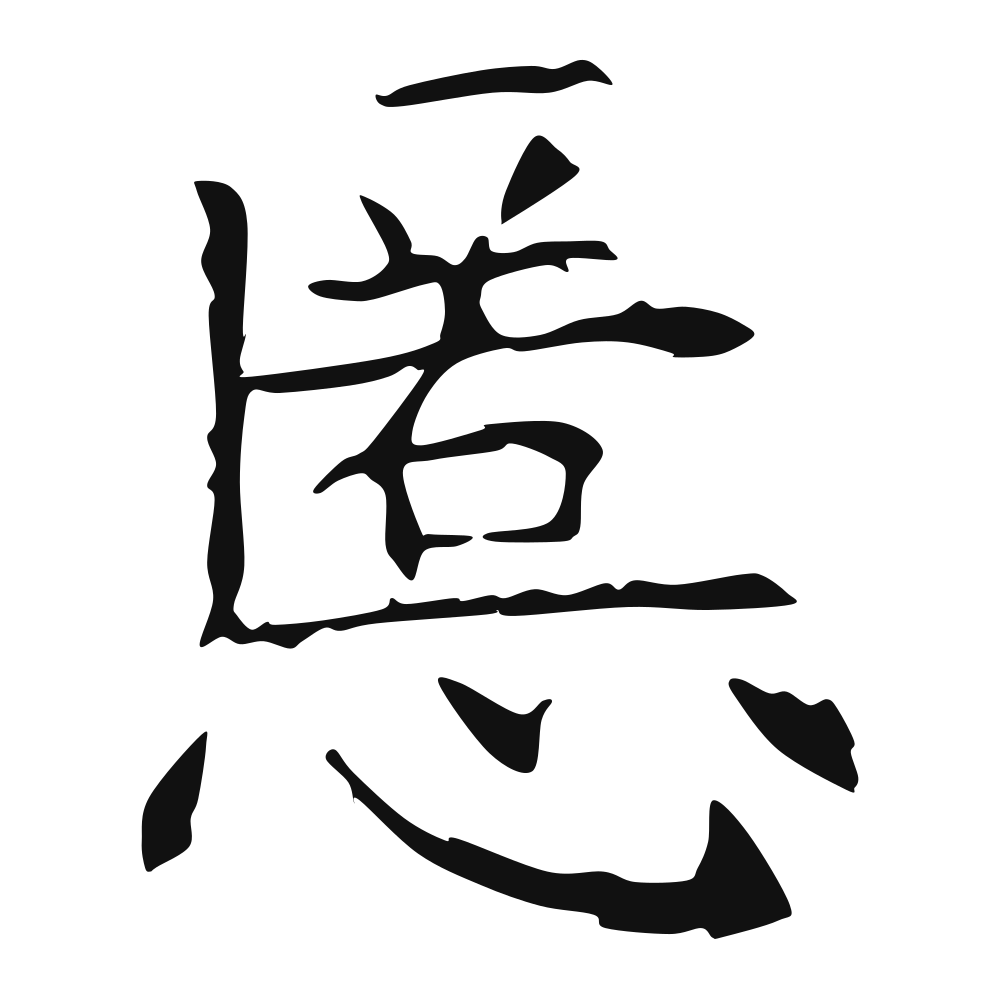
The Calligrapher — Ōuyáng Xún 欧阳询
Tang regular-script master whose 'Ouyang style' is a basic learning model.
Tang calligrapher (557–641), master of regular script/running script — Tang codifier of regular script; crisp, architectural strokes you could measure with a ruler. Tang dynasty
Cultural Story
慝 is wickedness kept in the dark. The 詩經 warns of 慝 in the heart, the hidden wrong a man nurses where no light falls, and the censors used 奸慝 for the traitor who smiles. The heart with 匿, to hide, is evil that knows to conceal itself. It is the sin that plans its disguise.
Common words & phrases
- 奸慝 wickedness · evil person
- 隐慝 hidden evil
- 邪慝 wicked · evil
Read the story behind the character
慝 is a dead word in speech, surviving in 奸慝 the archaism of the indictment and 隐慝 the hidden fault a moralist digs for. It belongs to the sermon and the old statute, the vocabulary of denouncing what lurks. No one says it to describe a bad day.
Why this character belongs on skin
There is a word for the thing you hide — 慝, stealthy wickedness, the fault concealed in the heart's dark room, nursed in private, fed on excuse. Confucian self-cultivation starts here, unflinching: 慝 is not the crime but the concealment, the curdled thing kept where no one can watch it spoil further. The Desert Fathers kept the same vigil and called the hidden ones thoughts; Buddhism names the poisons and insists they wither in the light of attention, every time, without exception. What makes this character strangely hopeful is that it exists at all — a civilization wise enough to coin a word for its own shadow, to build a vocabulary for the audit. To name a darkness is already to outflank it. Ink 慝 not as confession but as jurisdiction: you are the magistrate of your own hidden rooms, you know what lives there, and nothing there can be in charge of you without your signature. Revoke it.
Own this character
Purchase delivers the original SVG of this glyph, brushed by Ōuyáng Xún 欧阳询, ready to place on skin, paper, or screen.