
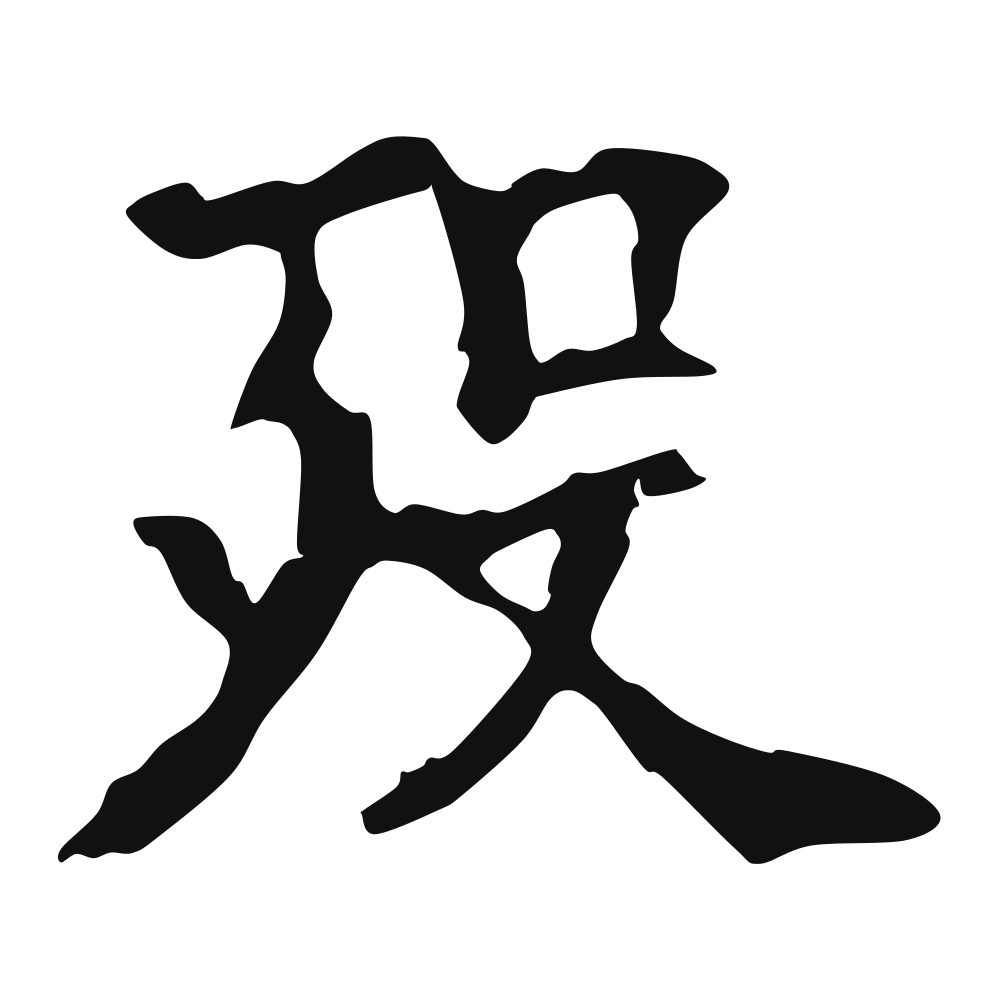
The Calligrapher — Ōuyáng Xún 欧阳询
Tang regular-script master whose 'Ouyang style' is a basic learning model.
Tang calligrapher (557–641), master of regular script/running script — Tang codifier of regular script; crisp, architectural strokes you could measure with a ruler. Tang dynasty
Cultural Story
殁 meant to pass away, a softer, more literary word for death than the blunt 死. The Shuowen reads it as ending, and classical inscriptions used 殁 to honour the departed with dignity: a gentleman 病殁 died of illness, and 殁世 meant his whole lifetime, the arc from birth to rest. The character wrapped mortality in courtesy rather than fear.
Common words & phrases
- 病殁 die of illness
- 亡殁 die · decease
- 殁世 whole life · lifetime
Read the story behind the character
Today 殁 appears in obituaries and memorials: a notice says a scholar 病殁 died of illness, a family records 亡殁 the passing of an elder, and a biography sums up a life as 殁世 a whole lifetime of work. Though rare in chat, the word lends quiet respect at funerals and in ancestry records, the gentle cousin of death that lets the living remember with grace.
Why this character belongs on skin
A body slips beneath the water and the surface closes: that is the oldest picture inside 殁, to sink, to be gone under, to die. The character does not rage about it. It states, the way water states things—smooth, cold, final. And yet the language around it is unexpectedly tender: 兵殁于王事, the soldier who perished in service, is spoken with a bow. Chinese epitaphs used 殁 the way Latin used obiit, carved small and dignified at the head of a life's summary. Everything someone was, then this word, then everything they are remembered as. There is a discipline in choosing a word this calm for the hardest fact. To carry 殁 in ink is to keep the waterline visible—a memento mori in a single stroke, the stoic's companion, the reminder that the surface will close over all of us, and what matters is what you did while above it.
Own this character
Purchase delivers the original SVG of this glyph, brushed by Ōuyáng Xún 欧阳询, ready to place on skin, paper, or screen.