
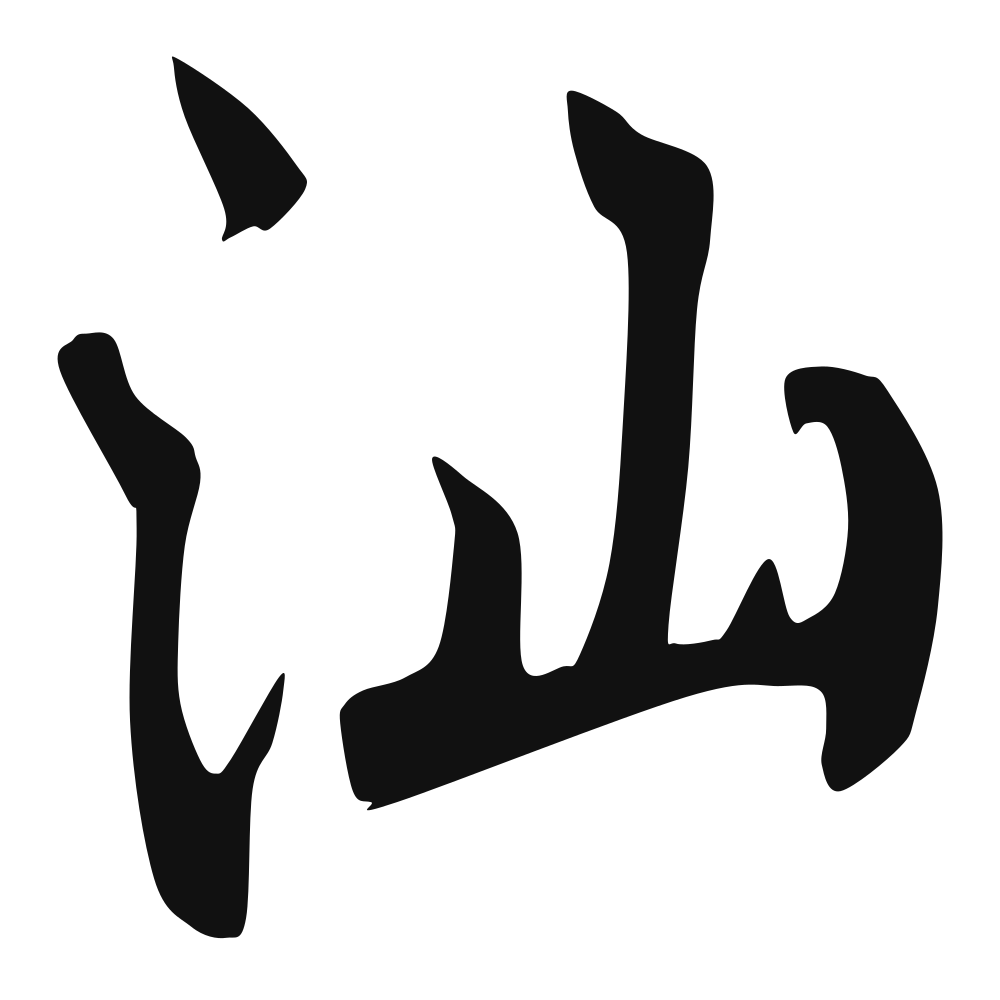
The Calligrapher — Ōuyáng Xún 欧阳询
Tang regular-script master whose 'Ouyang style' is a basic learning model.
Tang calligrapher (557–641), master of regular script/running script — Tang codifier of regular script; crisp, architectural strokes you could measure with a ruler. Tang dynasty
Cultural Story
汕 is a place-name character, from 水 (water) with 山 as phonetic. In the 說文解字 it meant fishing with a wicker trap — '魚遊水貌', fish moving in water. It later fixed to a coastal region of Guangdong, giving the city 汕頭 (Shantou) its name on the South China Sea, a harbor of nets.
Common words & phrases
- 汕頭 Shantou (city, Guangdong)
Read the story behind the character
汕 is best known through 汕頭 (Shantou), the port city in Guangdong famous for seafood and overseas traders. The character itself is rare outside that name, a quiet geographic marker on the southern coast where the 說文's old image of fish moving in water still fits the busy fishing harbor.
Why this character belongs on skin
汕 pairs water with a gesture of the hand: the old sense is scooping fish from the shallows, taking what the tide offers rather than what the deep conceals. It survives today mostly in 汕头, the coastal city where rivers meet the sea and every street at dawn smells of brine and the night's catch. The character is patient the way fishermen are patient—nets cast at first light, then the long rhythm of waiting, water doing most of the actual work while the hands merely stay ready. There is a quiet economics here that a hurry-up life forgets: abundance lives in the shallows too, and not every prize requires the deep dive. The hand that waits by the current eats; the hand that thrashes catches nothing but cold. Let this small wave live on your skin—a blessing on quiet hauls, honest hands, and the daily bread that comes to those who show up at the water's edge.
Own this character
Purchase delivers the original SVG of this glyph, brushed by Ōuyáng Xún 欧阳询, ready to place on skin, paper, or screen.